Centre for Dengue Research, Faculty of Medical Sciences, University of Sri Jayawardenapura, Nugegoda, Sri Lanka.
Allergy, Immunology and Cell Biology Unit, University of Sri Jayewardenepura, Nugegoda, Sri Lanka.
Sci Rep. 2020 Nov 16;10(1):19839. doi: 10.1038/s41598-020-76836-2.
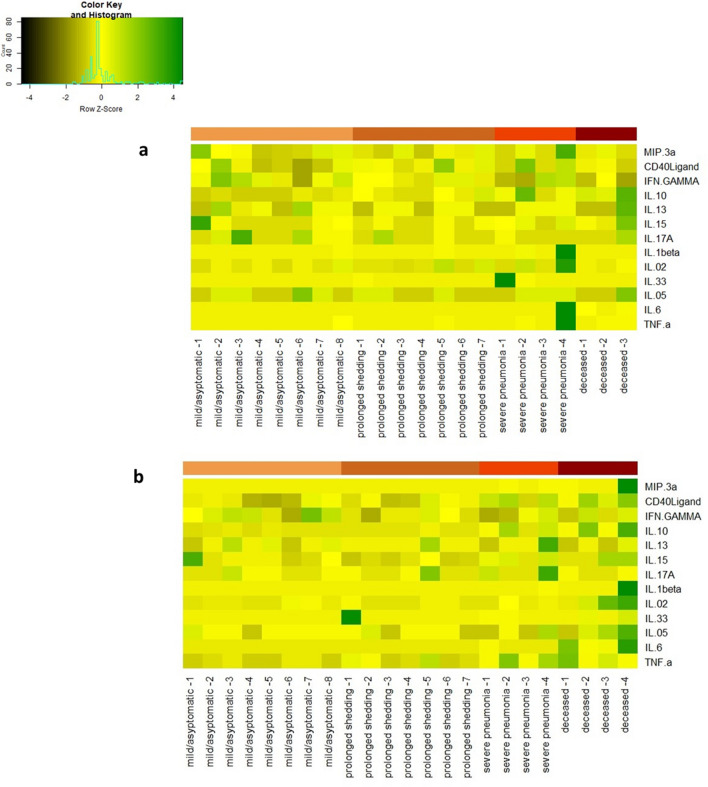
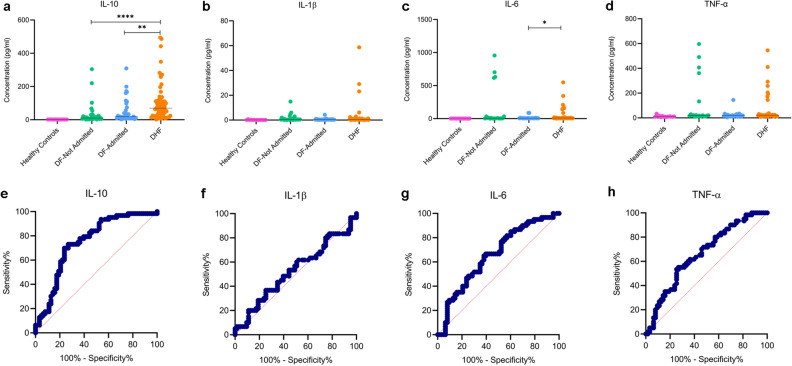
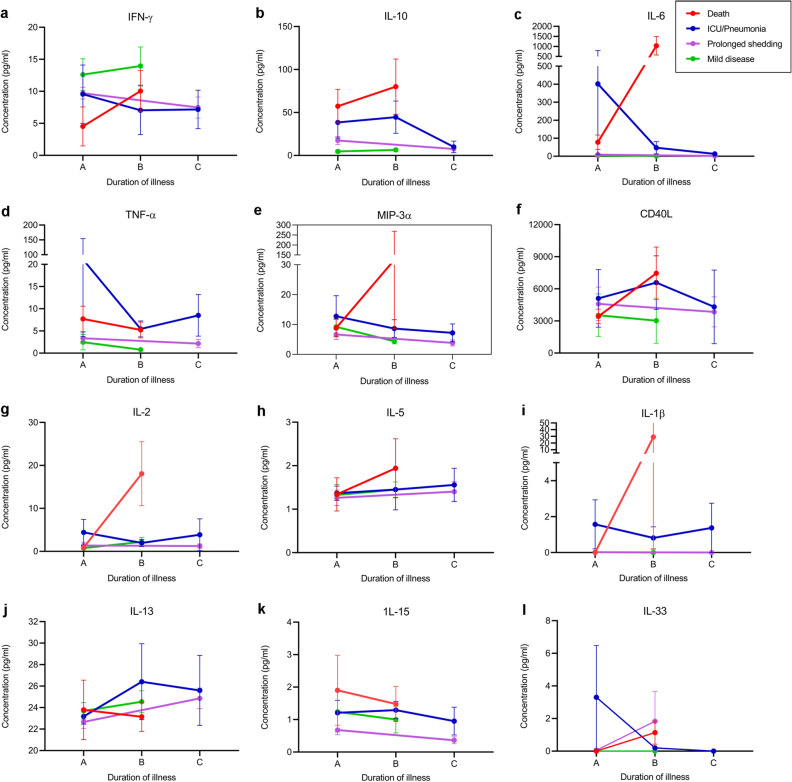
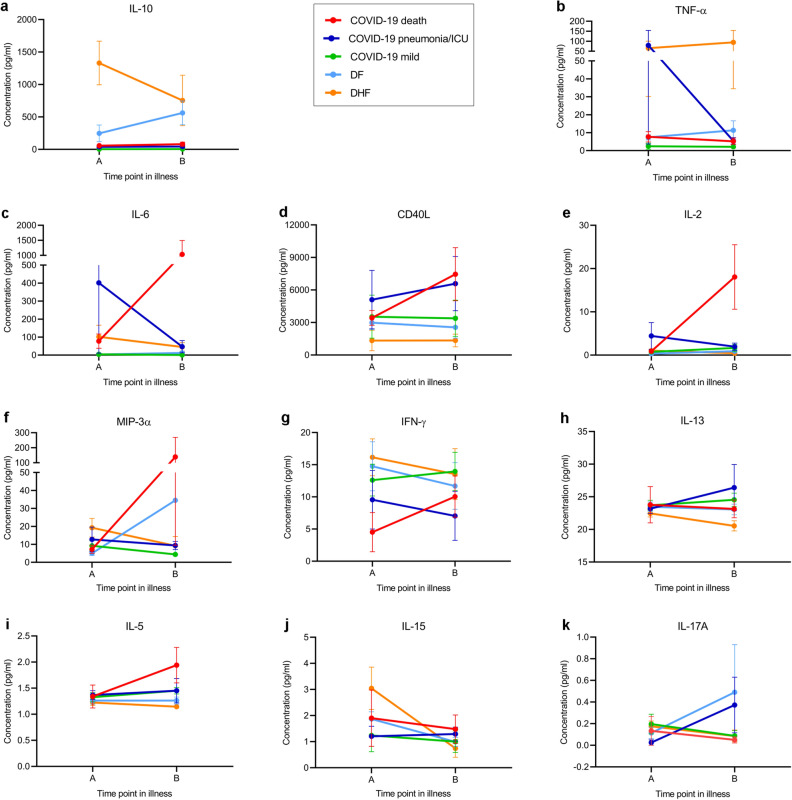
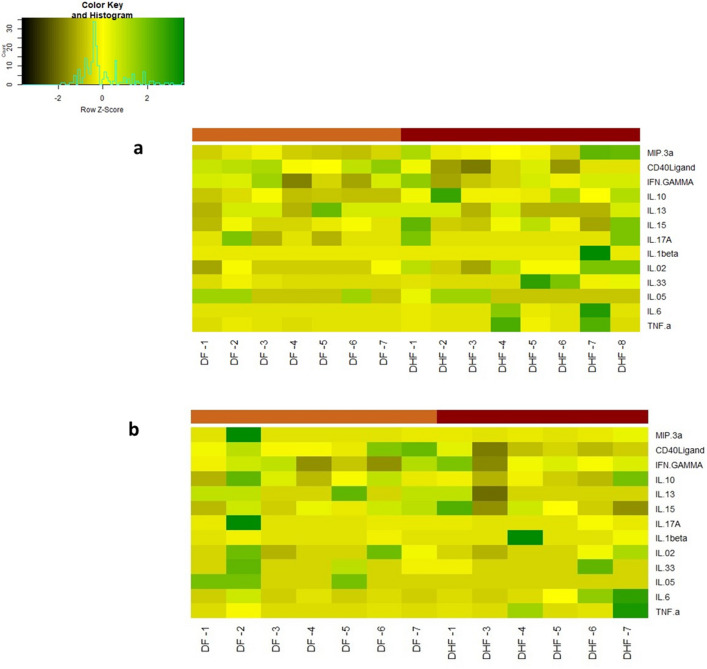
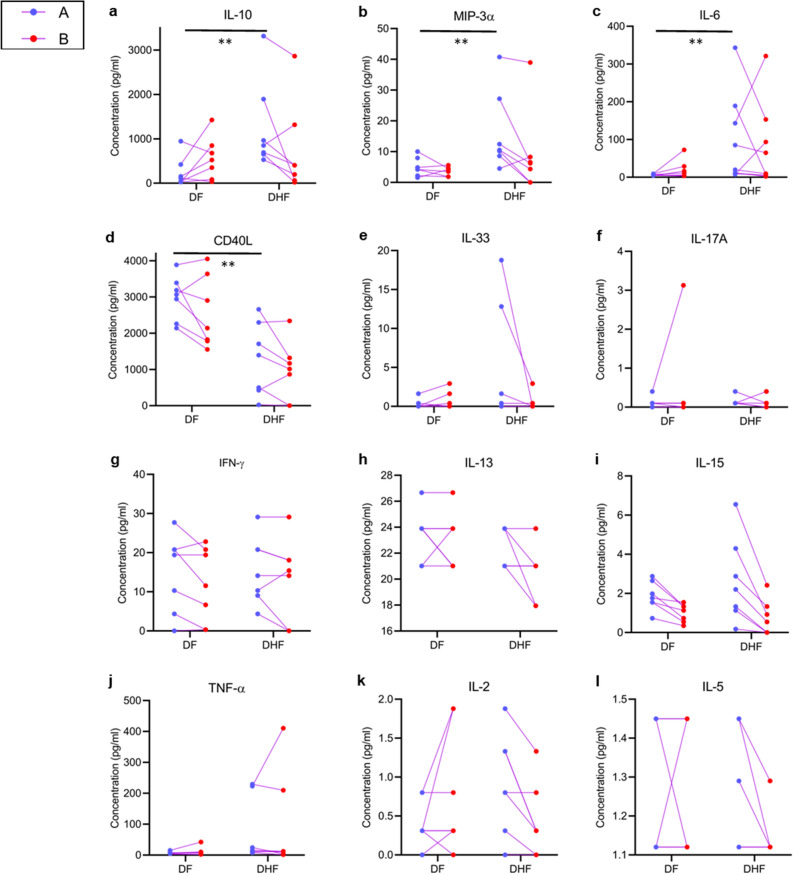
Severe pneumonia and multiorgan dysfunction in COVID-19 and dengue haemorrhagic fever (DHF) are two diseases that can associate with an altered immune response to the infecting virus. To determine the similarities and differences in the cytokine and chemokine responses in these two infections, we compared responses in patients with varying severity of COVID-19 and acute dengue at different time points of illness. During early disease, patients who proceeded to develop COVID-19 severe pneumonia (SP) and DHF had significantly higher levels of IL-6, IL-10 and MIP3α than those who developed mild illness. The lowest levels of IFNγ in early illness were seen in those who succumbed to their illness due to COVID-19. Levels of serum IL-10 (p = 0.0001), IL-6 (p = 0.002), MIP-3α (p = 0.02) and CD40-L levels (p = 0.002) significantly increased from 5 to 9 day of illness to 10-21 day of illness in patients with moderate-to-severe COVID-19, but not in those with mild illness. In contrast, these cytokine/chemokine levels remained unchanged in those with DHF or dengue fever (DF) during febrile and critical phases. Although IL-10 levels were significantly higher in COVID-19 patients with SP, patients with DHF had 25-fold higher levels, whereas IL-6 levels were 11-fold higher in those with COVID-19 SP. IL-10 and other cytokines were evaluated in a larger cohort of patients during early illness (≤ 4 days) who proceeded to develop DF (n = 71) or DHF (n = 64). Of the cytokines evaluated, IL-10 was significantly higher (p < 0.0001) in those who went on to develop DHF compared to DF. Low IFNγ response to the SARS-CoV2 and high levels of immunosuppressive IL-10 in both COVID-19 and dengue during early illness are indicators of an altered antiviral response potentially contributing to disease severity.
在 COVID-19 和登革热出血热 (DHF) 中,严重肺炎和多器官功能障碍是两种可能与感染病毒的免疫反应改变相关的疾病。为了确定这两种感染中细胞因子和趋化因子反应的异同,我们比较了不同严重程度的 COVID-19 患者和急性登革热患者在疾病不同时间点的反应。在疾病早期,进展为 COVID-19 严重肺炎 (SP) 和 DHF 的患者的 IL-6、IL-10 和 MIP3α 水平明显高于轻症患者。在 COVID-19 导致疾病的患者中,早期 IFNγ 水平最低。在 COVID-19 中度至重度患者中,血清 IL-10(p=0.0001)、IL-6(p=0.002)、MIP-3α(p=0.02)和 CD40-L 水平(p=0.002)从疾病的第 5 天到第 9 天显著增加,到第 10-21 天,而在轻症患者中则没有增加。相比之下,在 DHF 或登革热患者中,这些细胞因子/趋化因子水平在发热和危急期保持不变。尽管 COVID-19 SP 患者的 IL-10 水平明显更高,但 DHF 患者的水平高 25 倍,而 COVID-19 SP 患者的 IL-6 水平高 11 倍。在疾病早期(≤4 天)更大的患者队列中评估了 IL-10 和其他细胞因子,这些患者进展为登革热(n=71)或 DHF(n=64)。在所评估的细胞因子中,与登革热相比,进展为 DHF 的患者的 IL-10 明显更高(p<0.0001)。SARS-CoV2 的 IFNγ 反应低下和登革热早期的高免疫抑制性 IL-10 是抗病毒反应改变的指标,可能导致疾病严重程度增加。