Gregersen Hans
The Chinese University of Hong Kong, Shatin, Hong Kong SAR, China.
California Medical Innovations Institute, San Diego, CA 92121, USA.
Bioengineering (Basel). 2020 Nov 14;7(4):146. doi: 10.3390/bioengineering7040146.
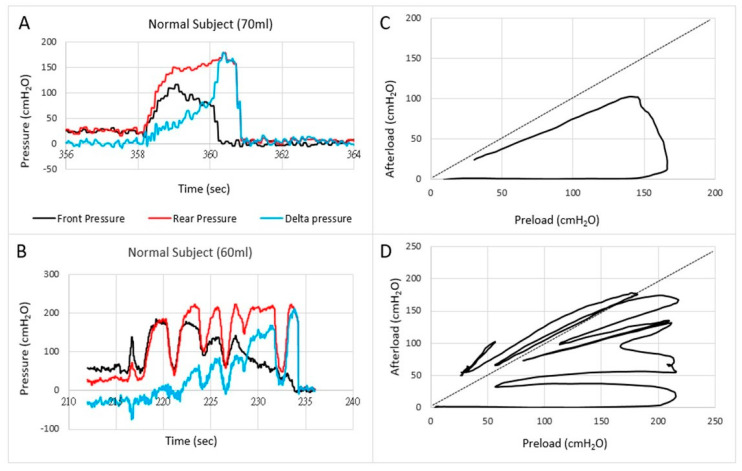
Biomechatronics (bionics) is an applied science that creates interdisciplinary bonds between biology and engineering. The lower gastrointestinal (GI) tract is difficult to study but has gained interest in recent decades from a bionics point of view. Ingestible capsules that record physiological variables during GI transit have been developed and used for detailed analysis of colon transit and motility. Recently, a simulated stool named Fecobionics was developed. It has the consistency and shape of normal stool. Fecobionics records a variety of parameters including pressures, bending, and shape changes. It has been used to study defecation patterns in large animals and humans, including patients with symptoms of obstructed defecation and fecal incontinence. Recently, it was applied in a canine colon model where it revealed patterns consistent with shallow waves originating from slow waves generated by the interstitial Cells of Cajal. Novel analysis such as the "rear-front" pressure diagram and quantification of defecation indices has been developed for Fecobionics. GI research has traditionally been based on experimental approaches. Mathematical modeling is a unique way to deal with the complexity. This paper describes the Fecobionics technology, related mechano-physiological modeling analyses, and outlines perspectives for future applications.
生物机电一体化(仿生学)是一门在生物学和工程学之间建立跨学科联系的应用科学。下消化道很难进行研究,但近几十年来从仿生学的角度受到了关注。已开发出可在胃肠道运输过程中记录生理变量的可吞咽胶囊,并用于结肠运输和蠕动的详细分析。最近,一种名为“粪便仿生学”的模拟粪便被开发出来。它具有正常粪便的稠度和形状。粪便仿生学可记录包括压力、弯曲和形状变化在内的各种参数。它已被用于研究大型动物和人类的排便模式,包括有排便梗阻和大便失禁症状的患者。最近,它被应用于犬结肠模型,揭示了与源自 Cajal 间质细胞产生的慢波的浅波一致的模式。针对粪便仿生学已经开发了诸如“前后”压力图和排便指数量化等新颖的分析方法。胃肠道研究传统上基于实验方法。数学建模是处理复杂性的独特方式。本文描述了粪便仿生学技术、相关的机械生理建模分析,并概述了未来应用的前景。