Department of Biomedical Science, CHA University, Seongnam 13488, Korea.
Department of Anatomy, Korea University College of Medicine, Seoul 02841, Korea.
Int J Mol Sci. 2020 Nov 14;21(22):8599. doi: 10.3390/ijms21228599.
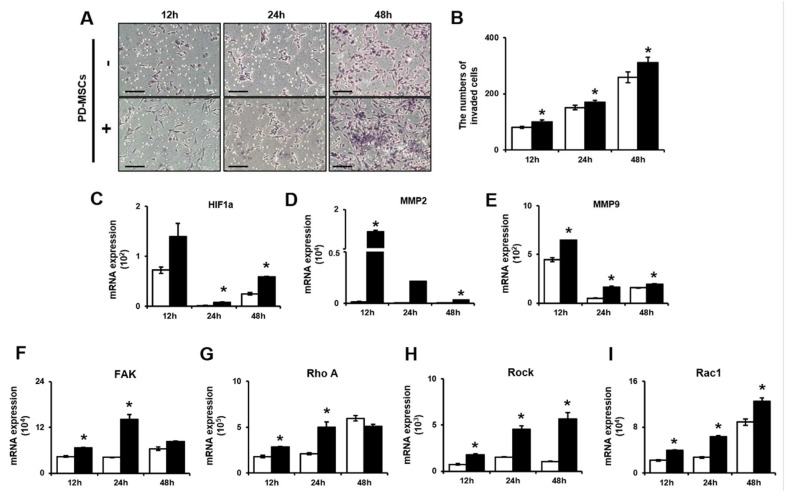
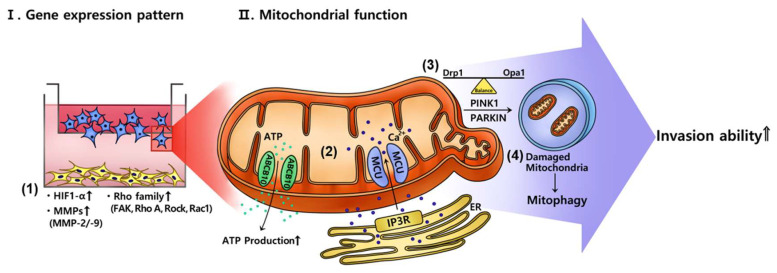
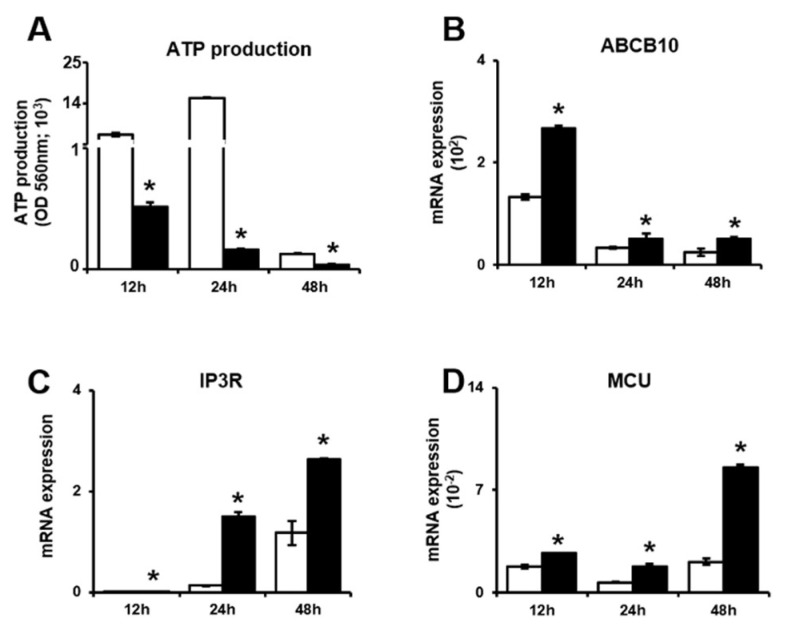
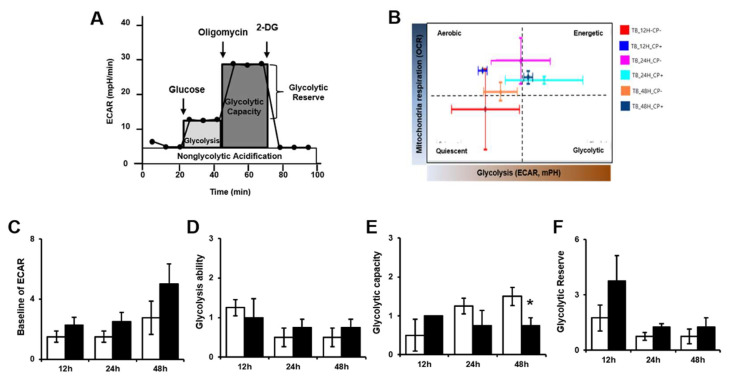
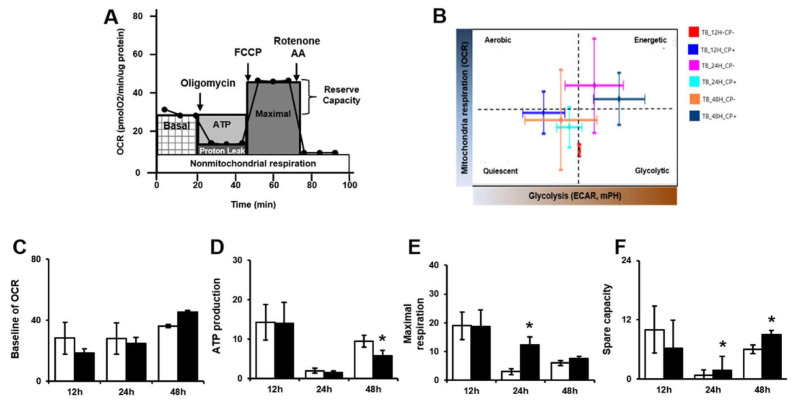
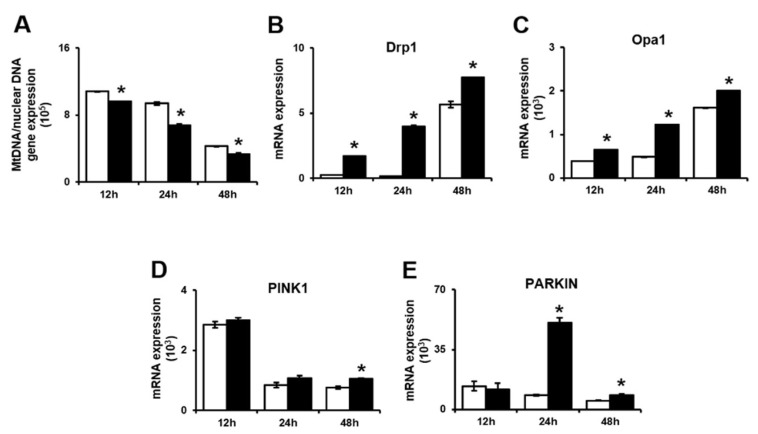
Mitochondrial dynamics are involved in many cellular events, including the proliferation, differentiation, and invasion/migration of normal as well as cancerous cells. Human placenta-derived mesenchymal stem cells (PD-MSCs) were known to regulate the invasion activity of trophoblasts. However, the effects of PD-MSCs on mitochondrial function in trophoblasts are still insufficiently understood. Therefore, the objectives of this study are to analyze the factors related to mitochondrial function and investigate the correlation between trophoblast invasion and mitophagy via PD-MSC cocultivation. We assess invasion ability and mitochondrial function in invasive trophoblasts according to PD-MSC cocultivation by quantitative reverse transcription polymerase chain reaction (qRT-PCR) and extracellular flux (XF) assay. Under PD-MSCs co-cultivation, invasion activity of a trophoblast is increased via activation of the Rho signaling pathway as well as Matrix metalloproteinases (MMPs). Additionally, the expression of mitochondrial function (e.g., reactive oxygen species (ROS), calcium, and adenosine triphosphate (ATP) synthesis) in trophoblasts are increased via PD-MSCs co-cultivation. Finally, PD-MSCs regulate mitochondrial autophagy factors in invasive trophoblasts via regulating the balance between PTEN-induced putative kinase 1 (PINK1) and parkin RBR E3 ubiquitin protein ligase (PARKIN) expression. Taken together, these results demonstrate that PD-MSCs enhance the invasion ability of trophoblasts via altering mitochondrial dynamics. These results support the fundamental mechanism of trophoblast invasion via mitochondrial function and provide a new stem cell therapy for infertility.
线粒体动力学参与许多细胞事件,包括正常和癌细胞的增殖、分化和侵袭/迁移。人胎盘间充质干细胞(PD-MSCs)已知可调节滋养细胞的侵袭活性。然而,PD-MSCs 对滋养细胞中线粒体功能的影响仍了解不足。因此,本研究的目的是分析与线粒体功能相关的因素,并通过 PD-MSC 共培养研究滋养细胞侵袭与噬线粒体之间的相关性。我们通过定量逆转录聚合酶链反应(qRT-PCR)和细胞外通量(XF)测定来评估 PD-MSC 共培养后侵袭性滋养细胞的侵袭能力和线粒体功能。在 PD-MSCs 共培养下,滋养细胞的侵袭活性通过 Rho 信号通路和基质金属蛋白酶(MMPs)的激活而增加。此外,通过 PD-MSCs 共培养,滋养细胞中线粒体功能的表达(例如活性氧(ROS)、钙和三磷酸腺苷(ATP)合成)增加。最后,PD-MSCs 通过调节 PTEN 诱导的假定激酶 1(PINK1)和 parkin RBR E3 泛素蛋白连接酶(PARKIN)表达之间的平衡来调节侵袭性滋养细胞中的线粒体自噬因子。总之,这些结果表明 PD-MSCs 通过改变线粒体动力学增强滋养细胞的侵袭能力。这些结果支持通过线粒体功能进行滋养细胞侵袭的基本机制,并为不孕不育提供了一种新的干细胞治疗方法。