Department of Computer Science, College of Computer and Information Sciences, Jouf University, Sakakah, Saudi Arabia.
Department of Computer Engineering and Networks, College of Computer and Information Sciences, Jouf University, Sakakah, Saudi Arabia.
J Healthc Eng. 2020 Oct 29;2020:8857346. doi: 10.1155/2020/8857346. eCollection 2020.
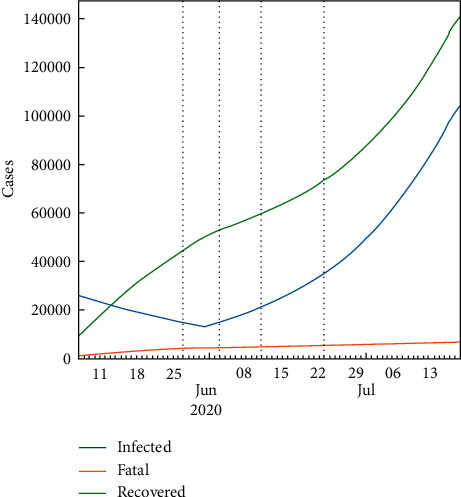
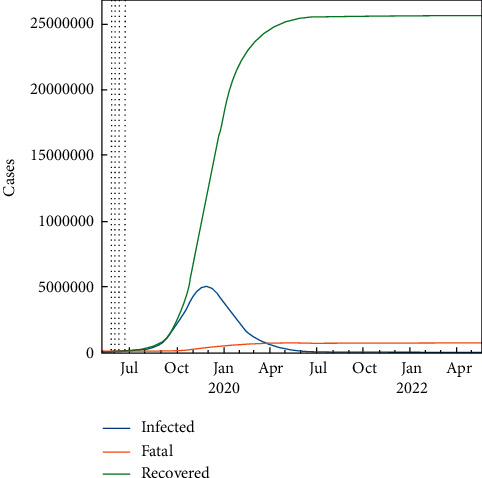
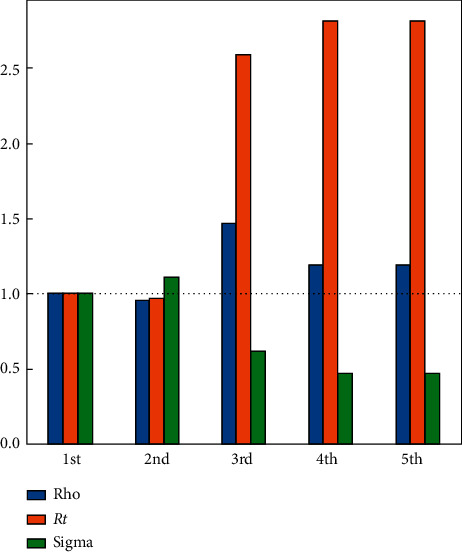
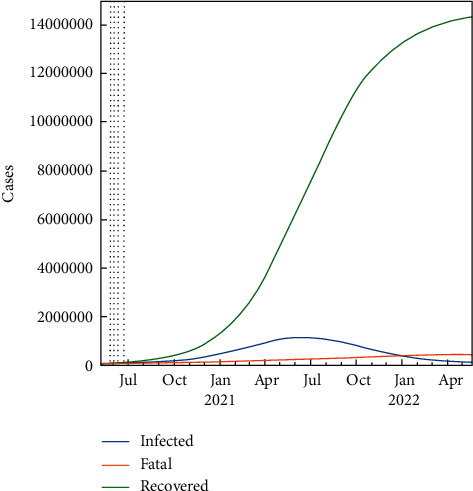
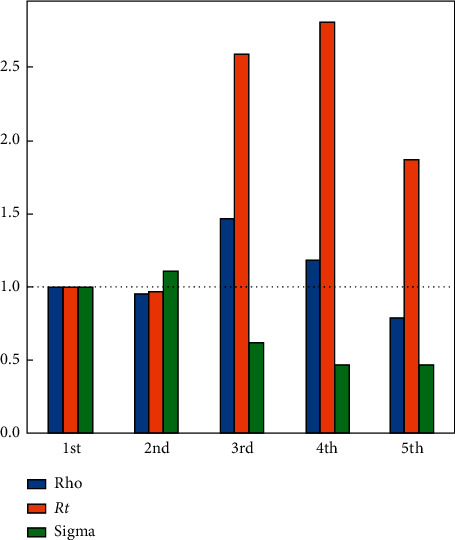
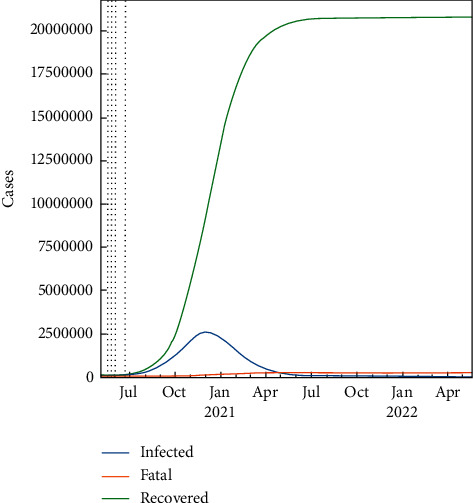
COVID-19 presents an urgent global challenge because of its contagious nature, frequently changing characteristics, and the lack of a vaccine or effective medicines. A model for measuring and preventing the continued spread of COVID-19 is urgently required to provide smart health care services. This requires using advanced intelligent computing such as artificial intelligence, machine learning, deep learning, cognitive computing, cloud computing, fog computing, and edge computing. This paper proposes a model for predicting COVID-19 using the SIR and machine learning for smart health care and the well-being of the citizens of KSA. Knowing the number of susceptible, infected, and recovered cases each day is critical for mathematical modeling to be able to identify the behavioral effects of the pandemic. It forecasts the situation for the upcoming 700 days. The proposed system predicts whether COVID-19 will spread in the population or die out in the long run. Mathematical analysis and simulation results are presented here as a means to forecast the progress of the outbreak and its possible end for three types of scenarios: "no actions," "lockdown," and "new medicines." The effect of interventions like lockdown and new medicines is compared with the "no actions" scenario. The lockdown case delays the peak point by decreasing the infection and affects the area equality rule of the infected curves. On the other side, new medicines have a significant impact on infected curve by decreasing the number of infected people about time. Available forecast data on COVID-19 using simulations predict that the highest level of cases might occur between 15 and 30 November 2020. Simulation data suggest that the virus might be fully under control only after June 2021. The reproductive rate shows that measures such as government lockdowns and isolation of individuals are not enough to stop the pandemic. This study recommends that authorities should, as soon as possible, apply a strict long-term containment strategy to reduce the epidemic size successfully.
COVID-19 因其传染性、频繁变化的特征以及缺乏疫苗或有效药物而构成紧迫的全球挑战。迫切需要建立一种衡量和防止 COVID-19 持续传播的模型,以为智能医疗保健服务提供支持。这需要使用先进的智能计算技术,如人工智能、机器学习、深度学习、认知计算、云计算、雾计算和边缘计算。本文提出了一种使用 SIR 模型和机器学习来预测 COVID-19 的模型,旨在为沙特阿拉伯的公民提供智能医疗保健和福祉。了解每天的易感人群、感染人群和康复人群的数量对于数学建模识别大流行的行为效应至关重要。该模型可以预测未来 700 天的情况。该系统预测 COVID-19 是在人群中传播还是从长远来看消失。本文提出了数学分析和模拟结果,作为预测疫情发展及其三种情景(“不采取行动”、“封锁”和“新药”)可能结束的一种方法。将封锁和新药等干预措施的效果与“不采取行动”的情景进行了比较。封锁案例通过减少感染,延迟了感染高峰期,同时也影响了感染曲线的区域均衡规则。另一方面,新药通过减少受感染人数,对感染曲线产生了重大影响。使用模拟进行的 COVID-19 可用预测数据表明,2020 年 11 月 15 日至 30 日之间可能会出现病例的最高峰。模拟数据表明,只有到 2021 年 6 月之后,病毒才可能得到完全控制。繁殖率表明,政府封锁和隔离个人等措施不足以阻止疫情。本研究建议有关当局应尽快采取严格的长期遏制策略,以成功减少疫情规模。