Vourchakbé Joël, Tiofack Zebaze Arnol Auvaker, Kante Tagueu Sartrien, Mpoame Mbida, Simo Gustave
Molecular Parasitology and Entomology Unit, Department of Biochemistry, Faculty of Science, University of Dschang, PO Box 67 Dschang, Cameroon.
Laboratory of Applied Biology and Ecology (LABEA), Department of Animal Biology, Faculty of Science, University of Dschang, PO Box 067 Dschang, Cameroon.
Parasite. 2020;27:63. doi: 10.1051/parasite/2020061. Epub 2020 Nov 18.
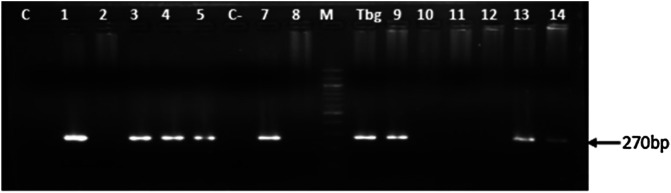
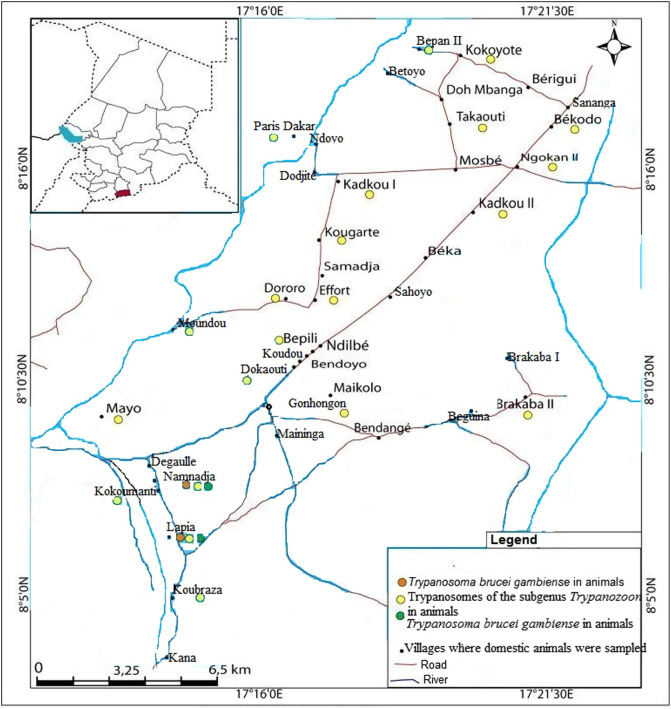
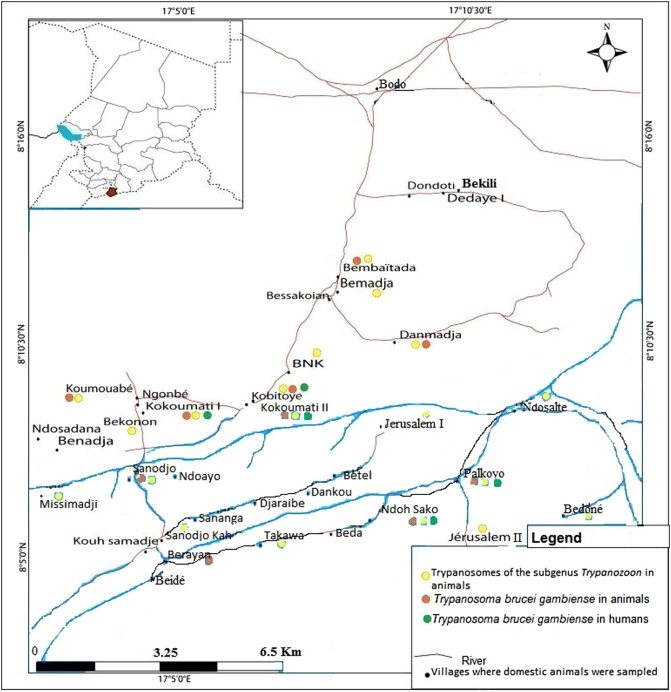
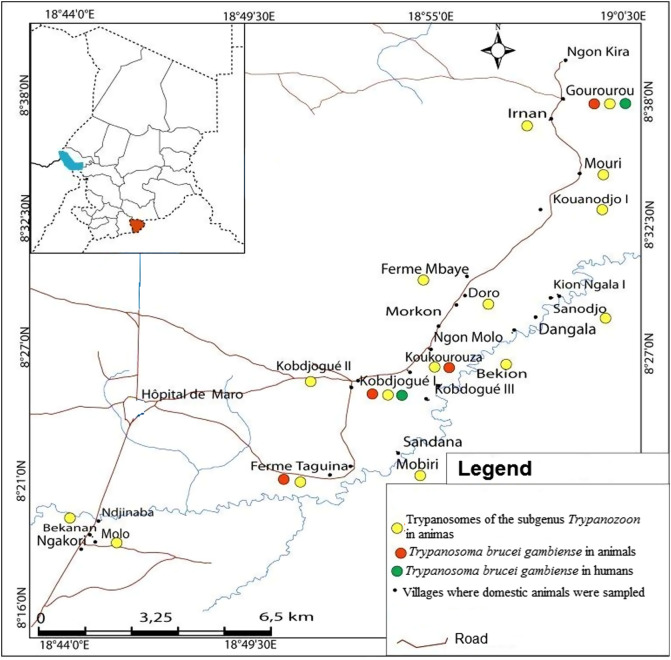
Human African trypanosomiasis (HAT) has been targeted for zero transmission to humans by 2030. Animal reservoirs of gambiense-HAT could jeopardize these elimination goals. This study was undertaken to identify potential host reservoirs for Trypanosoma brucei gambiense by detecting its natural infections in domestic animals of Chadian HAT foci. Blood samples were collected from 267 goats, 181 sheep, 154 dogs, and 67 pigs. Rapid diagnostic test (RDT) and capillary tube centrifugation (CTC) were performed to search for trypanosomes. DNA was extracted from the buffy coat, and trypanosomes of the subgenus Trypanozoon as well as T. b. gambiense were identified by PCR. Of 669 blood samples, 19.4% were positive by RDT and 9.0% by CTC. PCR revealed 150 animals (22.4%) with trypanosomes belonging to Trypanozoon, including 18 (12%) T. b. gambiense. This trypanosome was found in all investigated animal species and all HAT foci. Between animal species or villages, no significant differences were observed in the number of animals harboring T. b. gambiense DNA. Pigs, dogs, sheep and goats appeared to be potential reservoir hosts for T. b. gambiense in Chad. The identification of T. b. gambiense in all animal species of all HAT foci suggests that these animals should be considered when designing new control strategies for sustainable elimination of HAT. Investigations aiming to decrypt their specific role in each epidemiological setting are important to achieve zero transmission of HAT.
人类非洲锥虫病(HAT)的目标是到2030年实现对人类零传播。冈比亚型HAT的动物宿主可能会危及这些消除目标。本研究旨在通过检测乍得HAT疫源地家畜中的自然感染情况,确定布氏冈比亚锥虫的潜在宿主。采集了267只山羊、181只绵羊、154只狗和67头猪的血样。进行快速诊断测试(RDT)和毛细管离心法(CTC)以寻找锥虫。从血沉棕黄层中提取DNA,并通过PCR鉴定锥虫亚属以及布氏冈比亚锥虫。在669份血样中,RDT检测阳性率为19.4%,CTC检测阳性率为9.0%。PCR检测发现150只动物(22.4%)感染了属于锥虫亚属的锥虫,其中包括18只(12%)布氏冈比亚锥虫。在所有被调查的动物物种和所有HAT疫源地均发现了这种锥虫。在携带布氏冈比亚锥虫DNA的动物数量方面,未观察到动物物种或村庄之间存在显著差异。在乍得,猪、狗、绵羊和山羊似乎是布氏冈比亚锥虫的潜在储存宿主。在所有HAT疫源地的所有动物物种中均发现布氏冈比亚锥虫,这表明在设计可持续消除HAT的新控制策略时应考虑这些动物。旨在解读它们在每种流行病学环境中具体作用的调查对于实现HAT的零传播至关重要。