Department of Biochemistry, Duke University School of Medicine, Durham, North Carolina, USA; Department of Pharmacology and Cancer Biology, Duke University School of Medicine, Durham, North Carolina, USA.
Department of Molecular Biology and Genetics, Cornell University, Ithaca, New York, USA.
J Biol Chem. 2021 Jan-Jun;296:100097. doi: 10.1074/jbc.RA120.015452. Epub 2020 Nov 24.
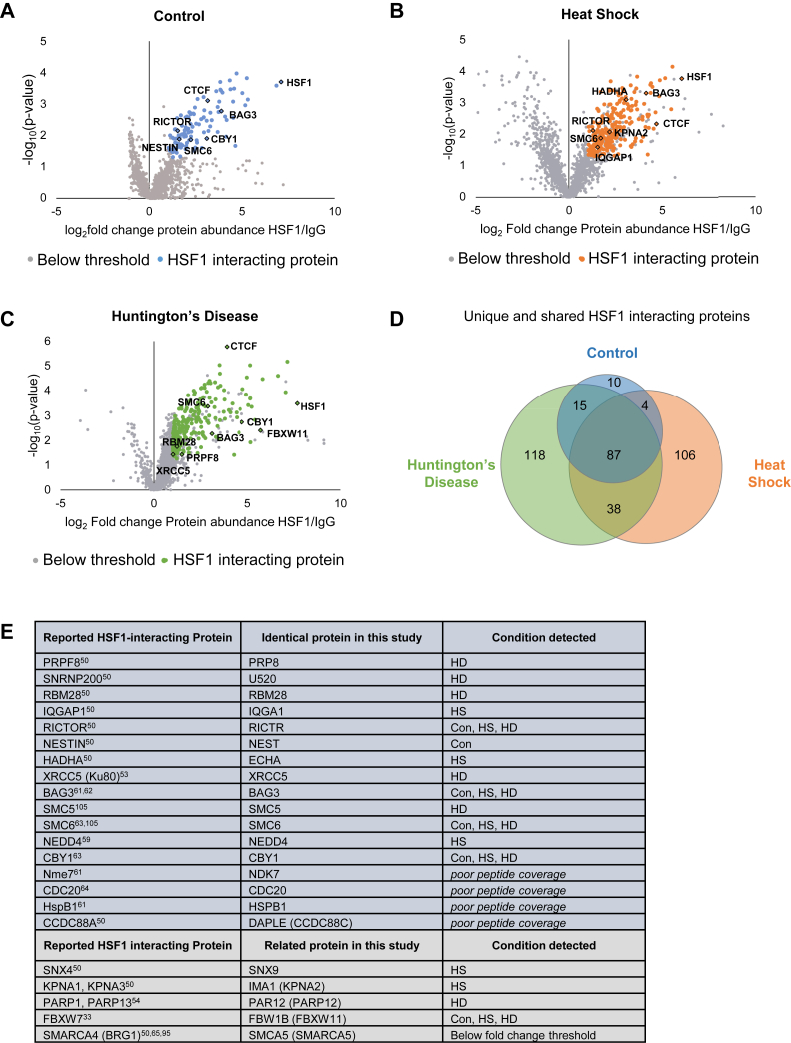
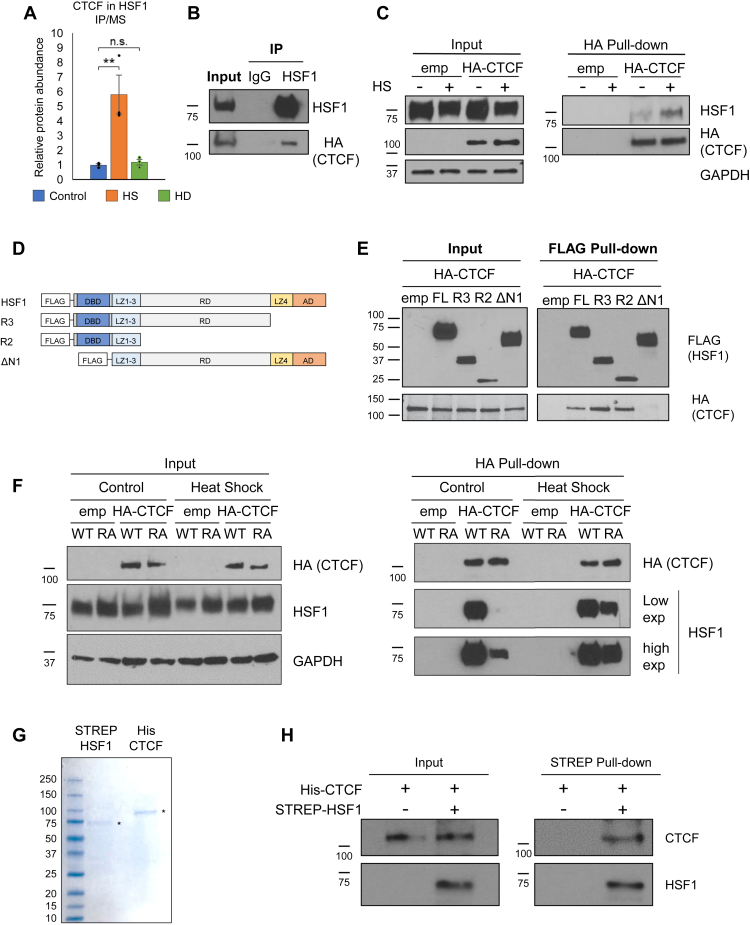
Heat shock transcription factor 1 (HSF1) orchestrates cellular stress protection by activating or repressing gene transcription in response to protein misfolding, oncogenic cell proliferation, and other environmental stresses. HSF1 is tightly regulated via intramolecular repressive interactions, post-translational modifications, and protein-protein interactions. How these HSF1 regulatory protein interactions are altered in response to acute and chronic stress is largely unknown. To elucidate the profile of HSF1 protein interactions under normal growth and chronic and acutely stressful conditions, quantitative proteomics studies identified interacting proteins in the response to heat shock or in the presence of a poly-glutamine aggregation protein cell-based model of Huntington's disease. These studies identified distinct protein interaction partners of HSF1 as well as changes in the magnitude of shared interactions as a function of each stressful condition. Several novel HSF1-interacting proteins were identified that encompass a wide variety of cellular functions, including roles in DNA repair, mRNA processing, and regulation of RNA polymerase II. One HSF1 partner, CTCF, interacted with HSF1 in a stress-inducible manner and functions in repression of specific HSF1 target genes. Understanding how HSF1 regulates gene repression is a crucial question, given the dysregulation of HSF1 target genes in both cancer and neurodegeneration. These studies expand our understanding of HSF1-mediated gene repression and provide key insights into HSF1 regulation via protein-protein interactions.
热休克转录因子 1(HSF1)通过响应蛋白质错误折叠、致癌细胞增殖和其他环境应激,激活或抑制基因转录,从而协调细胞应激保护。HSF1 通过分子内抑制相互作用、翻译后修饰和蛋白质-蛋白质相互作用进行严格调节。这些 HSF1 调节蛋白相互作用在应对急性和慢性应激时如何发生改变在很大程度上尚不清楚。为了阐明 HSF1 蛋白在正常生长以及慢性和急性应激条件下的相互作用谱,定量蛋白质组学研究鉴定了热休克或存在聚谷氨酰胺聚集蛋白的细胞模型中响应的相互作用蛋白亨廷顿病。这些研究确定了 HSF1 的不同蛋白相互作用伙伴,以及每种应激条件下共享相互作用的幅度变化。鉴定了几种新的 HSF1 相互作用蛋白,它们涵盖了广泛的细胞功能,包括在 DNA 修复、mRNA 处理和 RNA 聚合酶 II 调节中的作用。HSF1 的一个伴侣 CTCF 以应激诱导的方式与 HSF1 相互作用,并在特定 HSF1 靶基因的抑制中起作用。鉴于 HSF1 靶基因在癌症和神经退行性变中失调,了解 HSF1 如何调节基因抑制是一个关键问题。这些研究扩展了我们对 HSF1 介导的基因抑制的理解,并提供了通过蛋白质-蛋白质相互作用调节 HSF1 的关键见解。