Key Laboratory of Plants Genetic Engineering Center, Institute of Genetics and Physiology (Hebei Agricultural Products Quality and Safety Research Center), Hebei Academy of Agriculture and Forestry Sciences, Shijiazhuang, Hebei, 050000, People's Republic of China.
Departamento de Microbiología, Escuela Nacional de Ciencias Biológicas, Instituto Politécnico Nacional, C.P. 11340, Mexico City, Mexico.
Sci Rep. 2020 Nov 18;10(1):20132. doi: 10.1038/s41598-020-76887-5.
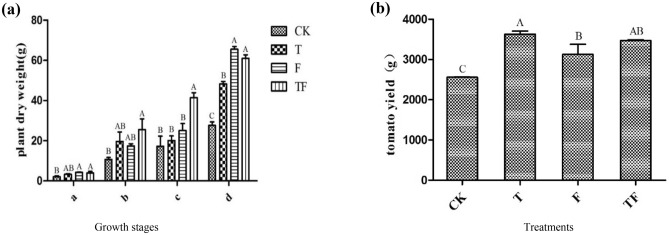
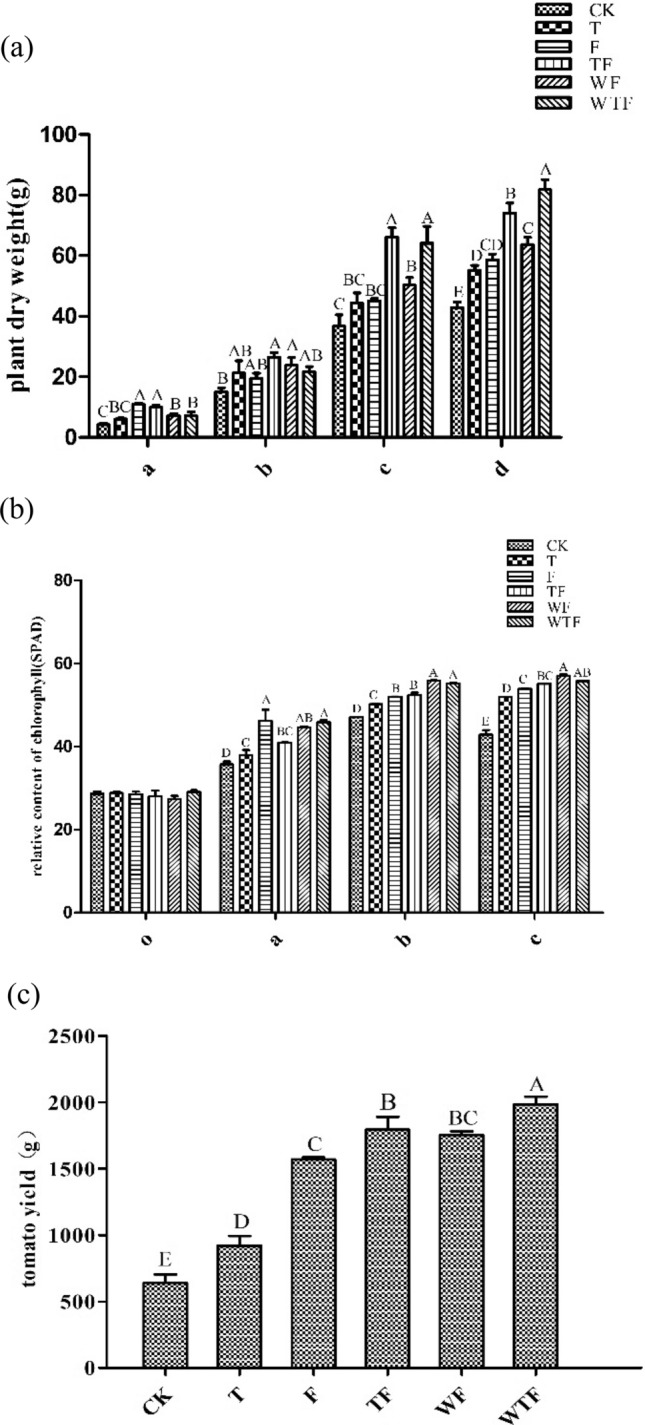
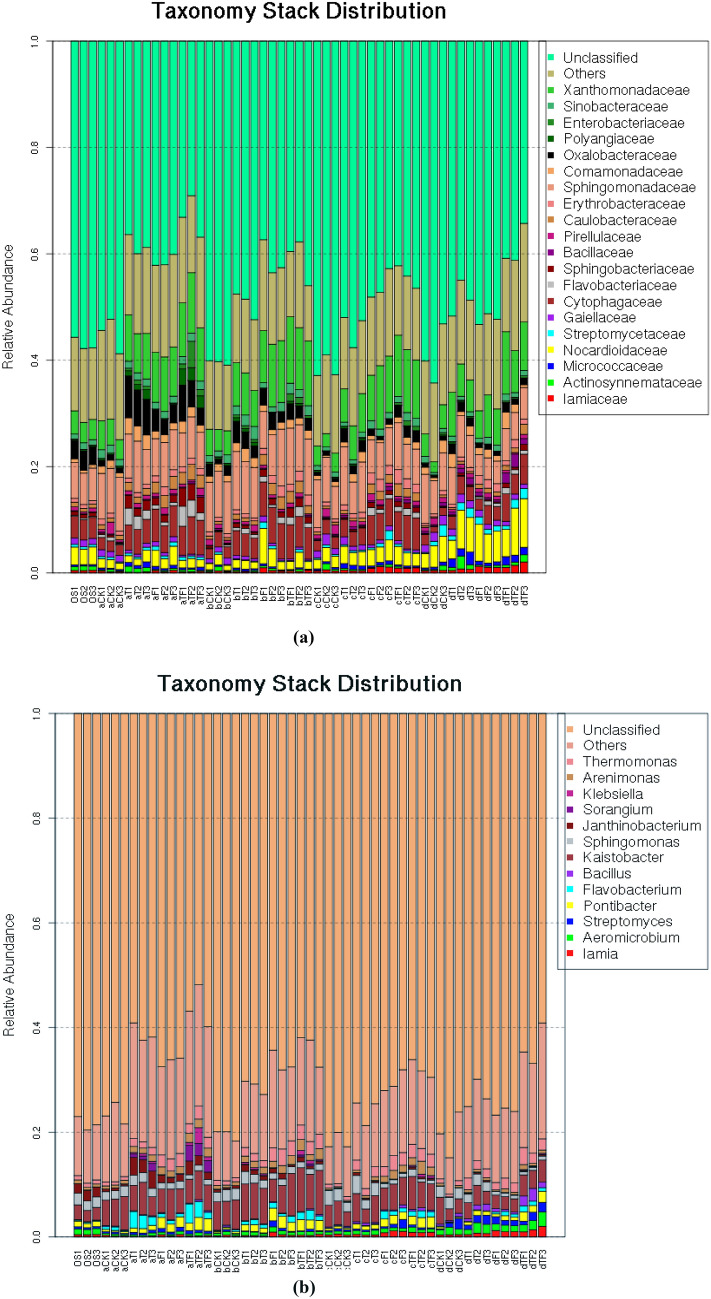
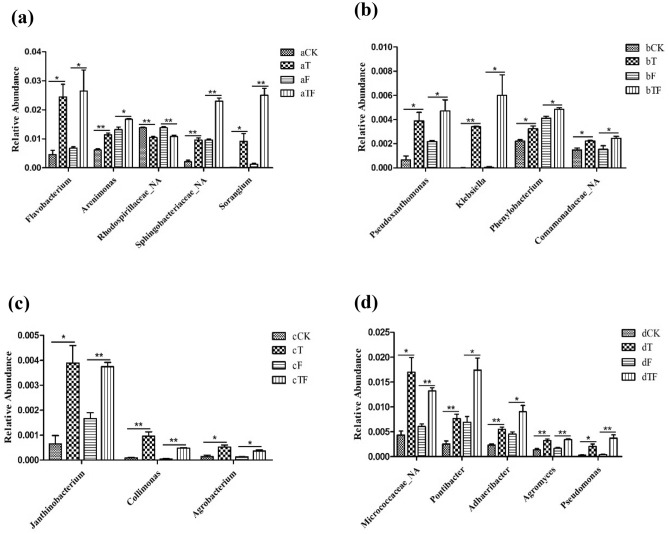
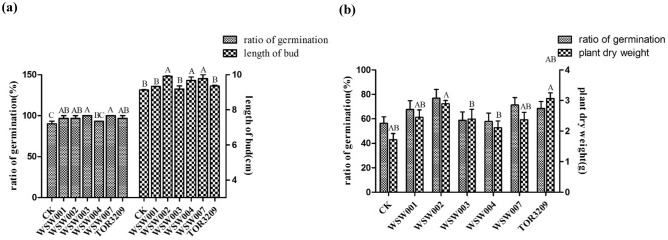
Aiming at revealing the possible mechanism of its growth promoting effect on tomato, the correlations among Streptomyces sp. TOR3209 inoculation, rhizobacteriome, and tomato growth/production traits were investigated in this study. By analyses of Illumina sequencing and plate coating, differences in rhizosphere microbial communities were found in different growth stages and distinct inoculation treatments. The plant biomass/fruit yields and relative abundances of families Flavobacteriaceae, Sphingobacteriaceae, Polyangiaceae and Enterobacteriaceae in treatments T (tomato inoculated with TOR3209) and TF (tomato inoculated with TOR3209 + organic fertilizer) were higher than that in the controls (CK and CK+ organic fertilizer), respectively. The analysis of Metastats and LEfSe revealed that the genera Flavobacterium and Sorangium in seedling stage, Klebsiella in flowering stage, Collimonas in early fruit setting stage, and genera Micrococcaceae, Pontibacte and Adhaeribacter in late fruit setting stage were the most representative rhizobacteria that positively responded to TOR3209 inoculation. By cultivation method, five bacterial strains positively correlated to TOR3209 inoculation were isolated from rhizosphere and root endosphere, which were identified as tomato growth promoters affiliated to Enterobacter sp., Arthrobacter sp., Bacillus subtilis, Rhizobium sp. and Bacillus velezensis. In pot experiment, TOR3209 and B. velezensis WSW007 showed joint promotion to tomato production, while the abundance of inoculated TOR3209 was dramatically decreased in rhizosphere along the growth of tomato. Conclusively, TOR3209 might promote the tomato production via changing of microbial community in rhizosphere. These findings provide a better understanding of the interactions among PGPR in plant promotion.
本研究旨在揭示其对番茄促生作用的可能机制,考察了链霉菌 TOR3209 接种、根际微生物组和番茄生长/生产特性之间的相关性。通过 Illumina 测序和平板涂布分析,发现不同生长阶段和不同接种处理的根际微生物群落存在差异。处理 T(接种 TOR3209 的番茄)和 TF(接种 TOR3209+有机肥的番茄)的植株生物量/果实产量和黄杆菌科、鞘氨醇单胞菌科、多粘菌科和肠杆菌科的相对丰度均高于对照(CK 和 CK+有机肥)。Metastats 和 LEfSe 分析表明,在幼苗期,Flavobacterium 和 Sorangium 属,开花期的 Klebsiella 属,早期坐果期的 Collimonas 属,以及后期坐果期的 Micrococcaceae、Pontibacte 和 Adhaeribacter 属是对 TOR3209 接种反应最具代表性的根际细菌。通过培养法,从根际和根内皮分离出与 TOR3209 接种呈正相关的 5 株细菌,鉴定为与 Enterobacter sp.、Arthrobacter sp.、枯草芽孢杆菌、根瘤菌属和 Bacillus velezensis 相关的番茄生长促进剂。在盆栽试验中,TOR3209 和 B. velezensis WSW007 对番茄生产有协同促进作用,而随着番茄生长,接种的 TOR3209 在根际的丰度显著降低。综上所述,TOR3209 可能通过改变根际微生物群落促进番茄的生长。这些发现为深入了解植物促生菌之间的相互作用提供了更好的认识。