Seminotti Bianca, Grings Mateus, Tucci Paolo, Leipnitz Guilhian, Saso Luciano
Postgraduate Program in Biological Sciences: Biochemistry, Department of Biochemistry, Institute of Basic Health Sciences, Universidade Federal do Rio Grande do Sul, Porto Alegre, Brazil.
Department of Clinical and Experimental Medicine, University of Foggia, Foggia, Italy.
Front Cell Neurosci. 2021 Nov 26;15:785057. doi: 10.3389/fncel.2021.785057. eCollection 2021.
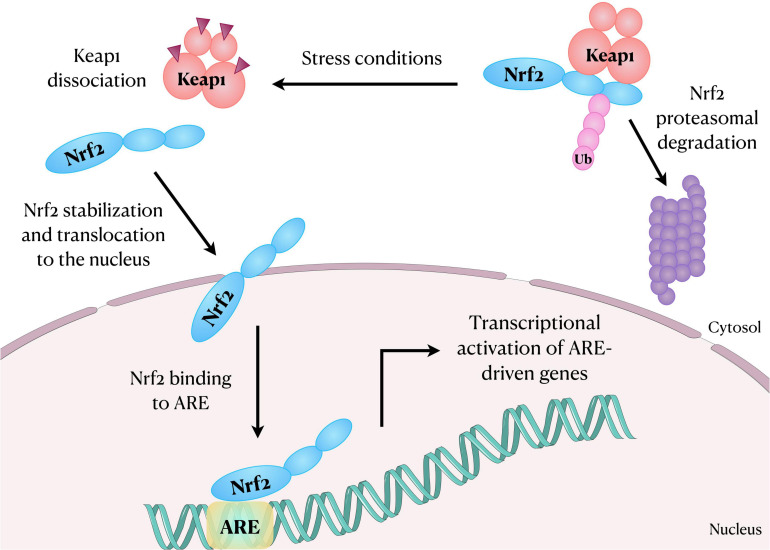
Inherited metabolic disorders (IMDs) are rare genetic conditions that affect multiple organs, predominantly the central nervous system. Since treatment for a large number of IMDs is limited, there is an urgent need to find novel therapeutical targets. Nuclear factor erythroid-2-related factor 2 (Nrf2) is a transcription factor that has a key role in controlling the intracellular redox environment by regulating the expression of antioxidant enzymes and several important genes related to redox homeostasis. Considering that oxidative stress along with antioxidant system alterations is a mechanism involved in the neuropathophysiology of many IMDs, this review focuses on the current knowledge about Nrf2 signaling dysregulation observed in this group of disorders characterized by neurological dysfunction. We review here Nrf2 signaling alterations observed in X-linked adrenoleukodystrophy, glutaric acidemia type I, hyperhomocysteinemia, and Friedreich's ataxia. Additionally, beneficial effects of different Nrf2 activators are shown, identifying a promising target for treatment of patients with these disorders. We expect that this article stimulates research into the investigation of Nrf2 pathway involvement in IMDs and the use of potential pharmacological modulators of this transcription factor to counteract oxidative stress and exert neuroprotection.
遗传性代谢紊乱(IMDs)是一类罕见的遗传疾病,会影响多个器官,主要是中枢神经系统。由于大量IMDs的治疗方法有限,因此迫切需要找到新的治疗靶点。核因子红细胞2相关因子2(Nrf2)是一种转录因子,通过调节抗氧化酶和一些与氧化还原稳态相关的重要基因的表达,在控制细胞内氧化还原环境中起关键作用。鉴于氧化应激以及抗氧化系统改变是许多IMDs神经病理生理学所涉及的一种机制,本综述聚焦于在以神经功能障碍为特征的这组疾病中观察到的Nrf2信号失调的现有知识。我们在此回顾在X连锁肾上腺脑白质营养不良、I型戊二酸血症、高同型半胱氨酸血症和弗里德赖希共济失调中观察到的Nrf2信号改变。此外,还展示了不同Nrf2激活剂的有益作用,确定了治疗这些疾病患者的一个有前景的靶点。我们期望本文能激发对Nrf2通路参与IMDs的研究,以及使用该转录因子的潜在药理学调节剂来对抗氧化应激并发挥神经保护作用。