Department of Cardiology, Shengjing Hospital of China Medical University, Shenyang, Liaoning, China.
Department of Pulmonary and Critical Care Medicine, Shengjing Hospital of China Medical University, Shenyang, Liaoning, China.
Cardiovasc Ther. 2020 Nov 10;2020:8535314. doi: 10.1155/2020/8535314. eCollection 2020.
Myocardial infarction (MI) is the most terrible appearance of cardiovascular disease. The incidence of heart failure, one of the complications of MI, has increased in the past few decades. Therefore, the identification of MI from angina patients and the determination of new diagnoses and therapies of MI are increasingly important. The present study was aimed at identifying differentially expressed genes and miRNAs as biomarkers for the clinical and prognosis factors of MI compared with angina using microarray data analysis.
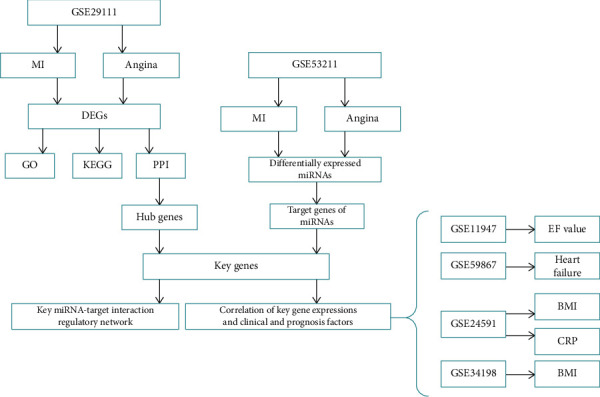
Differentially expressed miRNAs and genes were manifested by GEO2R. The biological function of differentially expressed genes (DEGs) was examined by GO and KEGG. The construction of a protein-protein network was explored by STRING. cytoHubba was utilized to screen hub genes. Analysis of miRNA-gene pairs was executed by the miRWalk 3.0 database. The miRNA-target pairs overlapped with hub genes were seen as key genes. Logistic regressive analysis was performed by SPSS.
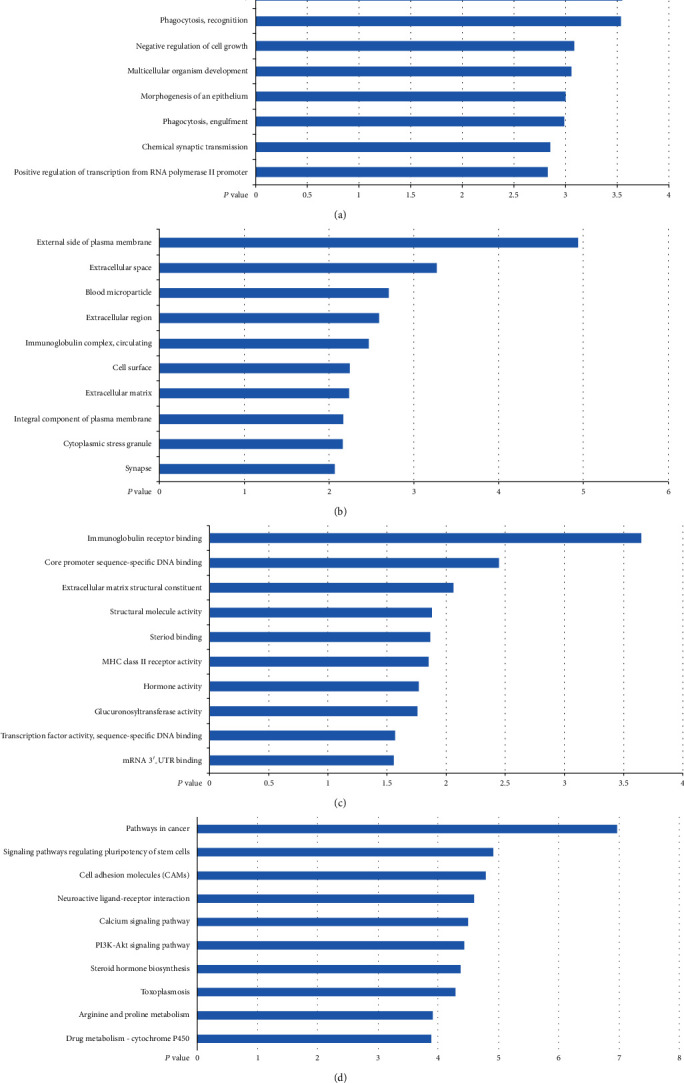
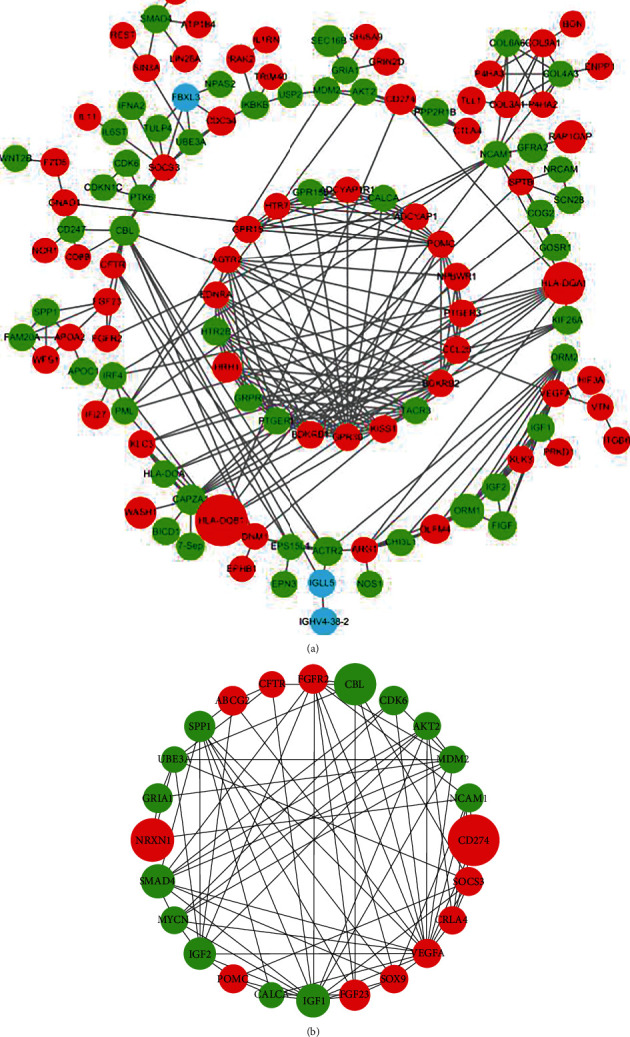
A number of 779 DEGs were recorded. The biological function containing extracellular components, signaling pathways, and cell adhesion was enriched. Twenty-four hub genes and three differentially expressed miRNAs were noted. Eight key genes were demonstrated, and 6 out of these 8 key genes were significantly related to clinical and prognosis factors following MI.
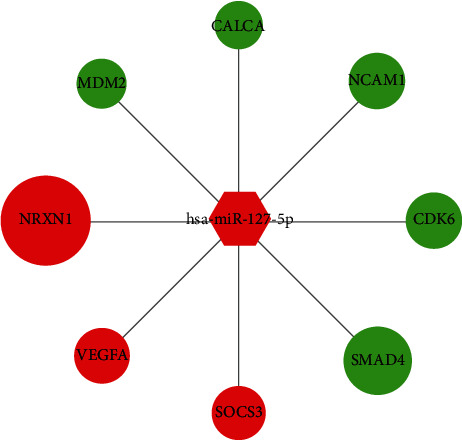
CALCA, CDK6, MDM2, NRXN1, SOCS3, VEGFA, SMAD4, NCAM1, and hsa-miR-127-5p were thought to be potential diagnosis biomarkers for MI. Meanwhile, CALCA, CDK6, NRXN1, SMAD4, SOCS3, and NCAM1 were further identified to be potential diagnosis and therapy targets for MI.
心肌梗死(MI)是心血管疾病最可怕的表现。MI 并发症之一心力衰竭的发病率在过去几十年中有所增加。因此,识别心绞痛患者中的 MI 并确定 MI 的新诊断和治疗方法变得越来越重要。本研究旨在通过微阵列数据分析,鉴定差异表达的基因和 miRNA,作为 MI 临床和预后因素的生物标志物。
GEO2R 显示差异表达的 miRNA 和基因。GO 和 KEGG 分析差异表达基因(DEGs)的生物学功能。STRING 探索蛋白质-蛋白质网络的构建。cytoHubba 用于筛选枢纽基因。miRWalk 3.0 数据库分析 miRNA-基因对。与枢纽基因重叠的 miRNA-靶对被视为关键基因。SPSS 进行逻辑回归分析。
共记录了 779 个 DEGs。富含细胞外成分、信号通路和细胞黏附的生物学功能。发现 24 个枢纽基因和 3 个差异表达的 miRNA。得出 8 个关键基因,其中 6 个关键基因与 MI 后的临床和预后因素显著相关。
CALCA、CDK6、MDM2、NRXN1、SOCS3、VEGFA、SMAD4、NCAM1 和 hsa-miR-127-5p 被认为是 MI 的潜在诊断生物标志物。同时,CALCA、CDK6、NRXN1、SMAD4、SOCS3 和 NCAM1 进一步被确定为 MI 的潜在诊断和治疗靶点。