Wang Ying, Leppert Axel, Tan Shuai, van der Gaag Bram, Li Nailin, Schultzberg Marianne, Hjorth Erik
Department of Neurobiology, Care Sciences & Society, Division of Neurogeriatrics, Karolinska Institutet, Solna, Sweden.
Department of Biosciences and Nutrition, Karolinska Institutet, Huddinge, Sweden.
J Cell Mol Med. 2021 Jan;25(1):434-447. doi: 10.1111/jcmm.16098. Epub 2020 Nov 22.
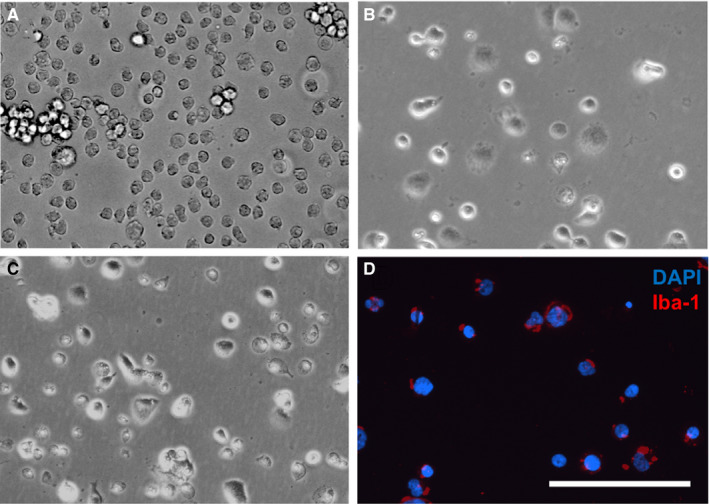
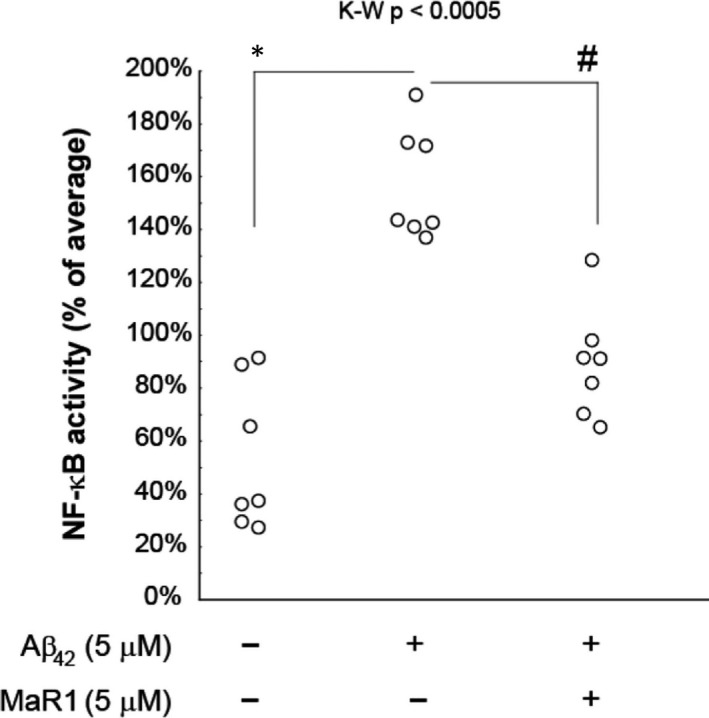
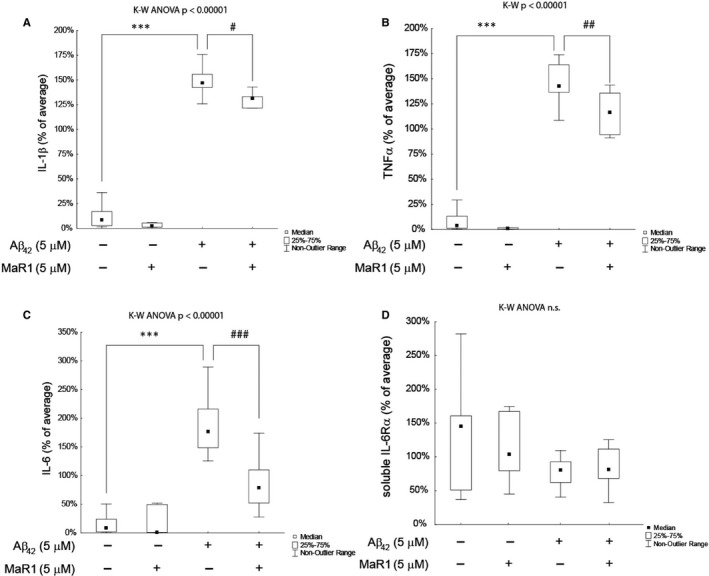
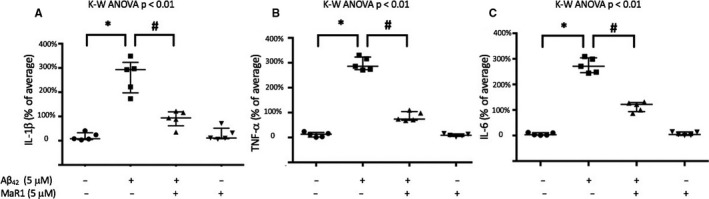
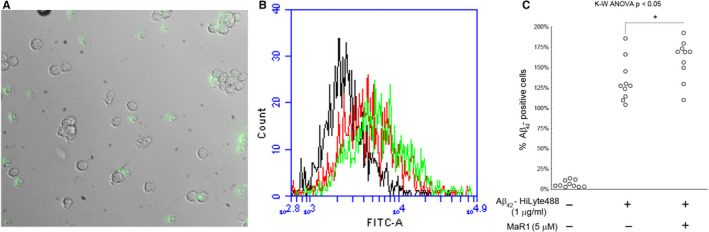
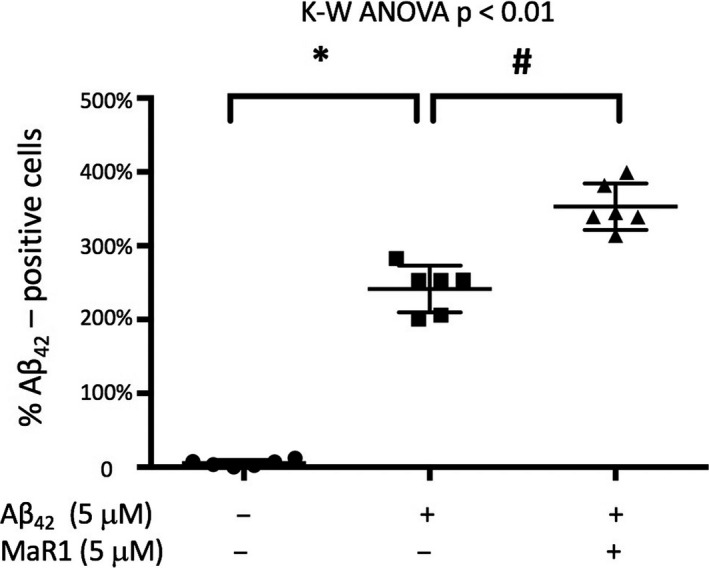
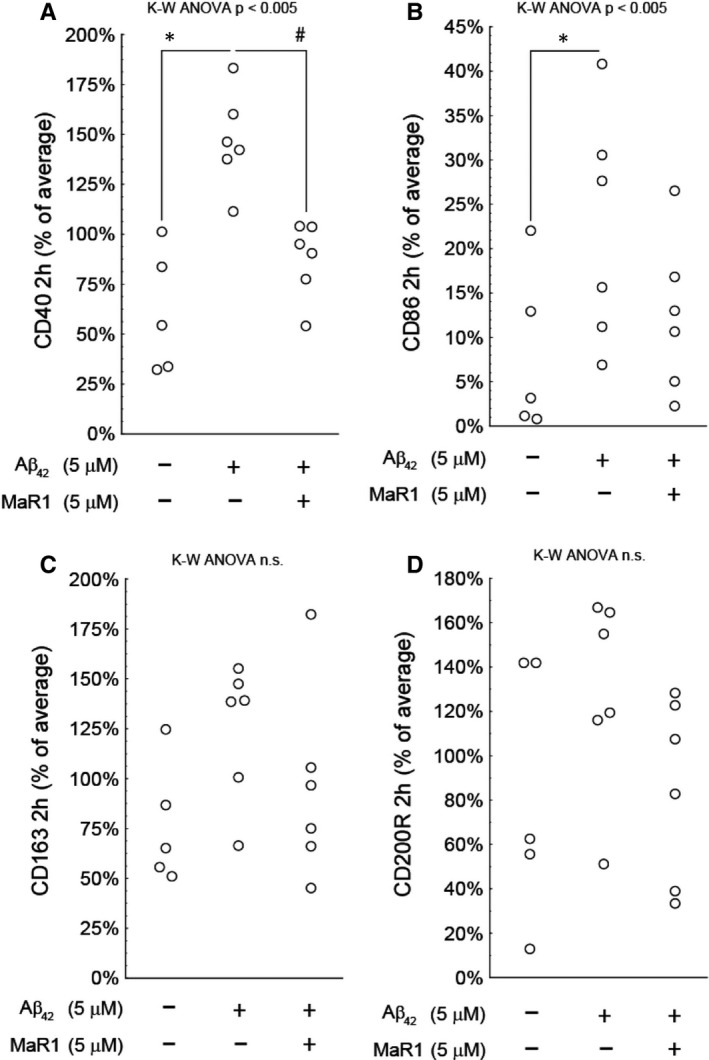
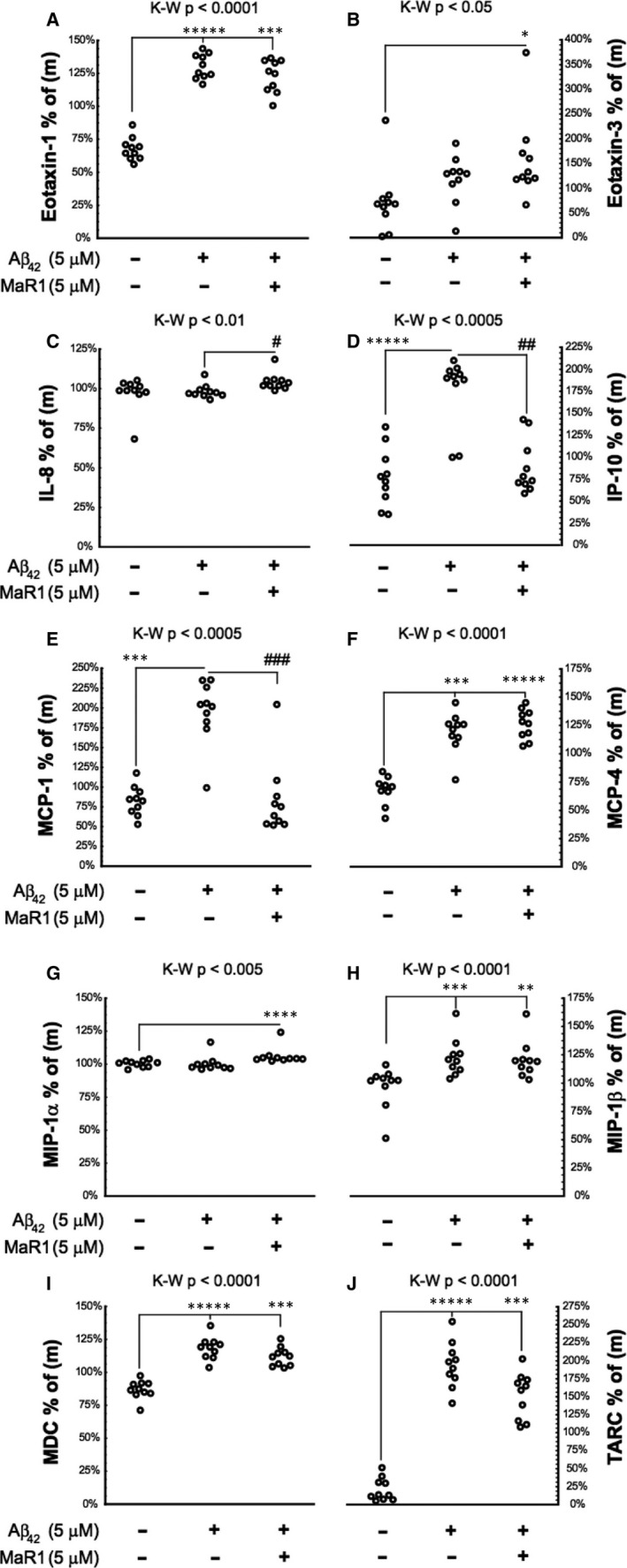
Alzheimer's disease (AD) is the most common dementia, characterized by pathological accumulation of β-amyloid (Aβ) and hyperphosphorylation of tau protein, together with a damaging chronic inflammation. The lack of effective treatments urgently warrants new therapeutic strategies. Resolution of inflammation, associated with beneficial and regenerative activities, is mediated by specialized pro-resolving lipid mediators (SPMs) including maresin 1 (MaR1). Decreased levels of MaR1 have been observed in AD brains. However, the pro-resolving role of MaR1 in AD has not been fully investigated. In the present study, human monocyte-derived microglia (MdM) and a differentiated human monocyte cell line (THP-1 cells) exposed to Aβ were used as models of AD neuroinflammation. We have studied the potential of MaR1 to inhibit pro-inflammatory activation of Aβ and assessed its ability to stimulate phagocytosis of Aβ . MaR1 inhibited the Aβ -induced increase in cytokine secretion and stimulated the uptake of Aβ in both MdM and differentiated THP-1 cells. MaR1 was also found to decrease chemokine secretion and reduce the associated increase in the activation marker CD40. Activation of kinases involved in transduction of inflammation was not affected by MaR1, but the activity of nuclear factor (NF)-κB was decreased. Our data show that MaR1 exerts effects that indicate a pro-resolving role in the context of AD and thus presents itself as a potential therapeutic target for AD.
阿尔茨海默病(AD)是最常见的痴呆症,其特征是β-淀粉样蛋白(Aβ)的病理性积累、tau蛋白的过度磷酸化以及具有破坏性的慢性炎症。由于缺乏有效的治疗方法,迫切需要新的治疗策略。炎症的消退与有益和再生活动相关,由包括maresin 1(MaR1)在内的特异性促消退脂质介质(SPM)介导。在AD脑内已观察到MaR1水平降低。然而,MaR1在AD中的促消退作用尚未得到充分研究。在本研究中,将暴露于Aβ的人单核细胞衍生的小胶质细胞(MdM)和分化的人单核细胞系(THP-1细胞)用作AD神经炎症模型。我们研究了MaR1抑制Aβ促炎激活的潜力,并评估了其刺激Aβ吞噬作用的能力。MaR1抑制了Aβ诱导的细胞因子分泌增加,并刺激了MdM和分化的THP-1细胞对Aβ的摄取。还发现MaR1可减少趋化因子分泌,并降低相关的激活标志物CD40的增加。参与炎症转导的激酶激活不受MaR1影响,但核因子(NF)-κB的活性降低。我们的数据表明,MaR1发挥的作用表明其在AD背景下具有促消退作用,因此可作为AD的潜在治疗靶点。