Center of Pain Management, Department of Anesthesiology, Pain and Perioperative Medicine, The First Affiliated Hospital of Zhengzhou University, Zhengzhou, 450052, China.
Outpatient and Emergency Department of West District Hospital, Children's Hospital Affiliated to Zhengzhou University, Zhengzhou, 450018, China.
Mol Med. 2020 Nov 23;26(1):113. doi: 10.1186/s10020-020-00232-9.
Postherpetic neuralgia (PHN) is the most common complication of herpes zoster, but the mechanism of PHN is still unclear. Activation of spinal astrocytes is involved in PHN. Our study aims to explore whether lncRNA KCNA2 antisense RNA (KCNA2-AS) regulates spinal astrocytes in PHN through signal transducers and activators of transcription 3 (STAT3).
Varicella zoster virus (VZV)-infected CV-1 cells were injected into rats to construct a PHN model. Primary spinal cord astrocytes were activated using S-Nitrosoglutathione (GSNO). Glial fibrillary acidic protein (GFAP; marker of astrocyte activation), phosphorylated STAT3 (pSTAT3), and KCNA2-AS were analyzed by immunofluorescence and RNA fluorescence in situ hybridization. RNA pull-down and RNA immunoprecipitation were used to detect binding of KCNA2-AS to pSTAT3.
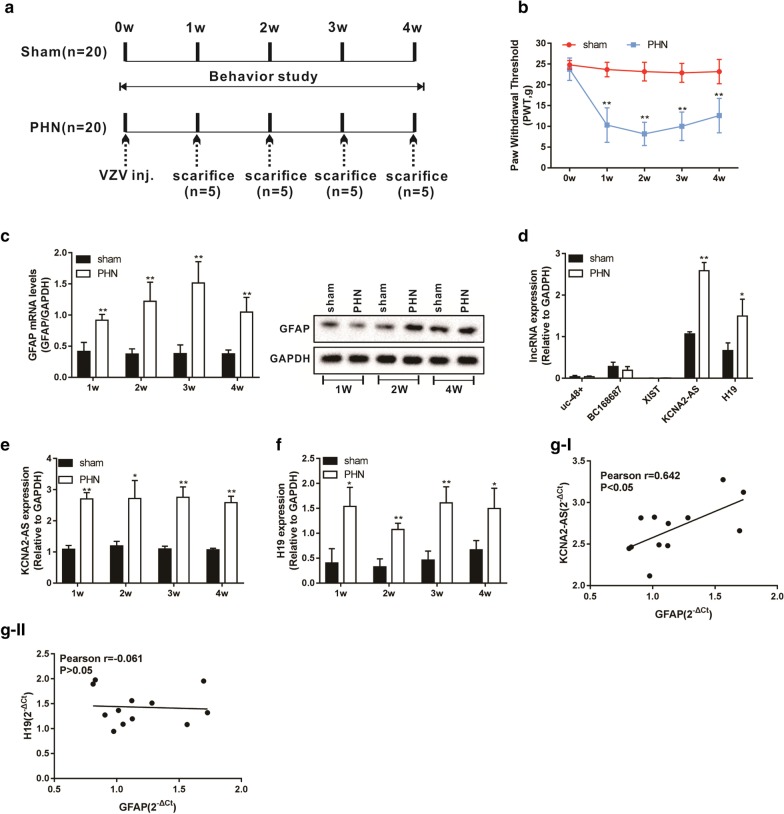
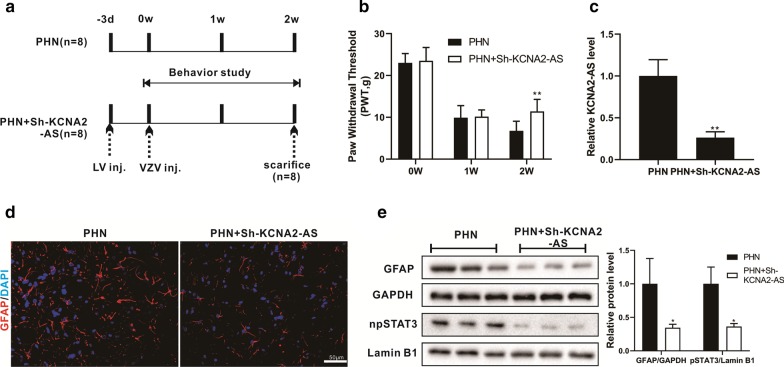
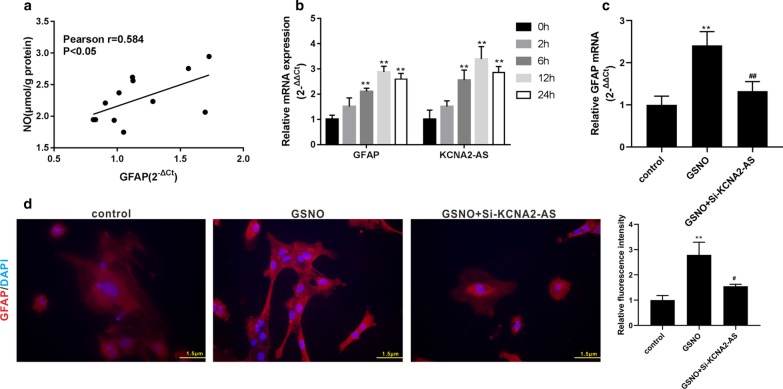
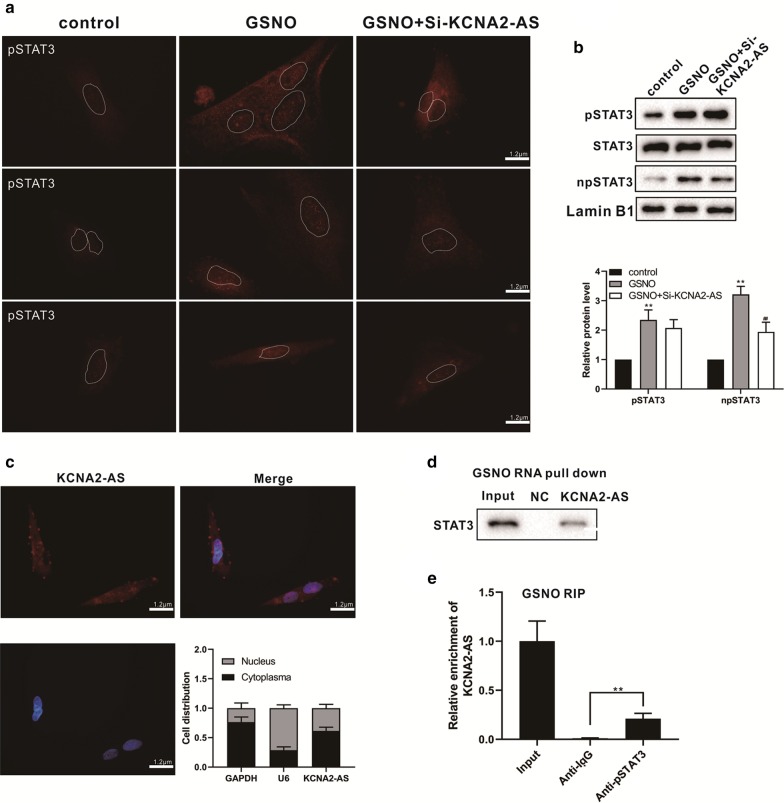
KCNA2-AS was highly expressed in the spinal cord tissue of PHN model rats, and was positively correlated with GFAP expression. GFAP was significantly increased in GSNO-induced cells, but the knockdown of KCNA2-AS reversed this result. Meanwhile, pSTAT3 was significantly increased in GSNO-induced cells, but knockdown of KCNA2-AS reduced pSTAT3 within the nucleus while the total pSTAT3 did not change significantly. pSTAT3 bound to KCNA2-AS and this binding increased with GSNO treatment. Furthermore, knockdown of KCNA2-AS in PHN model rats relieved mechanical allodynia.
Down-regulation of KCNA2-AS alleviates PHN partly by reducing the translocation of pSTAT3 cytoplasm to the nucleus and then inhibiting the activation of spinal astrocytes.
带状疱疹后神经痛(PHN)是带状疱疹最常见的并发症,但 PHN 的发病机制尚不清楚。脊髓星形胶质细胞的激活参与了 PHN 的发生。本研究旨在探讨长链非编码 RNA KCNA2 反义 RNA(KCNA2-AS)是否通过信号转导和转录激活因子 3(STAT3)调节 PHN 中的脊髓星形胶质细胞。
将单纯疱疹病毒(VZV)感染的 CV-1 细胞注射到大鼠体内构建 PHN 模型。使用 S-亚硝基谷胱甘肽(GSNO)激活原代脊髓星形胶质细胞。通过免疫荧光和 RNA 荧光原位杂交分析神经胶质纤维酸性蛋白(GFAP;星形胶质细胞激活标志物)、磷酸化 STAT3(pSTAT3)和 KCNA2-AS。采用 RNA 下拉和 RNA 免疫沉淀检测 KCNA2-AS 与 pSTAT3 的结合。
PHN 模型大鼠脊髓组织中 KCNA2-AS 表达水平升高,与 GFAP 表达呈正相关。GSNO 诱导的细胞中 GFAP 明显增加,但 KCNA2-AS 的敲低逆转了这一结果。同时,GSNO 诱导的细胞中 pSTAT3 明显增加,但 KCNA2-AS 的敲低减少了细胞核内的 pSTAT3,而总 pSTAT3 变化不明显。pSTAT3 与 KCNA2-AS 结合,这种结合随 GSNO 处理而增加。此外,PHN 模型大鼠中 KCNA2-AS 的敲低减轻了机械性痛觉过敏。
下调 KCNA2-AS 部分缓解 PHN,可能是通过减少 pSTAT3 从细胞质向细胞核易位,从而抑制脊髓星形胶质细胞的激活。