Centre for Organismal Studies, Heidelberg University, Heidelberg, Germany.
Computational Molecular Evolution Group, Heidelberg Institute for Theoretical Studies, Heidelberg, Germany.
Mol Biol Evol. 2021 May 4;38(5):1744-1760. doi: 10.1093/molbev/msaa304.
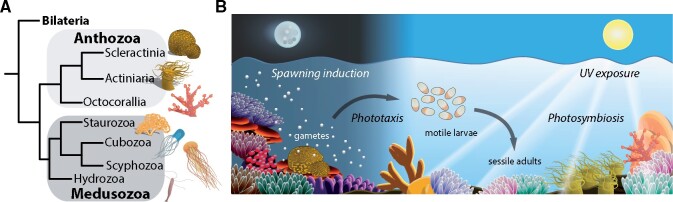
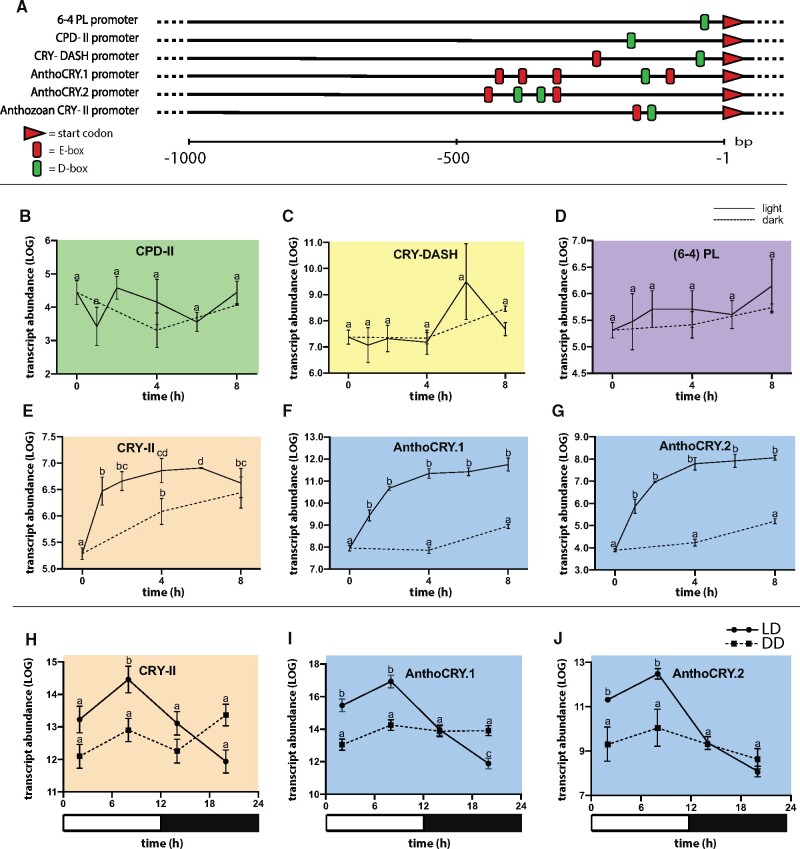
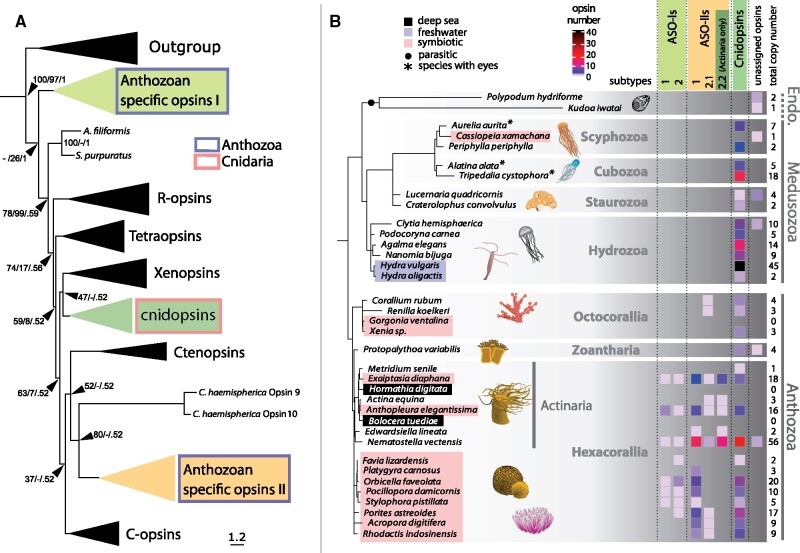
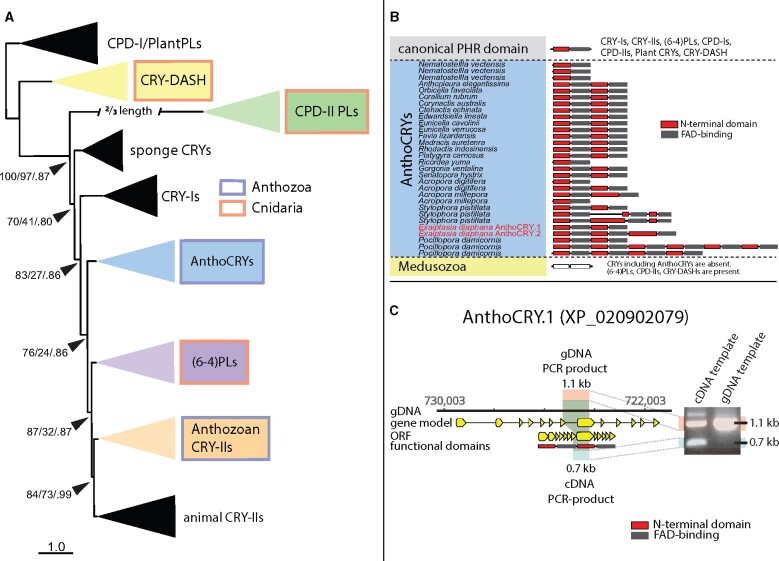
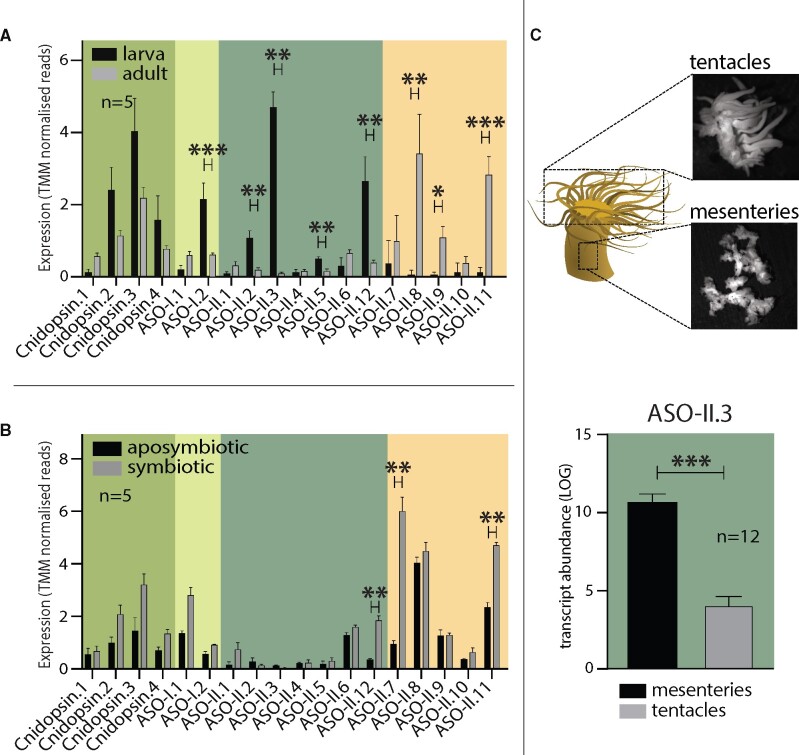
Anthozoan corals are an ecologically important group of cnidarians, which power the productivity of reef ecosystems. They are sessile, inhabit shallow, tropical oceans and are highly dependent on sun- and moonlight to regulate sexual reproduction, phototaxis, and photosymbiosis. However, their exposure to high levels of sunlight also imposes an increased risk of UV-induced DNA damage. How have these challenging photic environments influenced photoreceptor evolution and function in these animals? To address this question, we initially screened the cnidarian photoreceptor repertoire for Anthozoa-specific signatures by a broad-scale evolutionary analysis. We compared transcriptomic data of more than 36 cnidarian species and revealed a more diverse photoreceptor repertoire in the anthozoan subphylum than in the subphylum Medusozoa. We classified the three principle opsin classes into distinct subtypes and showed that Anthozoa retained all three classes, which diversified into at least six subtypes. In contrast, in Medusozoa, only one class with a single subtype persists. Similarly, in Anthozoa, we documented three photolyase classes and two cryptochrome (CRY) classes, whereas CRYs are entirely absent in Medusozoa. Interestingly, we also identified one anthozoan CRY class, which exhibited unique tandem duplications of the core functional domains. We next explored the functionality of anthozoan photoreceptors in the model species Exaiptasia diaphana (Aiptasia), which recapitulates key photo-behaviors of corals. We show that the diverse opsin genes are differentially expressed in important life stages common to reef-building corals and Aiptasia and that CRY expression is light regulated. We thereby provide important clues linking coral evolution with photoreceptor diversification.
造礁石珊瑚是刺胞动物门中生态上非常重要的一个类群,它们为珊瑚礁生态系统的生产力提供动力。它们是固着生物,栖息在浅海热带海洋中,高度依赖阳光和月光来调节有性繁殖、趋光性和共生光合作用。然而,它们暴露在高水平的阳光下也会增加紫外线诱导的 DNA 损伤的风险。这些具有挑战性的光环境如何影响这些动物的光感受器进化和功能?为了解决这个问题,我们首先通过广泛的进化分析筛选了珊瑚动物光感受器的 Anthozoa 特异性特征。我们比较了超过 36 种刺胞动物物种的转录组数据,揭示了 Anthozoa 亚门的光感受器谱比 Medusozoa 亚门更加多样化。我们将这三种主要的视蛋白类分为不同的亚型,并表明 Anthozoa 保留了所有三种类,它们多样化为至少六种亚型。相比之下,在 Medusozoa 中,只有一种单一亚型的类存在。同样,在 Anthozoa 中,我们记录了三种光裂合酶类和两种隐花色素(CRY)类,而 Medusozoa 中完全没有 CRY。有趣的是,我们还鉴定了一种 Anthozoa CRY 类,其核心功能域具有独特的串联重复。接下来,我们探索了模型物种 Exaiptasia diaphana(Aiptasia)中 Anthozoa 光感受器的功能,该模型再现了珊瑚的关键光行为。我们表明,多样化的视蛋白基因在造礁珊瑚和 Aiptasia 的重要生命阶段中差异表达,并且 CRY 表达受光照调节。因此,我们提供了将珊瑚进化与光感受器多样化联系起来的重要线索。