Department of Joint Surgery, The Affiliated Hospital of Qingdao University, Qingdao, 266000, Shandong, China.
Wuhan Fourth Hospital; Puai Hospital, Tongji Medical College, Huazhong University of Science and Technology, Wuhan, Hubei, China.
BMC Musculoskelet Disord. 2020 Nov 24;21(1):775. doi: 10.1186/s12891-020-03803-3.
The major causes of failure after total knee arthroplasty (TKA) include prosthesis loosening and infection. This study aimed to investigate the role of carboxymethyl chitosan (CMC) in knee arthroplasty.
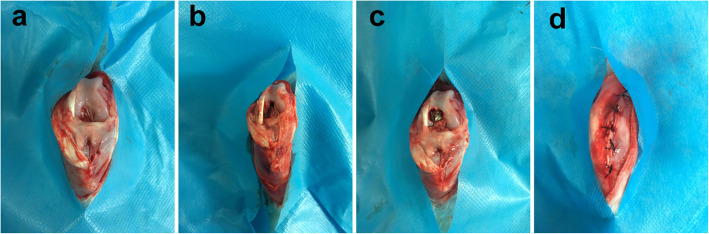
A total of 20 New Zealand white rabbits that were divided into two groups (10 in the control group and 10 in the chitosan group) were included in the study. They underwent TKA surgery, and all were implanted with titanium rod prostheses; the prosthesis in the chitosan group was coated with CMC. After 12 weeks, all rabbits were euthanized, and the following analyses of some specific surface membrane tissues around the prosthesis were performed: X-ray analysis; micro-computed tomography scan; haematoxylin and eosin, Van Gieson, and Von Kossa staining; reverse transcription polymerase chain reaction; and Western Blotting.
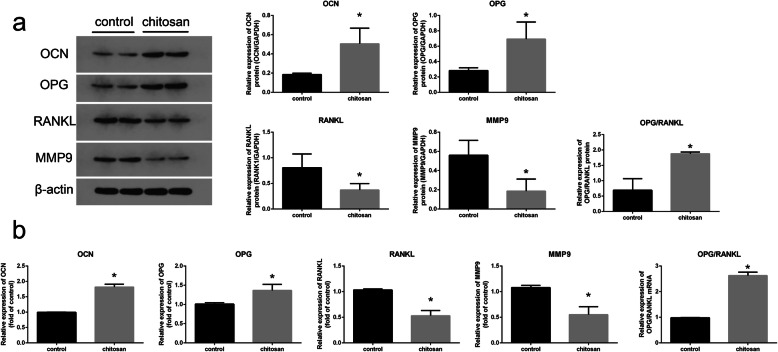
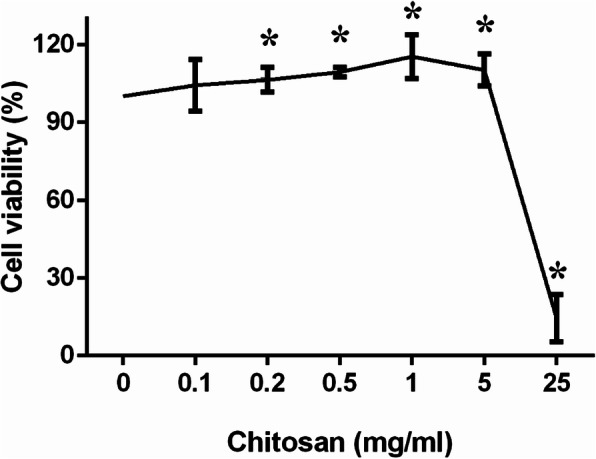
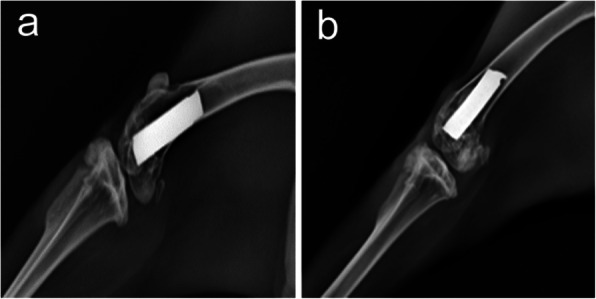
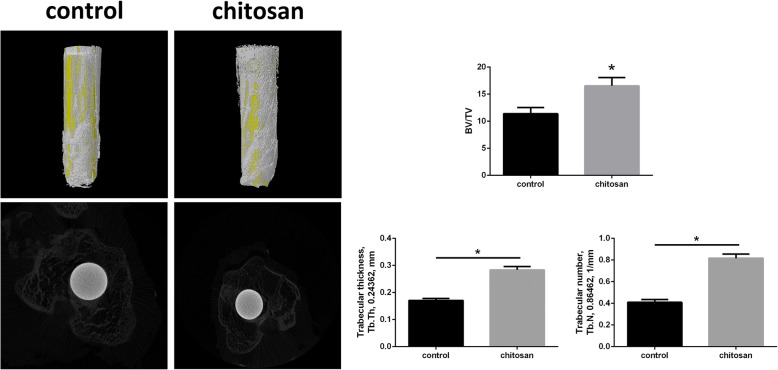
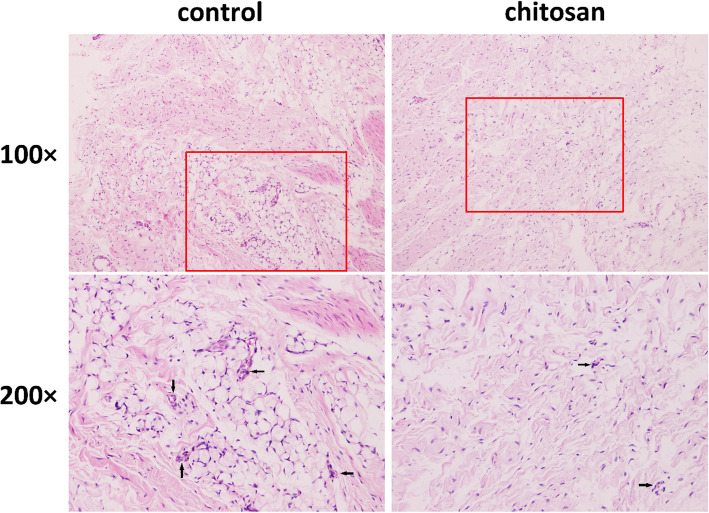
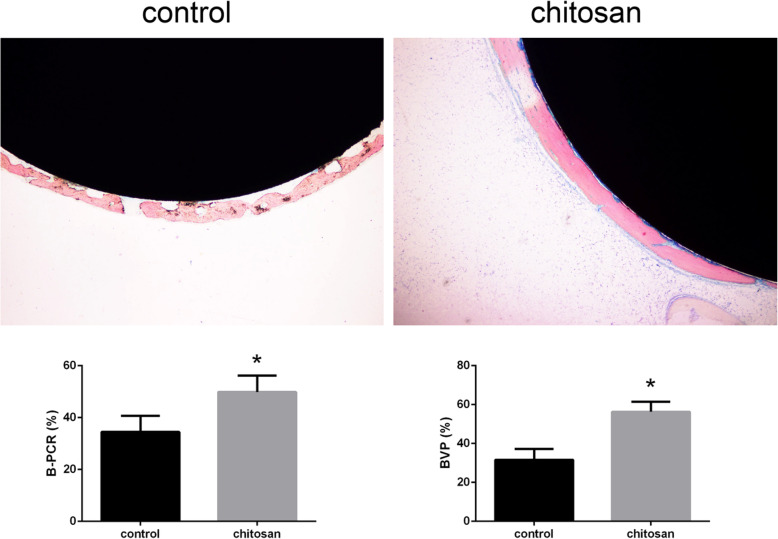
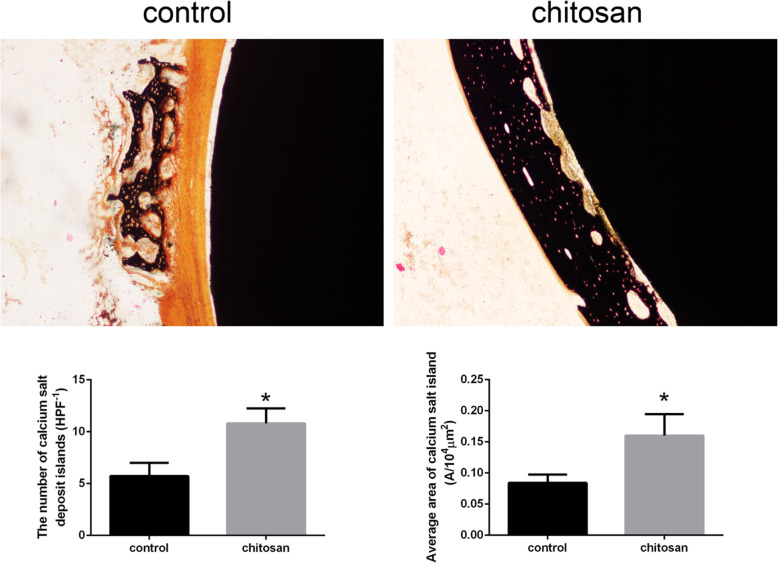
The result of CCK8 test showed CMC can promote cell proliferation and increase cell viability. Radiological result showed better amount of bone deposits and more bone formation in the chitosan group. HE staining result showed CMC reduces inflammation around the prosthesis. The VG and Von Kossa staining results showed CMC can promote bone deposition around prosthesis. And according to the results of PCR and WB, the OCN content was higher in the chitosan group, while the MMPs content was lower. The chitosan group has an increased OPG/RANKL ratio than the control group.
CMC can effectively inhibit the inflammatory response around the prosthesis and osteoclast activation and promote osteogenesis by interfering with the osteoprotegerin/receptor activator of nuclear factor kappa-Β ligand/receptor activator of nuclear factor kappa-Β signalling pathway.
全膝关节置换术(TKA)后失败的主要原因包括假体松动和感染。本研究旨在探讨羧甲基壳聚糖(CMC)在膝关节置换术中的作用。
共纳入 20 只新西兰大白兔,分为两组(对照组 10 只,壳聚糖组 10 只)。所有动物均行 TKA 手术,均植入钛棒假体;壳聚糖组假体表面涂覆 CMC。术后 12 周处死所有兔子,对假体周围部分特定的表面膜组织进行如下分析:X 射线分析;微计算机断层扫描;苏木精和伊红、VG、Von Kossa 染色;逆转录聚合酶链反应;Western 印迹。
CCK8 试验结果显示 CMC 可促进细胞增殖,提高细胞活力。影像学结果显示壳聚糖组有更多的骨沉积和更好的骨形成。HE 染色结果显示 CMC 可减轻假体周围的炎症。VG 和 Von Kossa 染色结果显示 CMC 可促进假体周围的骨沉积。根据 PCR 和 WB 的结果,壳聚糖组的 OCN 含量较高,而 MMPs 含量较低。壳聚糖组的 OPG/RANKL 比值高于对照组。
CMC 可通过干扰核因子κB 配体/核因子κB 受体激活剂/核因子κB 受体激活剂信号通路有效抑制假体周围的炎症反应和破骨细胞激活,促进成骨。