Development, Aging & Regeneration Program, Sanford Burnham Prebys Medical Discovery Institute, 10901 N. Torrey Pines Rd., La Jolla, CA 92037, USA.
Department of Bioengineering, University of California, San Diego, 9500 Gilman Drive, La Jolla, CA 92093, USA.
Cell Rep. 2020 Dec 8;33(10):108445. doi: 10.1016/j.celrep.2020.108445. Epub 2020 Nov 25.
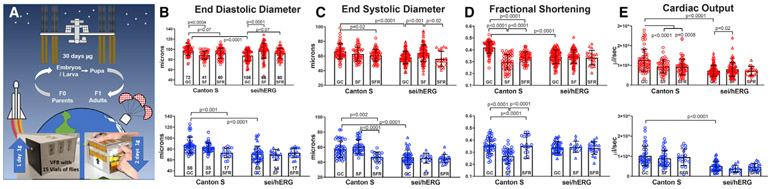
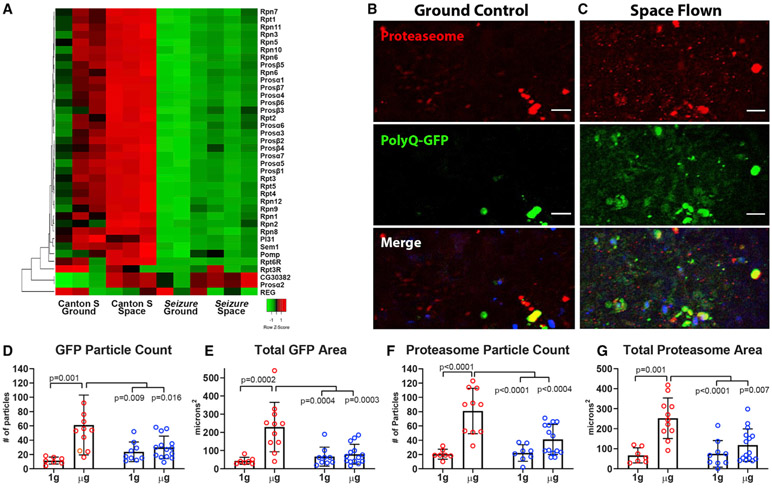
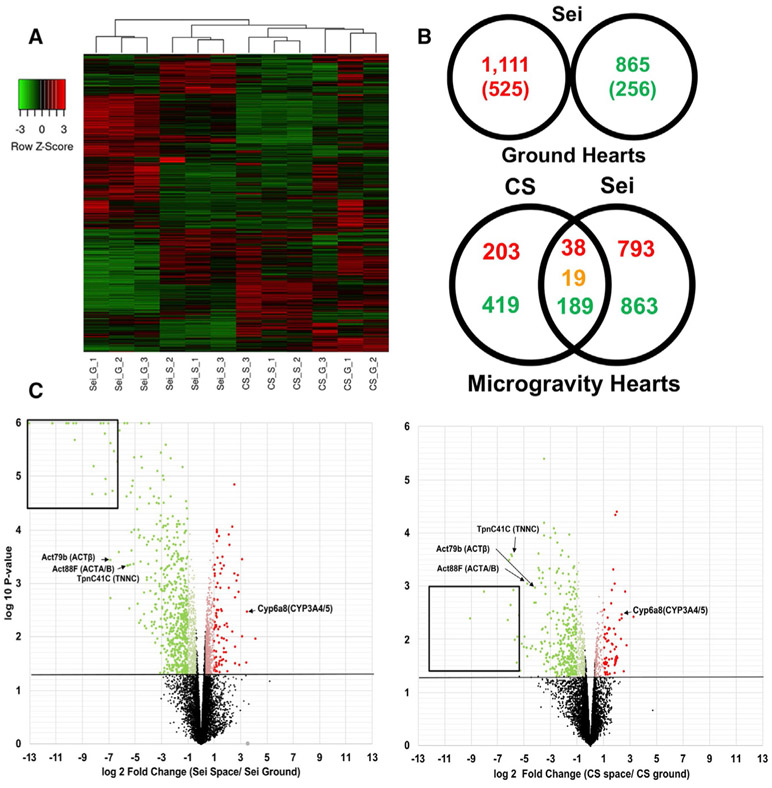
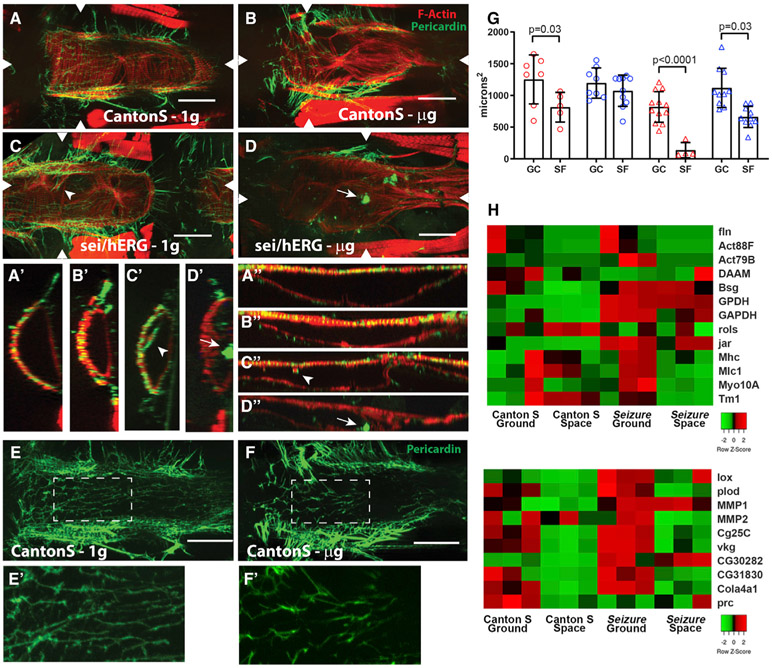
Understanding the effects of microgravity on human organs is crucial to exploration of low-earth orbit, the moon, and beyond. Drosophila can be sent to space in large numbers to examine the effects of microgravity on heart structure and function, which is fundamentally conserved from flies to humans. Flies reared in microgravity exhibit cardiac constriction with myofibrillar remodeling and diminished output. RNA sequencing (RNA-seq) in isolated hearts revealed reduced expression of sarcomeric/extracellular matrix (ECM) genes and dramatically increased proteasomal gene expression, consistent with the observed compromised, smaller hearts and suggesting abnormal proteostasis. This was examined further on a second flight in which we found dramatically elevated proteasome aggregates co-localizing with increased amyloid and polyQ deposits. Remarkably, in long-QT causing sei/hERG mutants, proteasomal gene expression at 1g, although less than the wild-type expression, was nevertheless increased in microgravity. Therefore, cardiac remodeling and proteostatic stress may be a fundamental response of heart muscle to microgravity.
了解微重力对人体器官的影响对于探索近地轨道、月球及更远的地方至关重要。可以将大量果蝇送入太空,以研究微重力对心脏结构和功能的影响,因为从果蝇到人类,心脏结构和功能的基本机制是保守的。在微重力环境中饲养的果蝇表现出心肌收缩、肌原纤维重塑和心输出量减少。分离心脏的 RNA 测序(RNA-seq)显示,肌节/细胞外基质(ECM)基因的表达减少,蛋白酶体基因的表达显著增加,与观察到的心脏受损、变小一致,并表明存在异常的蛋白稳态。在第二次飞行中进一步进行了检查,我们发现蛋白酶体聚集体与增加的淀粉样蛋白和聚 Q 沉积物明显共定位。值得注意的是,在引起长 QT 的 sei/hERG 突变体中,尽管在微重力条件下的表达低于野生型,但蛋白酶体基因的表达仍增加。因此,心脏重塑和蛋白稳态应激可能是心脏肌肉对微重力的基本反应。