Sports Performance Research Institute New Zealand (SPRINZ), Auckland University of Technology, 17 Antares Place, Rosedale, Auckland, 0632, New Zealand.
School of Physical Education, Sport and Exercise Sciences, University of Otago, Dunedin, Otago, 9016, New Zealand.
Mil Med Res. 2020 Nov 29;7(1):58. doi: 10.1186/s40779-020-00287-z.
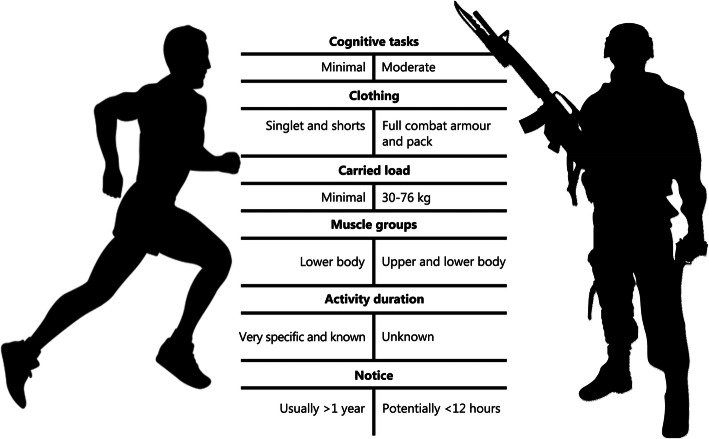
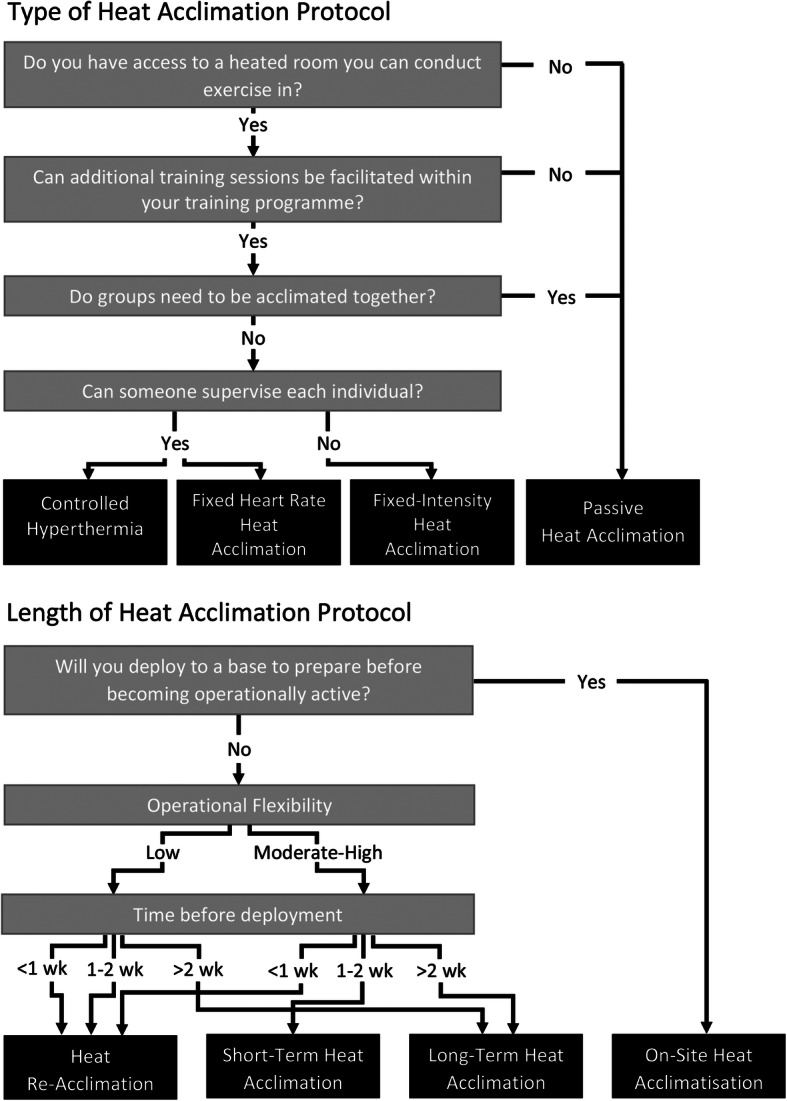
Acute exposure to heat, such as that experienced by people arriving into a hotter or more humid environment, can compromise physical and cognitive performance as well as health. In military contexts heat stress is exacerbated by the combination of protective clothing, carried loads, and unique activity profiles, making them susceptible to heat illnesses. As the operational environment is dynamic and unpredictable, strategies to minimize the effects of heat should be planned and conducted prior to deployment. This review explores how heat acclimation (HA) prior to deployment may attenuate the effects of heat by initiating physiological and behavioural adaptations to more efficiently and effectively protect thermal homeostasis, thereby improving performance and reducing heat illness risk. HA usually requires access to heat chamber facilities and takes weeks to conduct, which can often make it impractical and infeasible, especially if there are other training requirements and expectations. Recent research in athletic populations has produced protocols that are more feasible and accessible by reducing the time taken to induce adaptations, as well as exploring new methods such as passive HA. These protocols use shorter HA periods or minimise additional training requirements respectively, while still invoking key physiological adaptations, such as lowered core temperature, reduced heart rate and increased sweat rate at a given intensity. For deployments of special units at short notice (< 1 day) it might be optimal to use heat re-acclimation to maintain an elevated baseline of heat tolerance for long periods in anticipation of such an event. Methods practical for military groups are yet to be fully understood, therefore further investigation into the effectiveness of HA methods is required to establish the most effective and feasible approach to implement them within military groups.
急性暴露于热环境中,例如人们进入更热或更潮湿的环境时,会损害身体和认知表现以及健康。在军事环境中,热应激会因防护装备、携带的负荷和独特的活动模式而加剧,使他们容易患上热病。由于作战环境是动态和不可预测的,应在部署前计划和实施战略,以尽量减少热的影响。本综述探讨了部署前的热适应 (HA) 如何通过启动生理和行为适应来更有效地保护热平衡,从而提高性能并降低热病风险,从而减轻热的影响。HA 通常需要进入热室设施,并且需要数周的时间才能进行,这通常使其不切实际和不可行,特别是如果还有其他训练要求和期望。最近在运动员群体中的研究产生了更可行和更容易获得的方案,这些方案通过缩短适应时间以及探索被动 HA 等新方法来降低时间。这些方案分别使用较短的 HA 期或最小化额外的训练要求,同时仍然引发关键的生理适应,例如降低核心温度、降低心率和增加给定强度下的出汗率。对于需要在短时间内(<1 天)紧急部署的特种部队来说,使用热再适应来维持长时间的高温耐受性可能是最佳选择,以应对此类事件。对于军事群体实用的方法尚未完全理解,因此需要进一步研究 HA 方法的有效性,以确定在军事群体中实施这些方法的最有效和可行的方法。