Ahmad Ehtasham, Sargeant Jack A, Zaccardi Francesco, Khunti Kamlesh, Webb David R, Davies Melanie J
Diabetes Research Centre, University of Leicester, Leicester LE5 4PW, UK.
NIHR Leicester Biomedical Research Centre, University Hospitals of Leicester NHS Trust and the University of Leicester, Leicester LE5 4PW, UK.
Pharmaceuticals (Basel). 2020 Nov 27;13(12):427. doi: 10.3390/ph13120427.
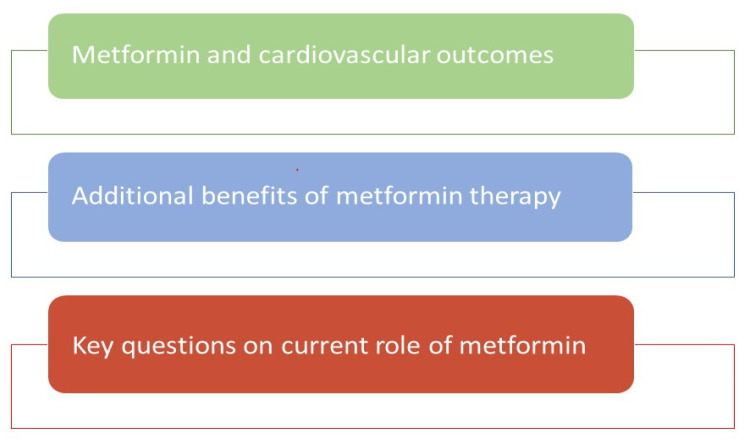
Metformin is the most commonly used glucose-lowering therapy (GLT) worldwide and remains the first-line therapy for newly diagnosed individuals with type 2 diabetes (T2D) in management algorithms and guidelines after the UK Prospective Diabetes Study (UKPDS) showed cardiovascular mortality benefits in the overweight population using metformin. However, the improved Major Adverse Cardiovascular Events (MACE) realised in some of the recent large cardiovascular outcomes trials (CVOTs) using sodium-glucose co-transporter 2 inhibitors (SGLT2i) and glucagon-like peptide-1 receptor agonists (GLP-1RA) have challenged metformin's position as a first-line agent in the management of T2D. Many experts now advocate revising the existing treatment algorithms to target atherosclerotic cardiovascular disease (ASCVD) and improving glycaemic control as a secondary aim. In this review article, we will revisit the major cardiovascular outcome data for metformin and include a critique of the UKPDS data. We then review additional factors that might be pertinent to metformin's status as a first-line agent and finally answer key questions when considering metformin's role in the modern-day management of T2D.
二甲双胍是全球最常用的降糖疗法(GLT),自英国前瞻性糖尿病研究(UKPDS)表明超重人群使用二甲双胍可降低心血管死亡率后,在管理算法和指南中,它仍是新诊断2型糖尿病(T2D)患者的一线治疗药物。然而,近期一些使用钠-葡萄糖协同转运蛋白2抑制剂(SGLT2i)和胰高血糖素样肽-1受体激动剂(GLP-1RA)的大型心血管结局试验(CVOT)所实现的主要不良心血管事件(MACE)改善,对二甲双胍作为T2D管理一线药物的地位提出了挑战。现在许多专家主张修订现有治疗算法,以针对动脉粥样硬化性心血管疾病(ASCVD),并将改善血糖控制作为次要目标。在这篇综述文章中,我们将重新审视二甲双胍的主要心血管结局数据,并对UKPDS数据进行批判性分析。然后,我们将审视可能与二甲双胍作为一线药物地位相关的其他因素,最后回答在考虑二甲双胍在T2D现代管理中的作用时的关键问题。