Ibrahim Ahmed, Magliulo Nicole, Groben James, Padilla Ashley, Akbik Firas, Abdel Hamid Z
Mechanical Engineering Department, Farmingdale State College, Farmingdale, New York, NY 11735, USA.
Biology Department, Farmingdale State College, Farmingdale, New York, NY 11735, USA.
J Funct Biomater. 2020 Dec 1;11(4):85. doi: 10.3390/jfb11040085.
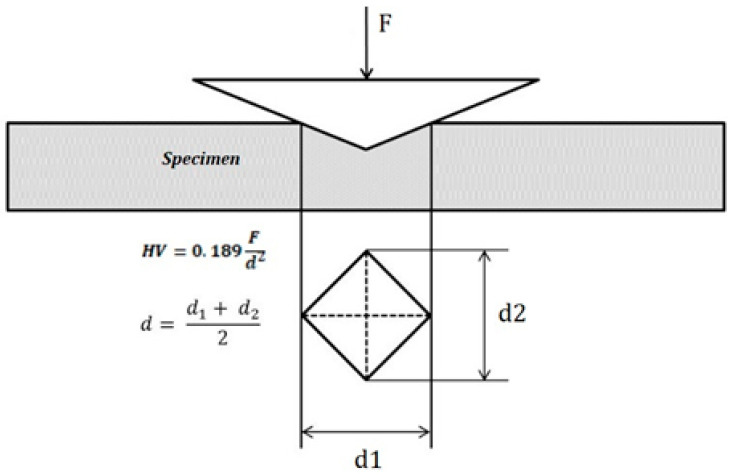
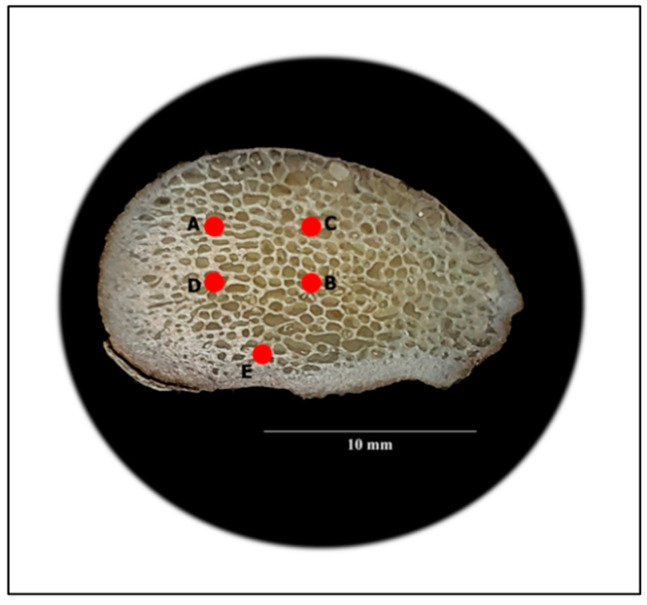
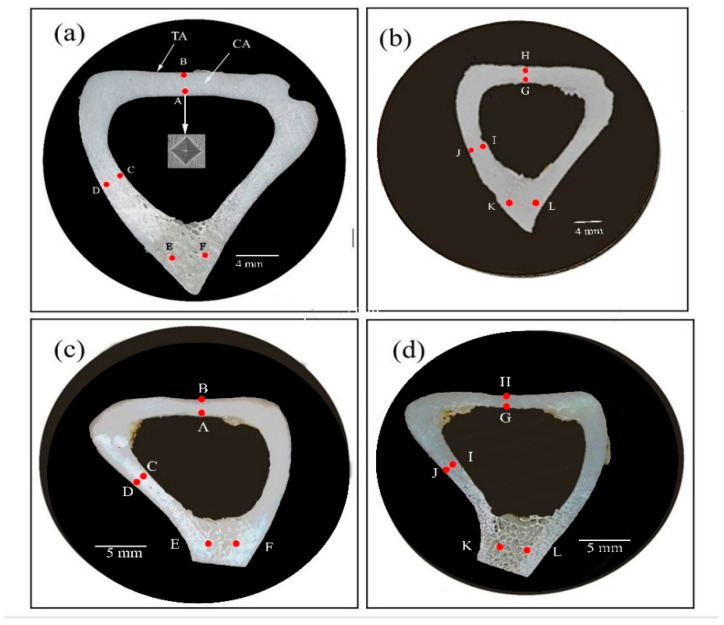
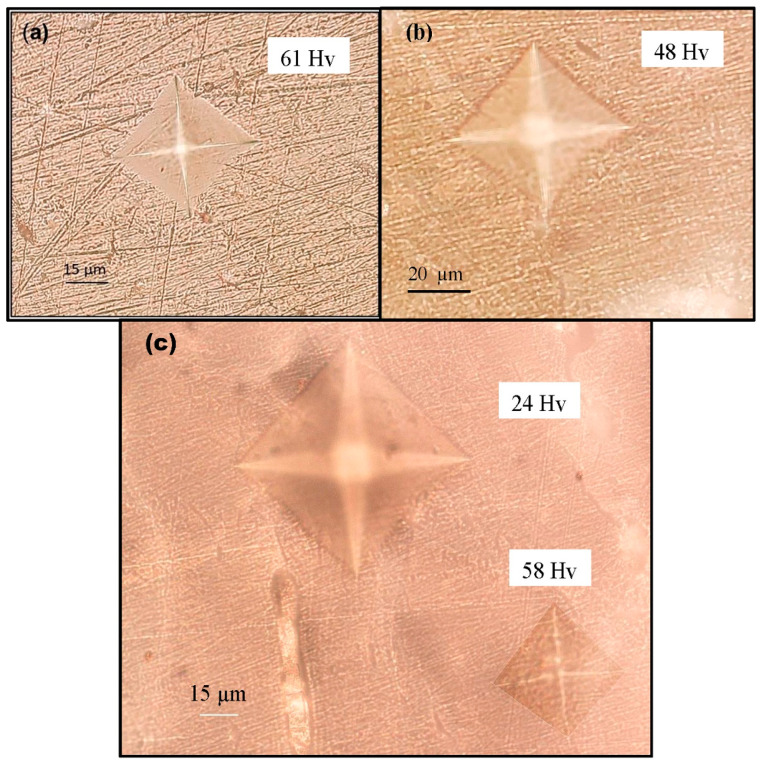
Bone is a nanocomposite material where the hard inorganic (hydroxyapatite crystallites) and organic (collagen fibrils) components are hierarchically arranged in the nanometer scale. Bone quality is dependent on the spatial distributions in the shape, size and composition of bone constituents (mineral, collagen and water). Bone hardness is an important property of bone, which includes both elastic and plastic deformation. In this study, a microhardness test was performed on a deer bone samples. The deer tibia shaft (diaphysis) was divided into several cross-sections of equal thickness; samples were prepared in untreated, boiled water treatment (100 °C for 30 min) and sodium hypochlorite (NaOCl) treatment conditions. Microhardness tests were performed on various regions of the tibial diaphysis to study the heterogeneous characteristics of bone microhardness and highlight the role of the organic matrix in bone hardness. The results indicated that boiled water treatment has a strong negative correlation with bone hardness. The untreated bone was significantly (+20%) harder than the boiled-water-treated bone. In general, the hardness values near the periosteal surface was significantly (23 to 45%) higher than the ones near the endosteal surface. Samples treated with NaOCl showed a significant reduction in hardness.
骨骼是一种纳米复合材料,其中坚硬的无机成分(羟基磷灰石微晶)和有机成分(胶原纤维)在纳米尺度上呈层次排列。骨质量取决于骨成分(矿物质、胶原蛋白和水)的形状、大小和组成的空间分布。骨硬度是骨骼的一项重要特性,包括弹性变形和塑性变形。在本研究中,对鹿骨样本进行了显微硬度测试。将鹿胫骨骨干(骨干)分成几个厚度相等的横截面;样本在未处理、沸水(100℃煮30分钟)处理和次氯酸钠(NaOCl)处理条件下制备。对胫骨骨干的各个区域进行显微硬度测试,以研究骨显微硬度的异质性特征,并突出有机基质在骨硬度中的作用。结果表明,沸水处理与骨硬度呈强负相关。未处理的骨骼比经沸水处理的骨骼明显硬20%。一般来说,骨膜表面附近的硬度值比骨髓腔表面附近的硬度值显著高23%至45%。用NaOCl处理的样本硬度显著降低。