Department of Epidemiology & Biostatistics, School of Public Health, Tehran University of Medical Sciences, Tehran, Iran.
Department of Epidemiology & Biostatistics, Knowledge Utilization Research Center and Community-Based Participatory-Research-Center, School of Public Health, Tehran University of Medical Sciences, Tehran, Iran.
BMC Public Health. 2020 Dec 4;20(1):1860. doi: 10.1186/s12889-020-09967-w.
Intermittent preventive treatment using Sulphadoxine pyrimethamine (IPTp-SP) for malaria prevention is recommended for all pregnant women in malaria endemic areas. However, there is limited evidence on the level of socioeconomic inequality in IPTp-SP use among pregnant women in Nigeria. Thus, this study aimed to determine the level of socioeconomic inequality in IPTp-SP use among pregnant women in Nigeria and to decompose it into its contributing factors.
A secondary data analysis of Nigerian demographic and health survey of 2018 was conducted. A sample of 21,621 pregnant women aged between 15 and 49 years and had live birth in the previous 2 years before the survey were included in this analysis. The study participants were recruited based on a stratified two-stage cluster sampling method. Socioeconomic inequality was decomposed into its contributing factors by concentration index.
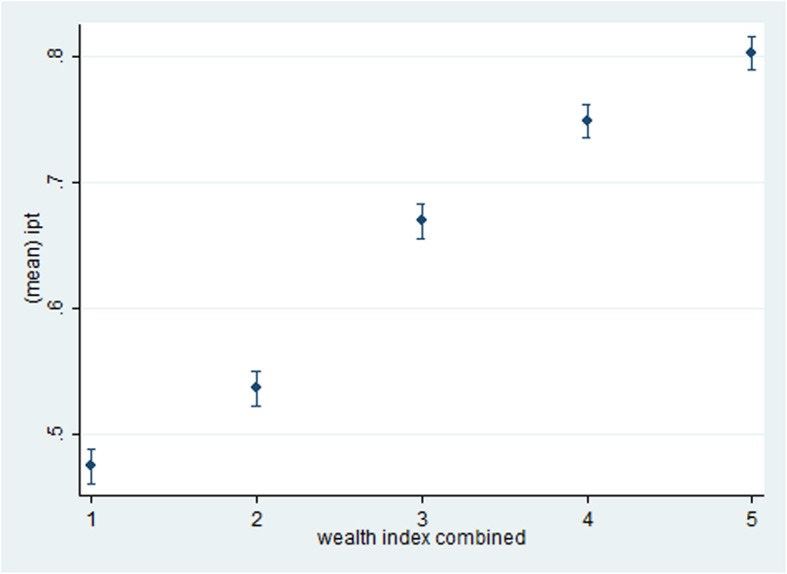
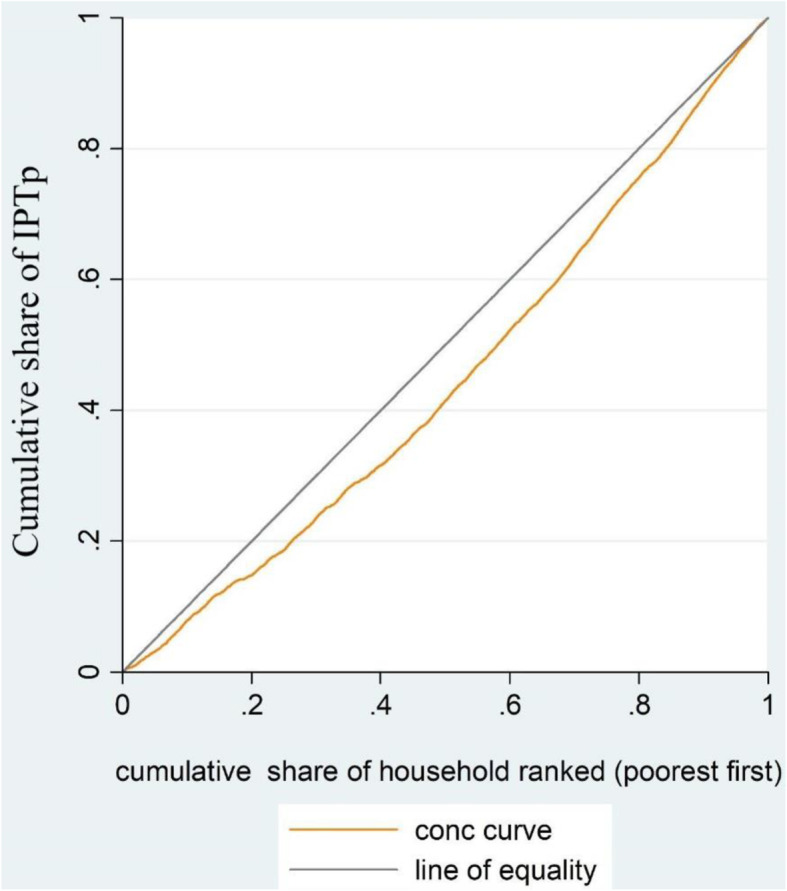
Totally 63.6% of pregnant women took at least one dose of IPTp-SP prophylaxis. Among IPTp-SP users, 35.1% took one dose, 38.6% took two doses and 26.2% took three doses and more. Based on both concentration index of 0.180 (p-value = < 0.001, 95% CI: 0.176 to 0.183) and Erreyger's normalization concentration index 0.280 (p-value = < 0.001, 95% CI: 0.251 to 0.309), the IPTp-SP utilization was pro-rich. The largest contributors to the inequality in IPTp-SP uptake were wealth index (47.81%) and educational status (28.66%).
Our findings showed that IPTp-SP use was pro-rich in Nigeria. Wealth index and educational status were the factors that significantly contributed to the inequality. The disparities could be reduced through free IPTp service expansion by targeting pregnant women from low socioeconomic status.
在疟疾流行地区,建议所有孕妇间歇性使用磺胺多辛-乙胺嘧啶(IPTp-SP)进行疟疾预防。然而,关于尼日利亚孕妇中 IPTp-SP 使用的社会经济不平等程度的证据有限。因此,本研究旨在确定尼日利亚孕妇中 IPTp-SP 使用的社会经济不平等程度,并将其分解为其促成因素。
对 2018 年尼日利亚人口与健康调查的二次数据分析。本分析纳入了年龄在 15 至 49 岁之间且在调查前 2 年内有活产的 21621 名孕妇。研究参与者是根据分层两阶段聚类抽样方法招募的。通过集中指数分解社会经济不平等的促成因素。
共有 63.6%的孕妇至少服用了一剂 IPTp-SP 预防药物。在 IPTp-SP 使用者中,35.1%服用了一剂,38.6%服用了两剂,26.2%服用了三剂及以上。基于集中指数为 0.180(p 值<0.001,95%置信区间:0.176 至 0.183)和 Erreyger 的归一化集中指数 0.280(p 值<0.001,95%置信区间:0.251 至 0.309),IPTp-SP 的利用呈富有倾向。对 IPTp-SP 利用率不平等贡献最大的因素是财富指数(47.81%)和教育程度(28.66%)。
我们的研究结果表明,尼日利亚的 IPTp-SP 使用呈富有倾向。财富指数和教育程度是导致不平等的主要因素。通过针对社会经济地位较低的孕妇扩大免费 IPTp 服务,可以减少这种差异。