School of Business, and Centre for Health Research, University of Southern Queensland, Toowoomba, QLD, 4350, Australia.
Department of Health Administration and Management, Faculty of Health Sciences and Technology, College of Medicine, University of Nigeria, Enugu Campus, Enugu, Enugu State, Nigeria.
Malar J. 2021 Jul 3;20(1):300. doi: 10.1186/s12936-021-03834-8.
Although malaria in pregnancy is preventable with the use of intermittent preventive treatment with sulfadoxine-pyrimethamine (IPTp-SP), it still causes maternal morbidity and mortality, in sub-Saharan Africa and Nigeria in particular. Socioeconomic inequality leads to limited uptake of IPTp-SP by pregnant women and is, therefore, a public health challenge in Nigeria. This study aimed to measure and identify factors explaining socioeconomic inequality in the uptake of IPTp-SP in Nigeria.
The study re-analysed dataset of 12,294 women aged 15-49 years from 2018 Nigeria Demographic Health Survey (DHS). The normalized concentration index (C) and concentration curve were used to quantify and graphically present socioeconomic inequalities in the uptake of IPTp-SP among pregnant women in Nigeria. The C was decomposed to identify key factors contributing to the observed socioeconomic inequality in the uptake of adequate (≥ 3) IPTp-SP.
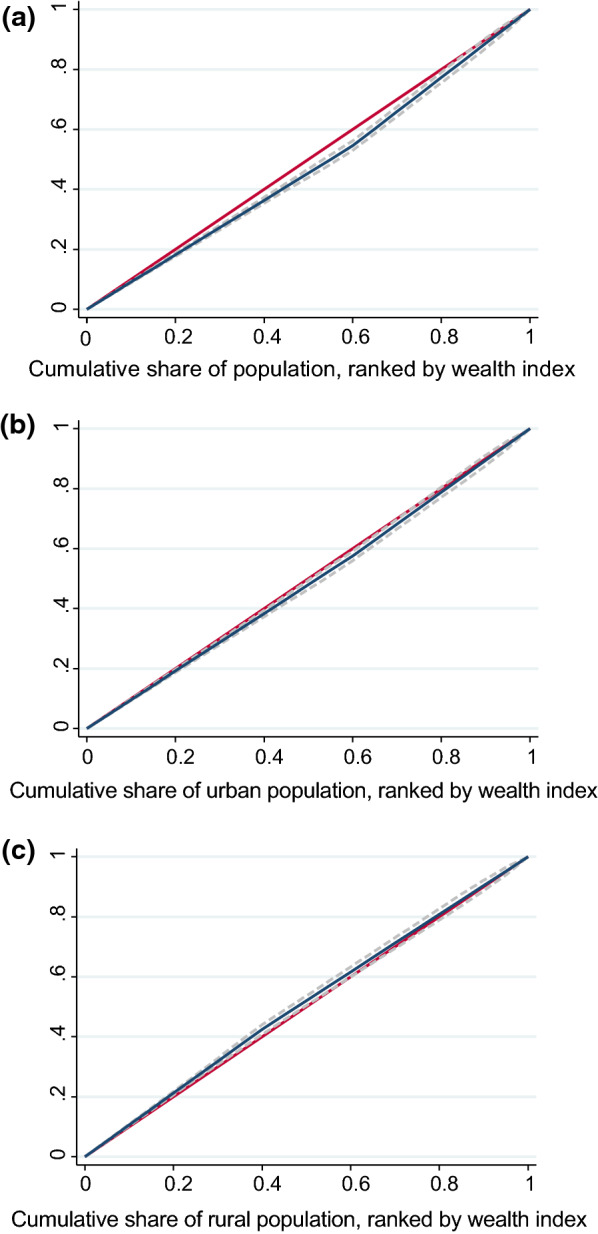
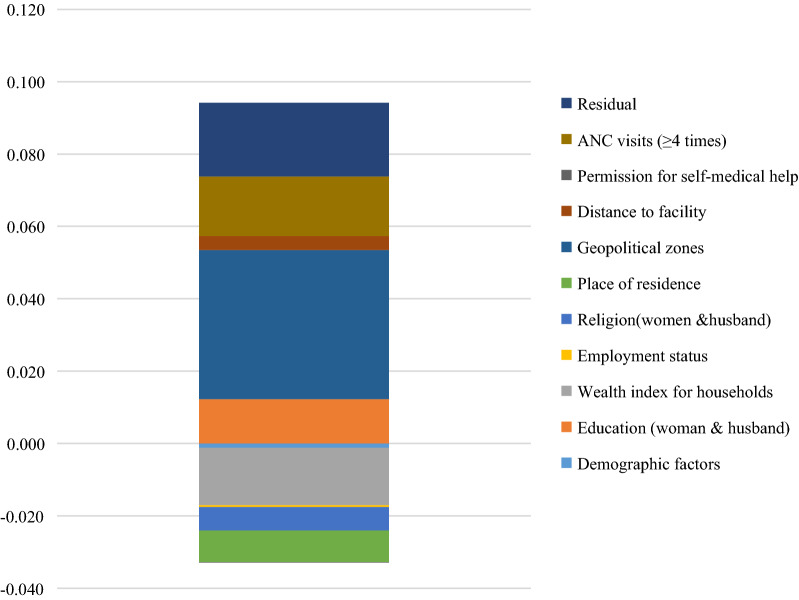
The study showed a higher concentration of the adequate uptake of IPTp-SP among socioeconomically advantaged women (C = 0.062; 95% confidence interval [CI] 0.048 to 0.076) in Nigeria. There is a pro-rich inequality in the uptake of IPTp-SP in urban areas (C = 0.283; 95%CI 0.279 to 0.288). In contrast, a pro-poor inequality in the uptake of IPTp-SP was observed in rural areas (C = - 0.238; 95%CI - 0.242 to - 0.235). The result of the decomposition analysis indicated that geographic zone of residence and antenatal visits were the two main drivers for the concentration of the uptake of IPTp-SP among wealthier pregnant women in Nigeria.
The pro-rich inequalities in the uptake of IPTp-SP among pregnant women in Nigeria, particularly in urban areas, warrant further attention. Strategies to improve the uptake of IPTp-SP among women residing in socioeconomically disadvantaged geographic zones (North-East and North-West) and improving antenatal visits among the poor women may reduce pro-rich inequality in the uptake of IPTp-SP among pregnant women in Nigeria.
尽管采用磺胺多辛-乙胺嘧啶(IPTp-SP)间歇性预防治疗可以预防妊娠疟疾,但它仍然会导致孕产妇发病率和死亡率,特别是在撒哈拉以南非洲和尼日利亚。社会经济不平等导致孕妇对 IPTp-SP 的接受程度有限,因此这是尼日利亚的一个公共卫生挑战。本研究旨在衡量和确定解释尼日利亚孕妇接受 IPTp-SP 方面社会经济不平等的因素。
本研究重新分析了 2018 年尼日利亚人口与健康调查(DHS)中 12294 名 15-49 岁妇女的数据。使用归一化集中指数(C)和集中曲线来量化和图形表示尼日利亚孕妇接受 IPTp-SP 方面的社会经济不平等。对 C 进行分解,以确定导致观察到的接受适当(≥3)IPTp-SP 的社会经济不平等的关键因素。
本研究表明,在尼日利亚,社会经济地位较高的孕妇接受适当的 IPTp-SP 的比例较高(C=0.062;95%置信区间[CI]0.048 至 0.076)。城市地区接受 IPTp-SP 的情况存在富者越富的不平等现象(C=0.283;95%CI0.279 至 0.288)。相比之下,农村地区接受 IPTp-SP 的情况则存在贫者越贫的不平等现象(C=-0.238;95%CI-0.242 至-0.235)。分解分析的结果表明,居住的地理区域和产前检查是尼日利亚较富裕孕妇接受 IPTp-SP 集中的两个主要驱动因素。
尼日利亚孕妇接受 IPTp-SP 的富者越富的不平等现象,特别是在城市地区,需要进一步关注。改善居住在社会经济不利地理区域(东北部和西北部)的妇女接受 IPTp-SP 的情况,并改善贫困妇女的产前检查,可能会减少尼日利亚孕妇接受 IPTp-SP 的富者越富的不平等现象。