McLoughlin Ella, Fletcher David, Slavich George M, Arnold Rachel, Moore Lee J
School of Sport, Exercise and Health Sciences, Loughborough University, United Kingdom.
Cousins Center for Psychoneuroimmunology and Department of Psychiatry and Biobehavioral Sciences, University of California, Los Angeles, USA.
Psychol Sport Exerc. 2021 Jan;52. doi: 10.1016/j.psychsport.2020.101823. Epub 2020 Oct 9.
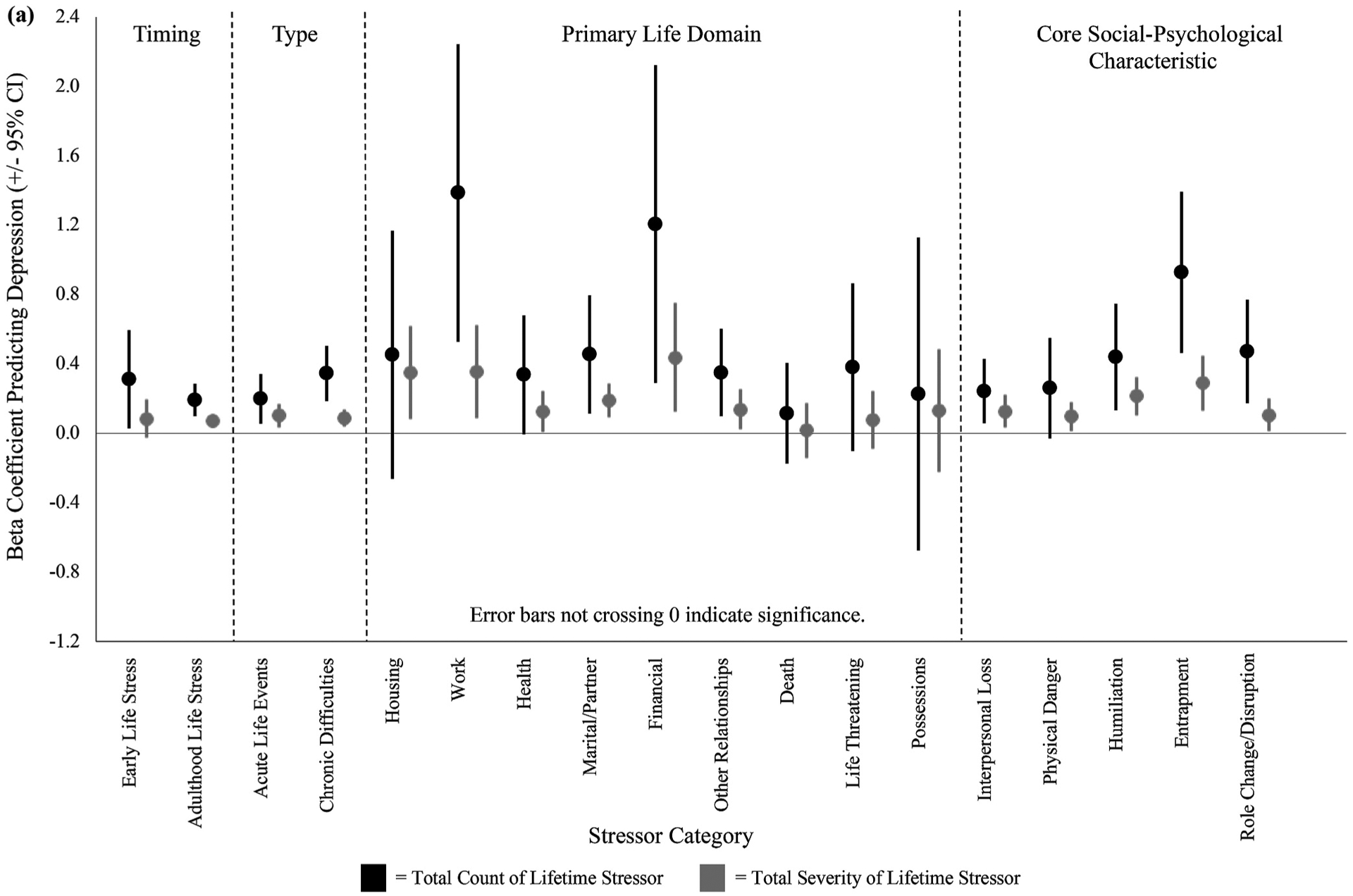
Research suggests that elite athletes are at increased risk of poor mental health, partly due to the intense demands associated with top-level sport. Despite growing interest in the topic, the factors that influence the mental health and well-being of elite athletes remain unclear. From a theoretical perspective, the accumulation of stress and adversity experienced over the life course may be an important factor. To investigate this possibility, we employed a mixed-method design to: (a) examine whether cumulative lifetime stress predicted depression, anxiety, and well-being in elite athletes; and (b) help explain why cumulative lifetime stress exposure might have resulted in poor mental health and well-being. Ninety-five elite athletes ( = 29.81, = 10.88) completed the Stress and Adversity Inventory, Patient Health Questionnaire, Generalized Anxiety Disorder 7-item scale, and the Scales of General Well-Being. Hierarchical regression analyses revealed that total count and severity of lifetime stressor exposure significantly predicted greater depression ( = .42, < .001; = .46, < .001) and anxiety symptoms ( = .34, = .003; = .28, = .018), and worse well-being ( = -.42, < .001; = -.30, = .015). Semi-structured interviews were then conducted with six athletes. Thematic analysis revealed that cumulative lifetime stress exposure fostered poor mental health and well-being by promoting maladaptive long-term coping strategies, increasing susceptibility to future stress, and limiting interpersonal relationships. We believe these findings can help practitioners identify, and intervene accordingly with, elite athletes at risk of experiencing stress-related mental health problems.
研究表明,精英运动员心理健康不佳的风险增加,部分原因是顶级运动带来的高强度要求。尽管对该话题的兴趣日益浓厚,但影响精英运动员心理健康和幸福感的因素仍不明确。从理论角度来看,一生中经历的压力和逆境的积累可能是一个重要因素。为了探究这种可能性,我们采用了混合方法设计来:(a) 检验累积一生的压力是否能预测精英运动员的抑郁、焦虑和幸福感;(b) 帮助解释为什么累积一生的压力暴露可能导致心理健康和幸福感不佳。95名精英运动员(平均年龄 = 29.81岁,标准差 = 10.88)完成了压力与逆境量表、患者健康问卷、广泛性焦虑症7项量表和总体幸福感量表。分层回归分析显示,一生压力源暴露的总数和严重程度显著预测了更高的抑郁(β = .42,p < .001;β = .46,p < .001)和焦虑症状(β = .34,p = .003;β = .28,p = .018),以及更差的幸福感(β = -.42,p < .001;β = -.30,p = .015)。然后对6名运动员进行了半结构化访谈。主题分析显示,累积一生的压力暴露通过促进适应不良性长期应对策略、增加对未来压力的易感性以及限制人际关系,导致了心理健康和幸福感不佳。我们相信这些发现可以帮助从业者识别有与压力相关心理健康问题风险的精英运动员,并据此进行干预。