Tisdall Loreen, Frey Renato, Horn Andreas, Ostwald Dirk, Horvath Lilla, Pedroni Andreas, Rieskamp Jörg, Blankenburg Felix, Hertwig Ralph, Mata Rui
Center for Cognitive and Decision Sciences, Faculty of Psychology, University of Basel, Basel, Switzerland.
Faculty of Psychology, Stanford University, Stanford, CA, United States.
Front Behav Neurosci. 2020 Nov 17;14:587152. doi: 10.3389/fnbeh.2020.587152. eCollection 2020.
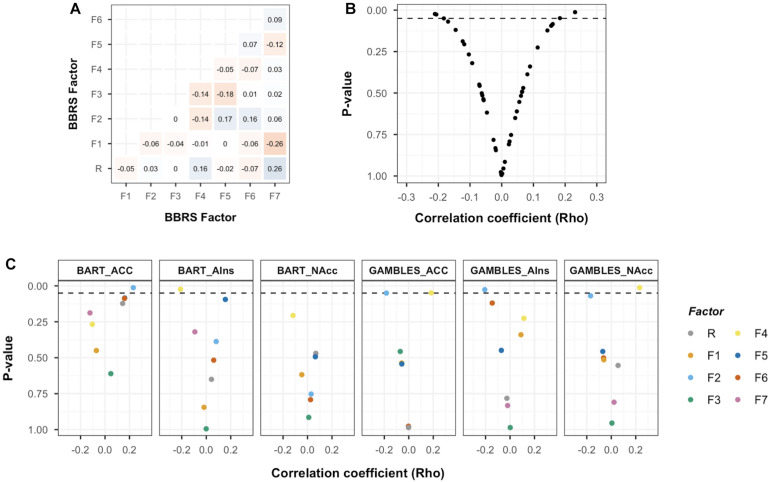
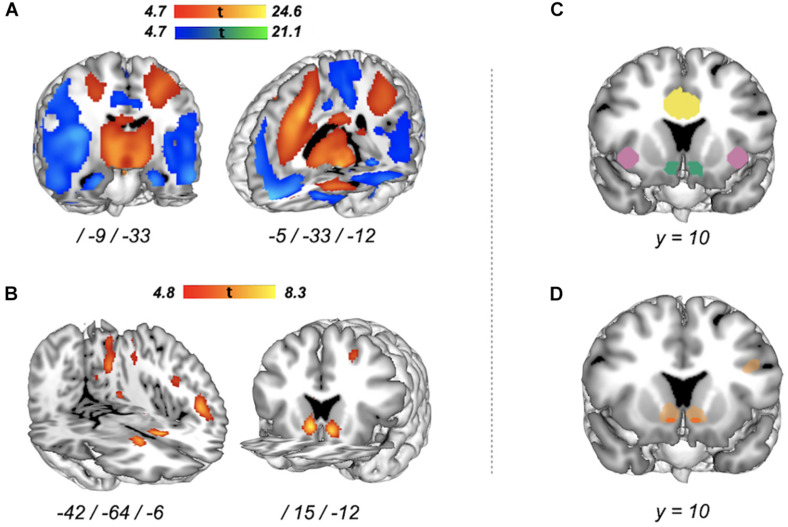
Maladaptive risk taking can have severe individual and societal consequences; thus, individual differences are prominent targets for intervention and prevention. Although brain activation has been shown to be associated with individual differences in risk taking, the directionality of the reported brain-behavior associations is less clear. Here, we argue that one aspect contributing to the mixed results is the low convergence between risk-taking measures, especially between the behavioral tasks used to elicit neural functional markers. To address this question, we analyzed within-participant neuroimaging data for two widely used risk-taking tasks collected from the imaging subsample of the Basel-Berlin Risk Study ( = 116 young human adults). Focusing on core brain regions implicated in risk taking (nucleus accumbens, anterior insula, and anterior cingulate cortex), for the two tasks, we examined group-level activation for risky versus safe choices, as well as associations between local functional markers and various risk-related outcomes, including psychometrically derived risk preference factors. While we observed common group-level activation in the two tasks (notably increased nucleus accumbens activation), individual differences analyses support the idea that the presence and directionality of associations between brain activation and risk taking varies as a function of the risk-taking measures used to capture individual differences. Our results have methodological implications for the use of brain markers for intervention or prevention.
适应不良的冒险行为会产生严重的个人和社会后果;因此,个体差异是干预和预防的主要目标。尽管大脑激活已被证明与冒险行为中的个体差异有关,但所报告的大脑与行为关联的方向性尚不清楚。在这里,我们认为导致结果不一致的一个原因是冒险行为测量方法之间的低收敛性,尤其是用于引出神经功能标记的行为任务之间。为了解决这个问题,我们分析了从巴塞尔 - 柏林风险研究的成像子样本(n = 116名年轻成年人)中收集的两个广泛使用的冒险任务的参与者内部神经成像数据。针对参与冒险行为的核心脑区(伏隔核、前岛叶和前扣带回皮质),对于这两个任务,我们检查了冒险选择与安全选择的组水平激活,以及局部功能标记与各种风险相关结果之间的关联,包括心理测量得出的风险偏好因素。虽然我们在两个任务中观察到了共同的组水平激活(特别是伏隔核激活增加),但个体差异分析支持这样一种观点,即大脑激活与冒险行为之间关联的存在和方向性会随着用于捕捉个体差异的冒险行为测量方法的不同而变化。我们的结果对使用大脑标记进行干预或预防具有方法学意义。