Fischer Sebastian, Dethlefsen Sarah, Klockgether Jens, Tümmler Burkhard
Clinical Research Group Molecular Pathology of Cystic Fibrosis and Pseudomonas Genomics, Clinic for Pediatric Pneumology, Allergology and Neonatology, Hannover Medical School, Hannover, Germany.
Clinical Research Group Molecular Pathology of Cystic Fibrosis and Pseudomonas Genomics, Clinic for Pediatric Pneumology, Allergology and Neonatology, Hannover Medical School, Hannover, Germany
mSystems. 2020 Dec 8;5(6):e01007-20. doi: 10.1128/mSystems.01007-20.
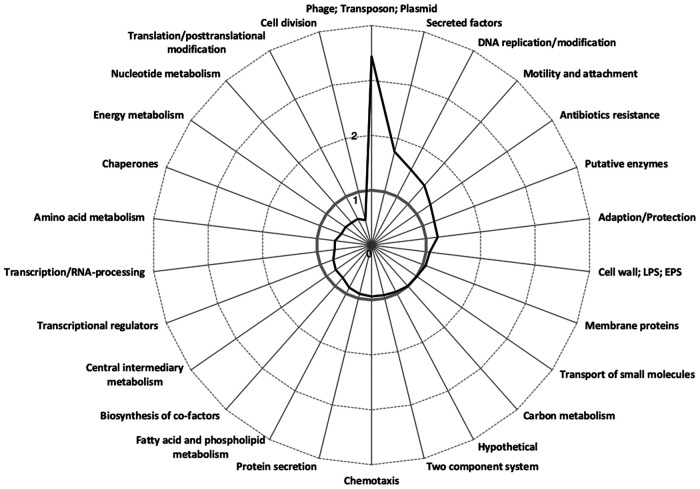
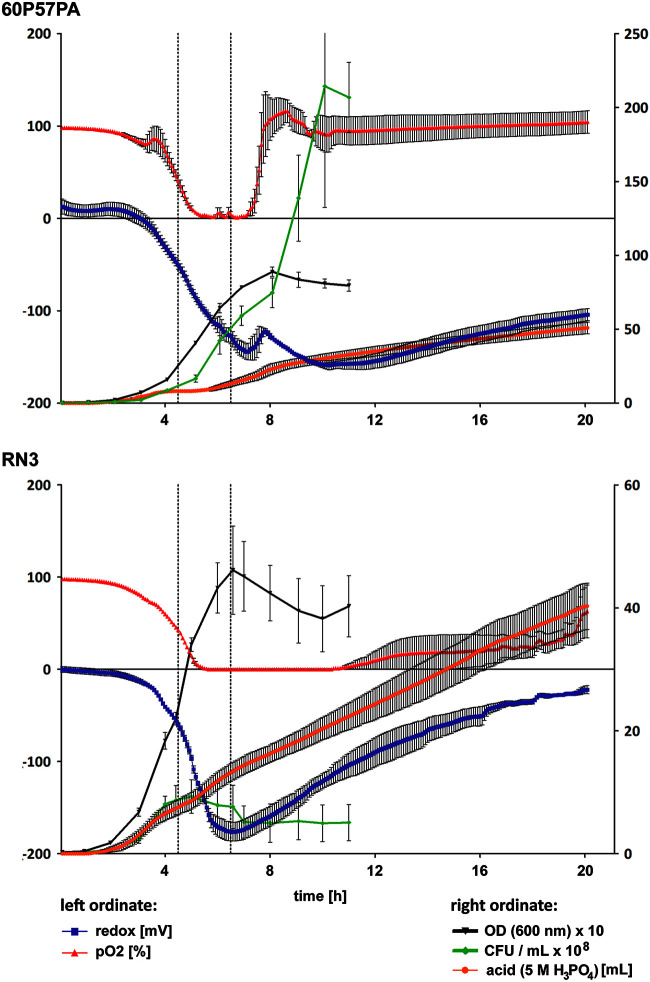
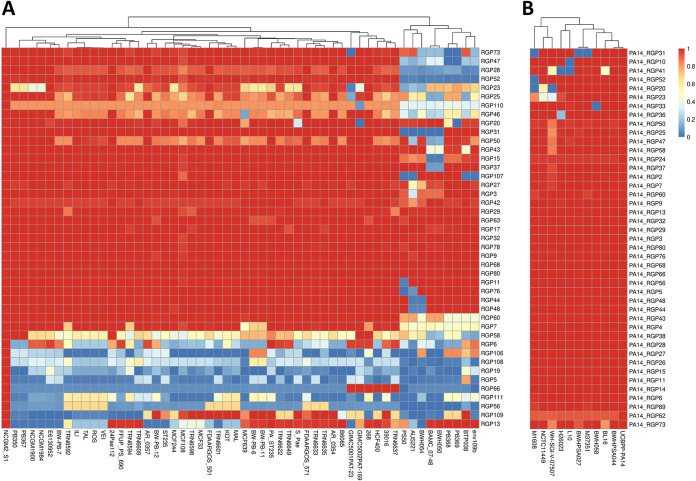
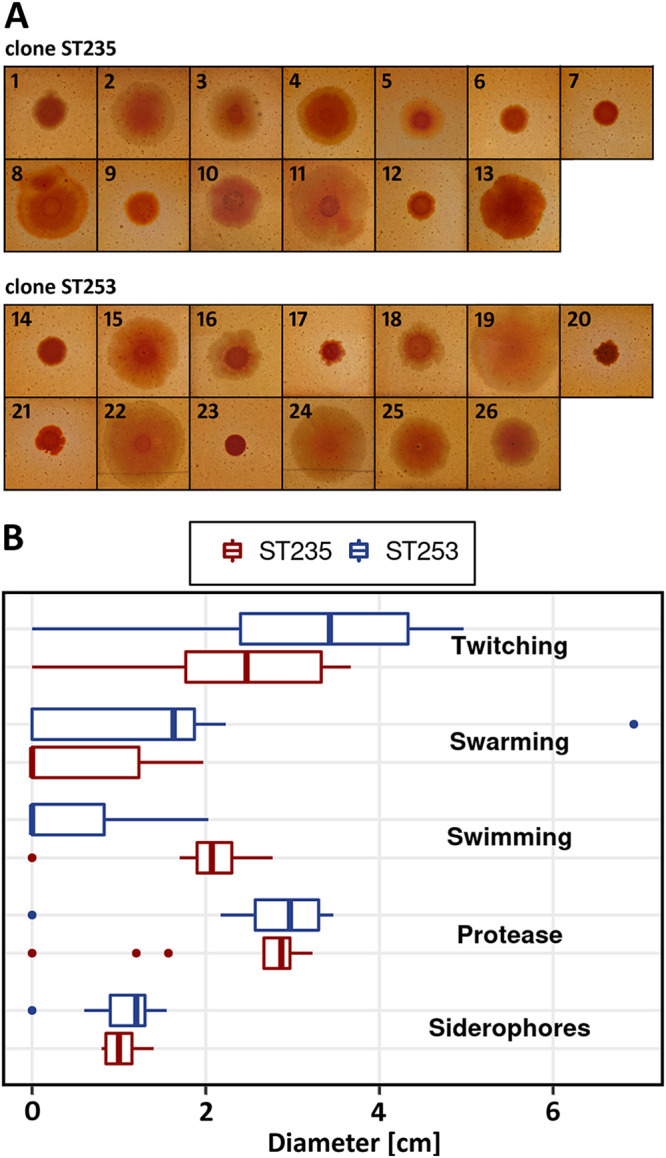
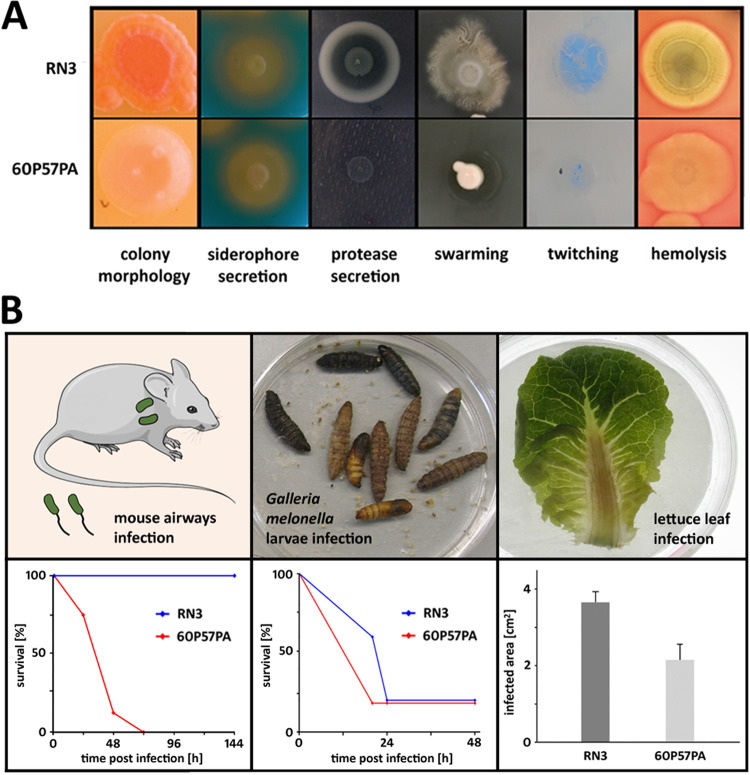
Genotyping of 2,882 isolates that had been collected during the last 40 years identified the ExoU-positive lineages PA14 (ST253) and ST235 as the second and third most frequent clones in the population. Both clones were approximately 2-fold more frequently detected in animate habitats than in soil or aquatic habitats. While ST253 clone isolates were causing mainly acute and chronic infections in humans, ST235 isolates had been preferentially collected from hospitalized patients with severe acute infections, particularly, keratitis, urinary tract infections, burn wounds, and ventilator-associated pneumonia. The two major clones differed substantially in the composition and flexibility of the accessory genome and by more than 8,000 amino acid sequences. Pronounced sequence variation between orthologs was noted in genes encoding elements of secretion systems and secreted effector molecules, including the type III secretion system, indicating the modes of action of the different clones. When comparing representatives of the two clones in batch culture, the PA14 strain orchestrated the quorum sensing circuitry for the expression of pathogenic traits and stopped growing in batch culture when it entered the stationary phase, but the quorum sensing-deficient ST235 strain expressed high type III secretion activity and continued to grow and to divide. In summary, unrestricted growth, high constitutive type III secretion activity, and facilitated uptake of foreign DNA could be major features that have made ST235 a global high-risk clone associated with poor outcomes of acute nosocomial infections. The ubiquitous and metabolically versatile environmental bacterium can cause infections in a wide variety of hosts, including insects, plants, animals, and humans. is one of the ESKAPE (, , , , , and species) pathogens that are the major cause of nosocomial infections in the United States and are a threat all over the world because of their capacity to become increasingly resistant to all available antibiotics. Most experimental work on has been performed with reference strains PAO1 and PA14, providing deep insight into key metabolic and regulatory pathways thought to be applicable to all strains. However, this comparative study on the two most common -positive clones taught us that there are major lineages in the population such as the global high-risk clone ST235 that exhibit uncommon traits of lifestyle, genome mobility, and pathogenicity distinct from those in our knowledge gained from the studies with the reference strains.
对过去40年收集的2882株分离株进行基因分型,确定外切核酸酶U阳性谱系PA14(ST253)和ST235为该群体中第二和第三常见的克隆型。在有生命的栖息地中检测到这两种克隆型的频率均约为土壤或水生生境中的2倍。虽然ST253克隆型分离株主要引起人类的急性和慢性感染,但ST235分离株主要是从患有严重急性感染的住院患者中分离得到的,特别是角膜炎、尿路感染、烧伤创面感染和呼吸机相关性肺炎患者。这两个主要克隆型在辅助基因组的组成和灵活性以及超过8000个氨基酸序列上存在很大差异。在编码分泌系统元件和分泌效应分子(包括III型分泌系统)的基因中,直系同源基因之间存在明显的序列变异,这表明了不同克隆型的作用方式。在分批培养中比较这两个克隆型的代表时,PA14菌株精心调控群体感应电路以表达致病性状,并在进入稳定期时停止在分批培养中生长,但群体感应缺陷型ST235菌株表达出高III型分泌活性,并继续生长和分裂。总之,不受限制的生长、高组成性III型分泌活性以及对外源DNA的易摄取性可能是使ST235成为与急性医院感染不良结局相关的全球高风险克隆型的主要特征。这种普遍存在且代谢功能多样的环境细菌可在包括昆虫、植物、动物和人类在内的多种宿主中引起感染。它是ESKAPE(粪肠球菌、金黄色葡萄球菌、肺炎克雷伯菌、鲍曼不动杆菌、铜绿假单胞菌和阴沟肠杆菌)病原体之一,是美国医院感染的主要原因,并且由于其对所有可用抗生素的耐药性日益增强而对全球构成威胁。大多数关于铜绿假单胞菌的实验工作都是使用参考菌株PAO1和PA14进行的,这为深入了解被认为适用于所有铜绿假单胞菌菌株的关键代谢和调控途径提供了帮助。然而,这项对两种最常见的外切核酸酶U阳性克隆型的比较研究告诉我们,该群体中存在主要谱系,如全球高风险克隆型ST235,其具有与我们从参考菌株研究中获得的知识不同的独特生活方式、基因组流动性和致病性特征。