College of Animal Science and Technology, Gansu Agricultural University, Lanzhou 730070, China.
Biomed Res Int. 2020 Nov 23;2020:2610431. doi: 10.1155/2020/2610431. eCollection 2020.
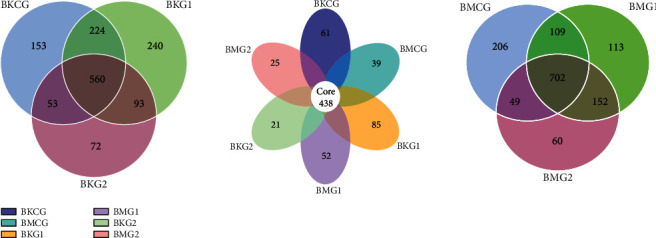
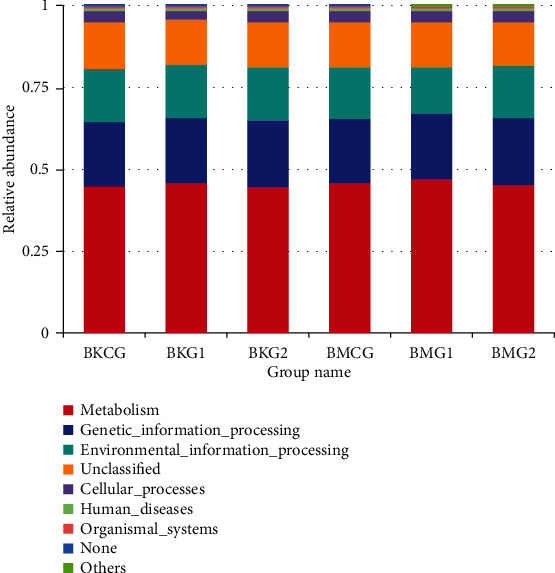
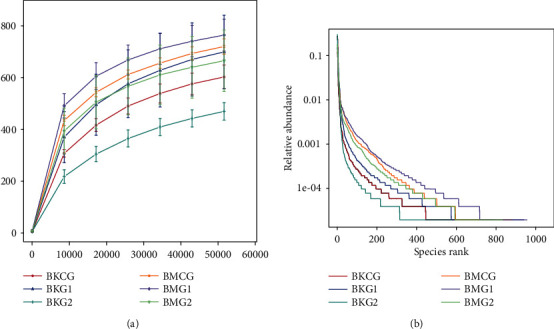
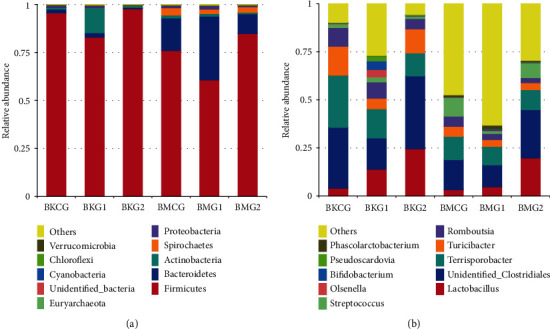
Diets containing different crude protein levels (16%, 14%, and 12%) were created to feed Bamei pigs in order to study the effect of these compositions on intestinal colonies. Therefore, 27 healthy Bamei pigs of similar weight (20.99 kg ± 0.16 kg) were selected and randomly divided into three groups for microbial diversity analysis. The results of this study show that microbial diversities and abundances in Bamei pig jejunum and caecum samples after feeding with different dietary protein levels were significantly different. Dietary crude protein level exerted no significant effect on the Shannon index for cecum microbes in these pigs, while Simpson, ACE, and Chao1 indices for group I were all significantly higher than those of either the control group or group II ( < 0.05). Indeed, data show that microbial diversities and abundances in the 14% protein level group were higher than those in either the 16% or 12% groups. Dominant bacteria present in jejunum and cecum samples given low-protein diets were members of the phyla and . Data show that as dietary crude protein level decreases, representatives of the microbial flora genus in jejunum and cecum samples gradually increases. Values for the KEGG functional prediction of microbial flora at different dietary protein levels also show that genes of jejunum and cecum microorganisms were mainly enriched in the "metabolism" pathway and indicate that low protein diets increase intestinal metabolic activity. Therefore, we recommend that Bamei pig dietary protein levels are reduced 2% from their existing level of 16% crude protein. We also suggest that essential synthetic amino acids (AA) are added to optimize this ideal protein model as this will increase intestinal flora diversity in these pigs and enhance health. These changes will have a positive effect in promoting the healthy growth of Bamei pigs.
设计了含不同粗蛋白水平(16%、14%和 12%)的日粮来饲养八眉猪,以研究这些组成对肠道菌群的影响。因此,选择了 27 头体重相似(20.99kg±0.16kg)的健康八眉猪,随机分为 3 组进行微生物多样性分析。本研究结果表明,饲喂不同蛋白水平日粮后八眉猪空肠和盲肠样本的微生物多样性和丰度存在显著差异。日粮粗蛋白水平对这些猪盲肠微生物的 Shannon 指数没有显著影响,但 I 组的 Simpson、ACE 和 Chao1 指数均显著高于对照组和 II 组(<0.05)。事实上,数据表明,14%蛋白水平组的微生物多样性和丰度高于 16%和 12%组。低蛋白日粮组空肠和盲肠样本中的优势菌属于 和 门。数据表明,随着日粮粗蛋白水平的降低,空肠和盲肠样本中微生物菌群属 的代表逐渐增加。不同蛋白水平日粮下微生物菌群的 KEGG 功能预测值也表明,空肠和盲肠微生物的基因主要富集在“代谢”途径中,这表明低蛋白日粮增加了肠道代谢活性。因此,我们建议将八眉猪的日粮蛋白水平从目前的 16%粗蛋白水平降低 2%。我们还建议添加必需合成氨基酸(AA)来优化这种理想蛋白模型,这将增加这些猪的肠道菌群多样性,提高其健康水平。这些变化将对促进八眉猪的健康生长产生积极影响。