Jin Jipeng, Zhang Liping, Jia Jianlei, Chen Qian, Yuan Zan, Zhang Xiaoyan, Sun Weibo, Ma Cunming, Xu Fafang, Zhan Shoujun, Ma Limin, Zhou Guihua
College of Animal Science and Technology, Gansu Agricultural University, Lanzhou 730070, China.
Key of Laboratory of Plateau Ecology and Agriculture, Qinghai University, Xining 810016, China.
Animals (Basel). 2019 Sep 23;9(10):713. doi: 10.3390/ani9100713.
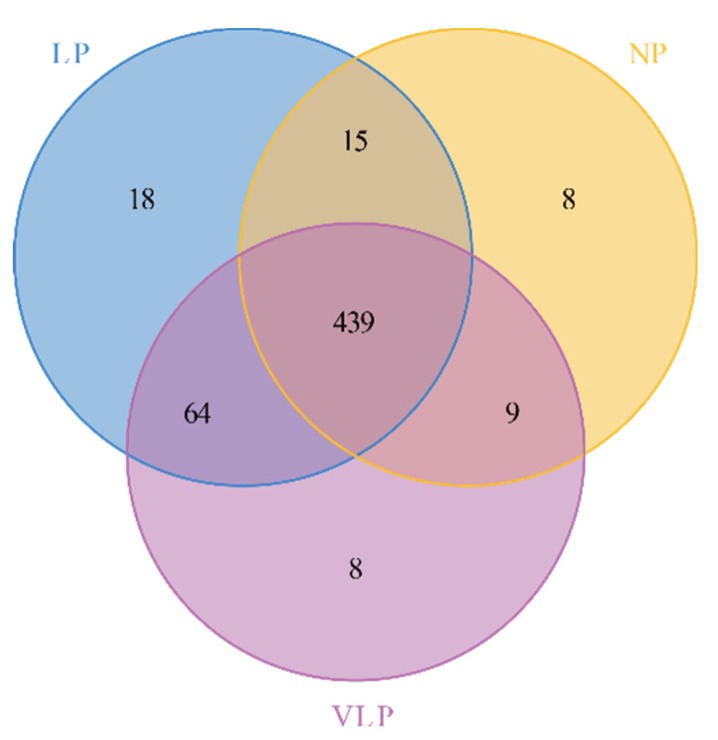
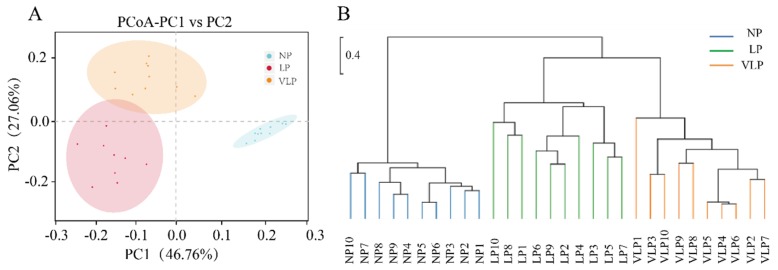
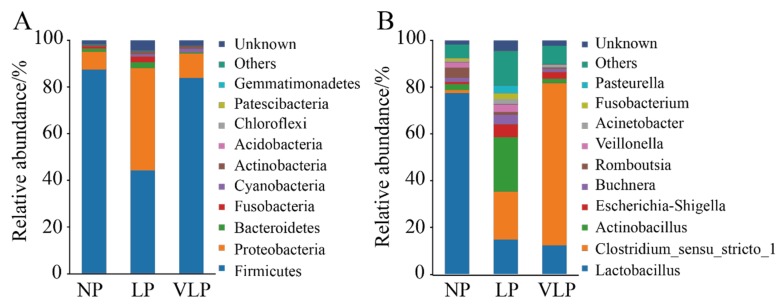
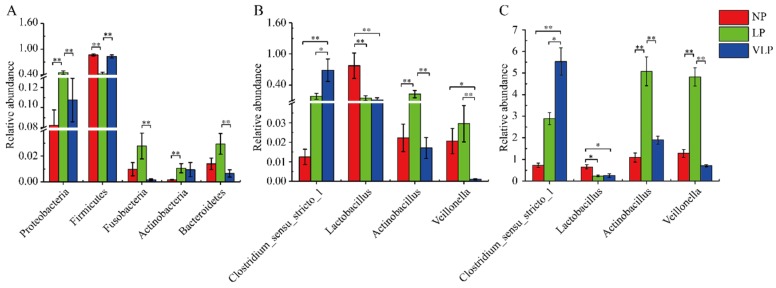
The jejunum is the primary organ for digestion and nutrient absorption in mammals. The development of the jejunum in suckling piglets directly affects their growth performance post-weaning. The jejunum microbiome plays an important role in proliferation, metabolism, apoptosis, immune, and homeostasis of the epithelial cells within the organ. The composition and diversity of the gut microbiome is susceptible to the protein composition of the diet. Therefore, the effects of maternal low-protein diets on piglets' intestinal microbial structure and function have become a hot topic of study. Herein, a maternal low-protein diet was formulated to explore the effects on jejunum microbiome composition and metabolic profiles in Bamei suckling piglets. Using 16S ribosomal RNA (16S rRNA) sequencing in conjunction with bioinformatics analysis, 21 phyla and 297 genera were identified within the gut microflora. The top 10 phyla and 10 genera are within the gut bacteria. Next, KEGG analysis showed that the low-protein diet significantly increased the gut microbial composition, transport and catabolism, immune system, global and overview maps, amino acid metabolism, metabolism of cofactors and vitamins, endocrine system, biosynthesis of other secondary metabolites, signal transduction, environmental adaptation, and cell motility. Taken together, low-protein diets do not appear to affect the reproductive performance of Bamei sows but improved the gut microbiome of the suckling piglets as well as reduced the probability of diarrhea. The data presented here provide new insights on the dietary protein requirements to support the Huzhu Bamei pig industry.
空肠是哺乳动物消化和营养吸收的主要器官。哺乳仔猪空肠的发育直接影响其断奶后的生长性能。空肠微生物群在该器官内上皮细胞的增殖、代谢、凋亡、免疫和内环境稳态中发挥着重要作用。肠道微生物群的组成和多样性易受日粮蛋白质组成的影响。因此,母体低蛋白日粮对仔猪肠道微生物结构和功能的影响已成为研究的热点。在此,配制了一种母体低蛋白日粮,以探讨其对八眉哺乳仔猪空肠微生物群组成和代谢谱的影响。通过16S核糖体RNA(16S rRNA)测序结合生物信息学分析,在肠道微生物区系中鉴定出21个门和297个属。肠道细菌中前10个门和10个属。接下来,KEGG分析表明,低蛋白日粮显著增加了肠道微生物组成、转运和分解代谢、免疫系统、全局和概述图谱、氨基酸代谢、辅因子和维生素代谢、内分泌系统、其他次生代谢物的生物合成、信号转导、环境适应和细胞运动。综上所述,低蛋白日粮似乎不会影响八眉母猪的繁殖性能,但改善了哺乳仔猪的肠道微生物群,并降低了腹泻的概率。本文提供的数据为支持互助八眉猪产业的日粮蛋白质需求提供了新的见解。