Department of Epidemiology and Biostatistics, Faculty of Medicine, Kurdistan University of Medical Sciences, Sanandaj, Iran.
Department of Urology, Faculty of Medicine, Kurdistan University of Medical Sciences, Sanandaj, Iran.
BMC Urol. 2020 Dec 11;20(1):195. doi: 10.1186/s12894-020-00769-1.
Bladder cancer is one of the most common urinary tract cancers. This study aims to estimate the survival rate of patients with bladder cancer according to the Cox proportional hazards model based on some key relevant variables.
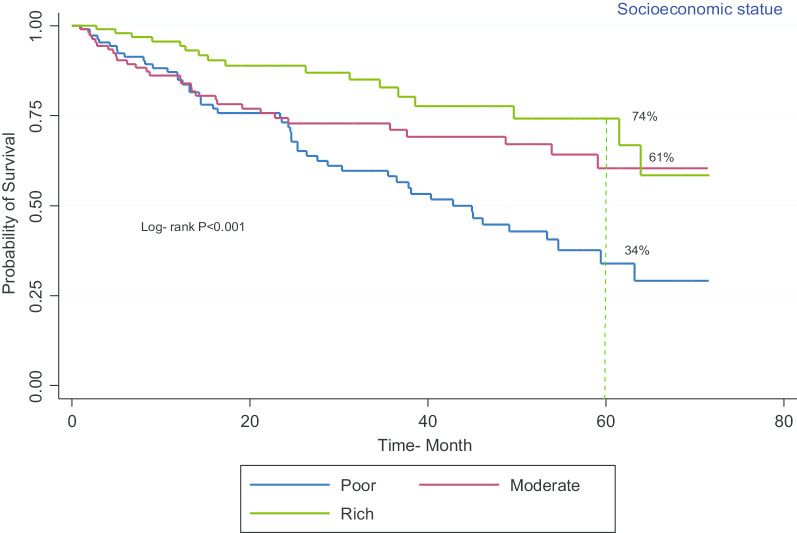
In this retrospective population-based cohort study that explores the survival of patients with bladder cancer and its related factors, we first collected demographic information and medical records of 321 patients with bladder cancer through in-person and telephone interviews. Then, in the analysis phase, Kaplan-Meier method and log-rank test were used to draw the survival curve, compare the groups, and explore the effect of risk factors on the patient survival rate using Cox proportional hazards model.
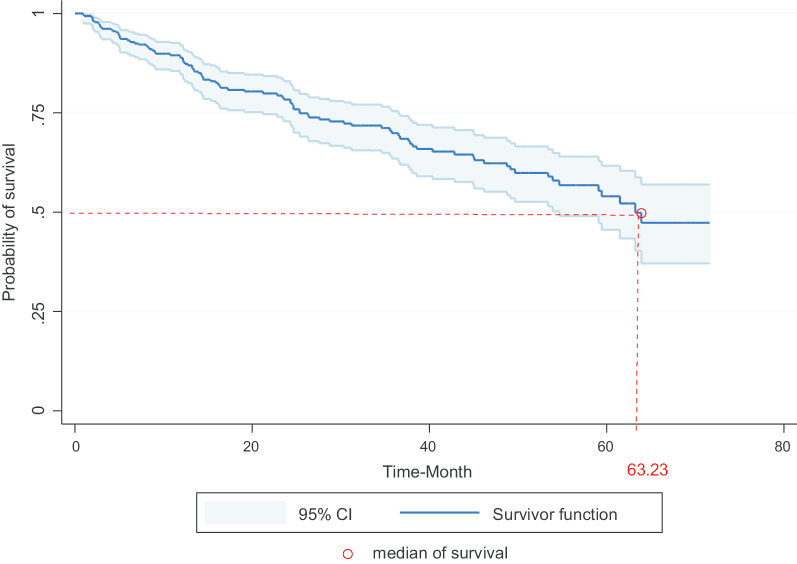
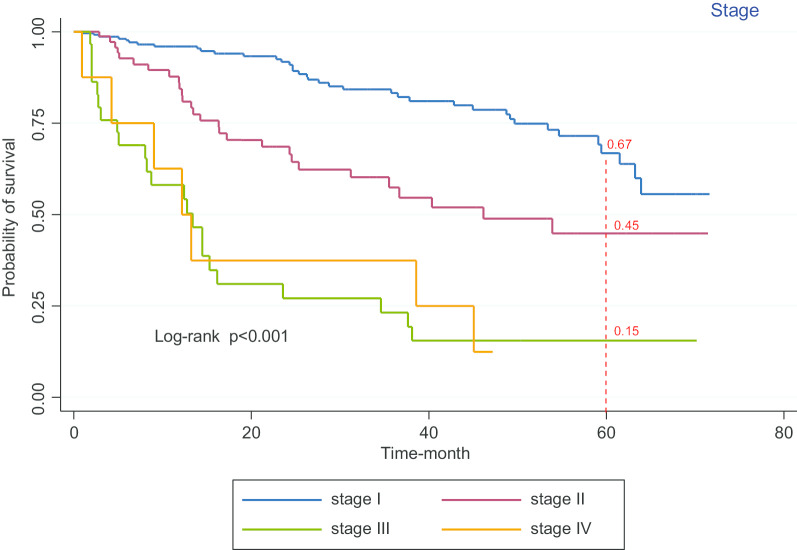
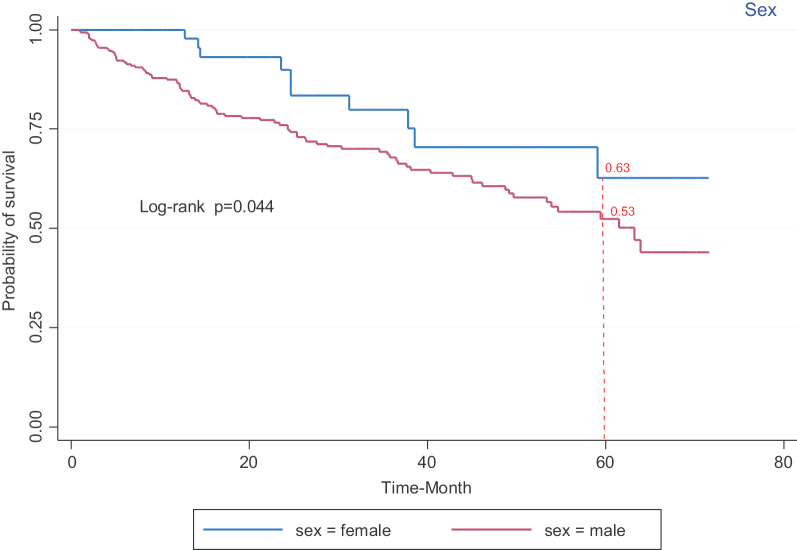
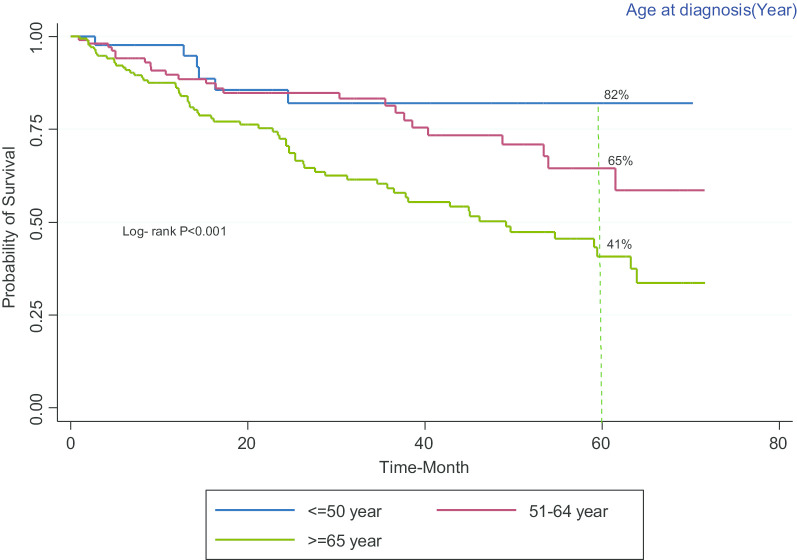
The median survival rate of patients was 63.2 (54.7-72) months and one, three and five-year survival rates were 87%, 68% and 54%, respectively. The results of multiple analyses using Cox's proportional hazards model revealed that variables of sex (male gender) (HR = 11.8, 95% CI: 0.4-100.7), more than 65 year of age (HR = 4.1, 95% CI: 0.4-11), occupation, income level, (HR = 0.4, 95% CI: 0.2-0.8), well differentiated tumor grade (HR = 3.2, 95% CI: 1.7-6) and disease stage influenced the survival rate of patients (p < 0.05).
The survival rate of patients with bladder cancer in Kurdistan province is relatively low. Given the impact of the disease stage on the survival rate, adequate access to appropriate diagnostic and treatment services as well as planning for screening and early diagnosis, especially in men, can increase the survival rate of patients.
膀胱癌是最常见的泌尿系肿瘤之一。本研究旨在基于一些关键相关变量,应用 Cox 比例风险模型来评估膀胱癌患者的生存率。
在这项探索膀胱癌患者生存情况及其相关因素的回顾性基于人群的队列研究中,我们首先通过面对面和电话访谈收集了 321 名膀胱癌患者的人口统计学信息和病历。然后,在分析阶段,采用 Kaplan-Meier 法和对数秩检验绘制生存曲线,比较各组,并使用 Cox 比例风险模型探索风险因素对患者生存率的影响。
患者的中位生存率为 63.2(54.7-72)个月,1、3 和 5 年生存率分别为 87%、68%和 54%。使用 Cox 比例风险模型进行的多变量分析结果显示,性别(男性)(HR=11.8,95%CI:0.4-100.7)、年龄大于 65 岁(HR=4.1,95%CI:0.4-11)、职业、收入水平(HR=0.4,95%CI:0.2-0.8)、肿瘤分化程度较好(HR=3.2,95%CI:1.7-6)和疾病分期影响患者的生存率(p<0.05)。
库尔德斯坦省膀胱癌患者的生存率相对较低。鉴于疾病分期对生存率的影响,充分获得适当的诊断和治疗服务,并规划筛查和早期诊断,特别是针对男性,可以提高患者的生存率。