Department of Parasitology, Faculty of Medicine, Chulalongkorn University, Bangkok, Thailand.
Vector Biology and Vector borne Disease Research Unit, Department of Parasitology, Faculty of Medicine, Chulalongkorn University, Bangkok, Thailand.
PLoS Negl Trop Dis. 2020 Dec 16;14(12):e0008955. doi: 10.1371/journal.pntd.0008955. eCollection 2020 Dec.
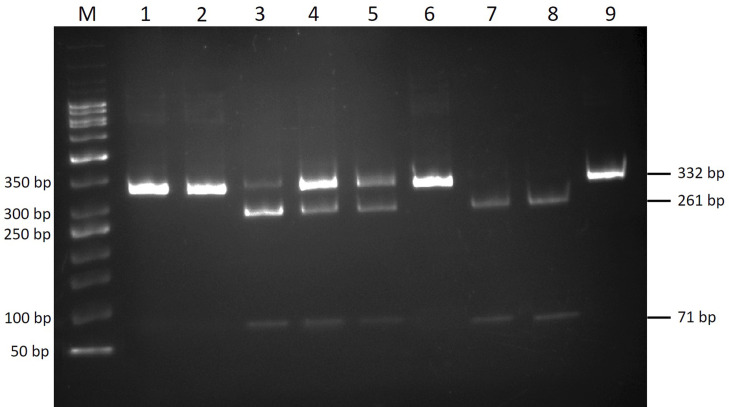
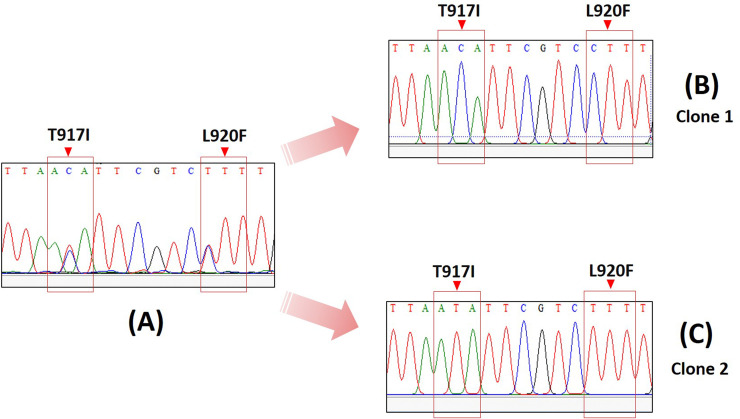
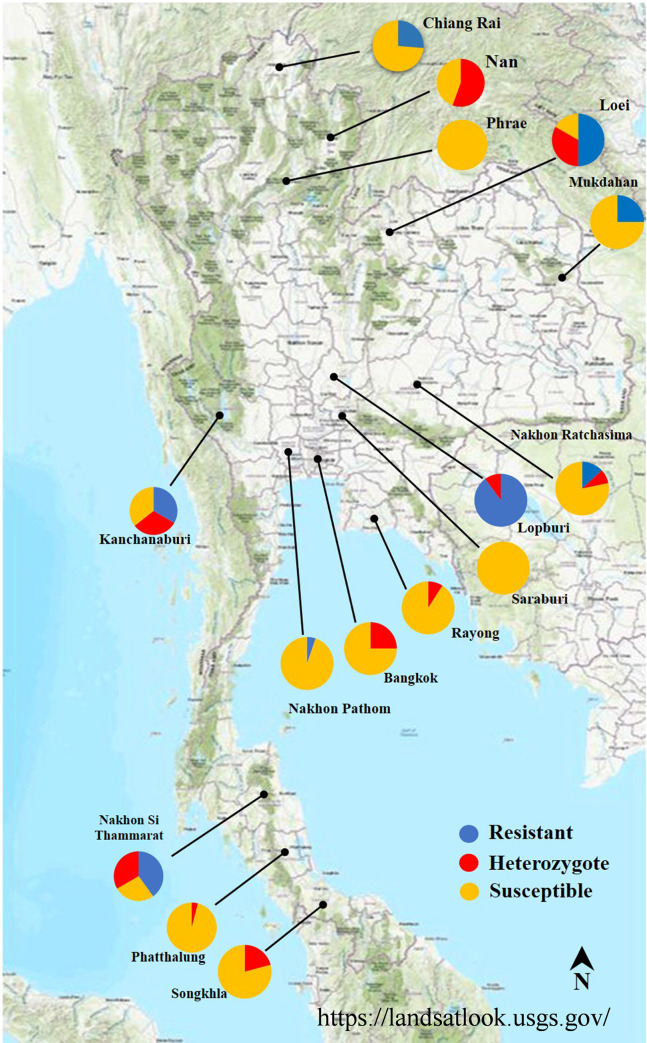
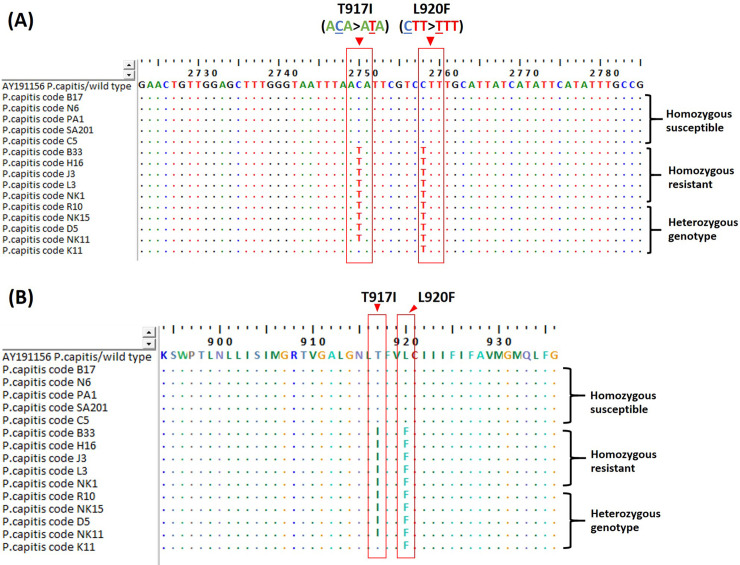
Human head lice are blood-sucking insects causing an infestation in humans called pediculosis capitis. The infestation is more prevalent in the school-aged population. Scalp itching, a common presenting symptom, results in scratching and sleep disturbance. The condition can lead to social stigmatization which can lead to loss of self-esteem. Currently, the mainstay of treatment for pediculosis is chemical insecticides such as permethrin. The extended use of permethrin worldwide leads to growing pediculicide resistance. The aim of this study is to demonstrate the presence of the knockdown resistance (kdr) mutation in head lice populations from six different localities of Thailand. A total of 260 head lice samples in this study were collected from 15 provinces in the 6 regions of Thailand. Polymerase chain reaction (PCR) was used to amplify the α subunit of voltage-sensitive sodium channel (VSSC) gene, kdr mutation (C→T substitution). Restriction fragment length polymorphism (RFLP) patterns and sequencing were used to identify the kdr T917I mutation and demonstrated three genotypic forms including homozygous susceptible (SS), heterozygous genotype (RS), and homozygous resistant (RR). Of 260 samples from this study, 156 (60.00%) were SS, 58 (22.31%) were RS, and 46 (17.69%) were RR. The overall frequency of the kdr T917I mutation was 0.31. Genotypes frequencies determination using the exact test of Hardy-Weinberg equilibrium found that northern, central, northeastern, southern, and western region of Thailand differed from expectation. The five aforementioned localities had positive inbreeding coefficient value (Fis > 0) which indicated an excess of homozygotes. The nucleotide and amino acid sequences of RS and RR showed T917I and L920F point mutations. In conclusion, this is the first study detecting permethrin resistance among human head lice from Thailand. PCR-RFLP is an easy technique to demonstrate the kdr mutation in head louse. The data obtained from this study would increase awareness of increasing of the kdr mutation in head louse in Thailand.
人体头虱是吸血昆虫,会导致人类感染头虱病。这种感染在学龄人口中更为普遍。常见的症状是头皮瘙痒,导致搔抓和睡眠障碍。这种情况会导致社会污名化,从而导致自尊心受损。目前,治疗头虱病的主要方法是使用化学杀虫剂,如氯菊酯。全世界广泛使用氯菊酯导致了抗药性的不断增加。本研究的目的是证明来自泰国六个不同地区的头虱种群存在击倒抗性(kdr)突变。本研究共采集了来自泰国六个地区 15 个省的 260 个头虱样本。聚合酶链反应(PCR)用于扩增电压敏感钠通道(VSSC)基因的α亚基,kdr 突变(C→T 取代)。限制性片段长度多态性(RFLP)模式和测序用于鉴定 kdr T917I 突变,并证明了三种基因型,包括纯合敏感型(SS)、杂合基因型(RS)和纯合抗性型(RR)。在本研究的 260 个样本中,156 个(60.00%)为 SS,58 个(22.31%)为 RS,46 个(17.69%)为 RR。kdr T917I 突变的总频率为 0.31。使用 Hardy-Weinberg 平衡精确检验确定基因型频率发现,泰国北部、中部、东北部、南部和西部地区与预期不符。上述五个地区的近交系数值(Fis>0)均为正值,表明纯合子过多。RS 和 RR 的核苷酸和氨基酸序列显示 T917I 和 L920F 点突变。综上所述,这是首次在泰国检测到人体头虱对氯菊酯的抗药性。PCR-RFLP 是一种简单的技术,可以证明头虱中的 kdr 突变。本研究获得的数据将提高人们对泰国头虱中 kdr 突变不断增加的认识。