Department of Veterinary Science, University for Development Studies, P. O. Box TL 1882, Tamale 00233, Ghana.
Antimicrobial Research Unit, Infection Genomics and Applied Bioinformatics Division, University of KwaZulu-Natal, Durban 4000, South Africa.
Genes (Basel). 2020 Dec 14;11(12):1504. doi: 10.3390/genes11121504.
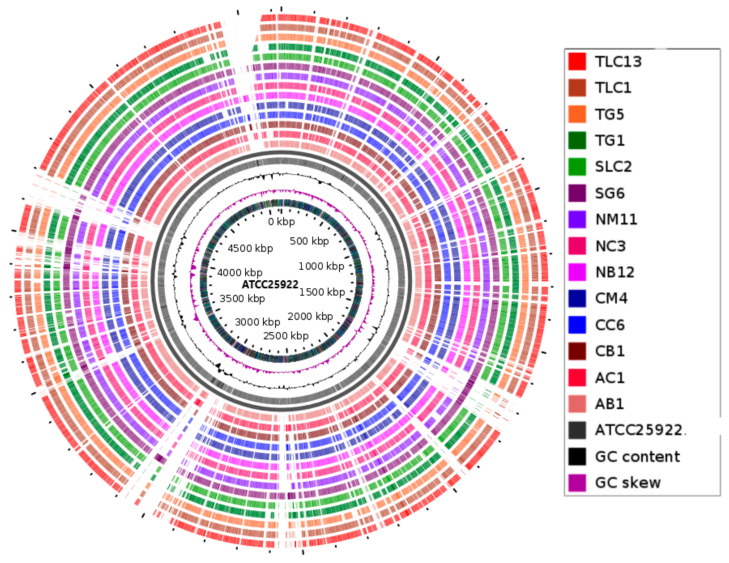
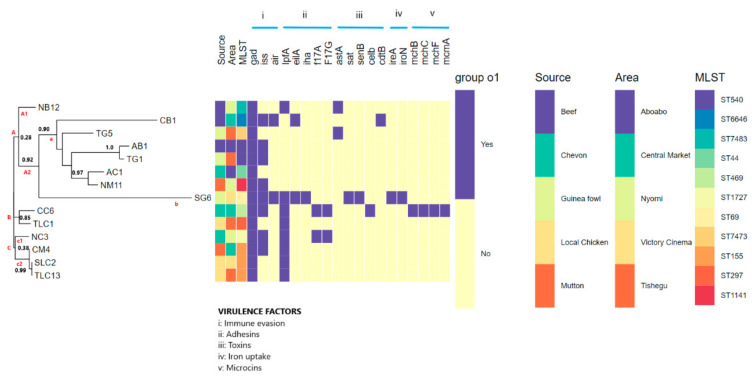
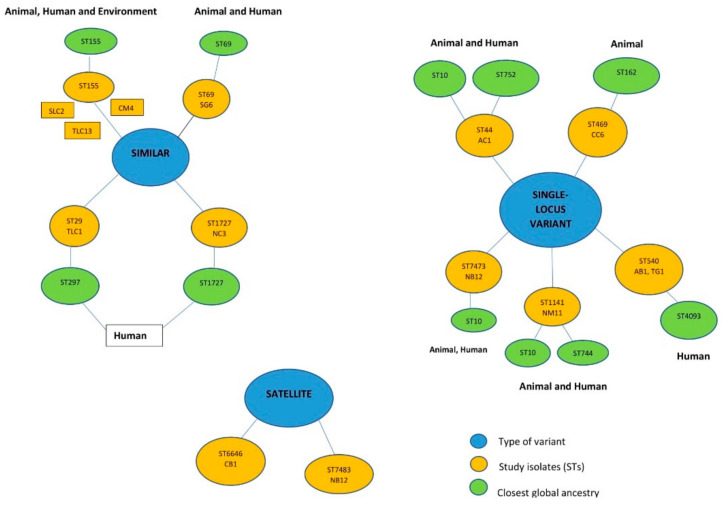
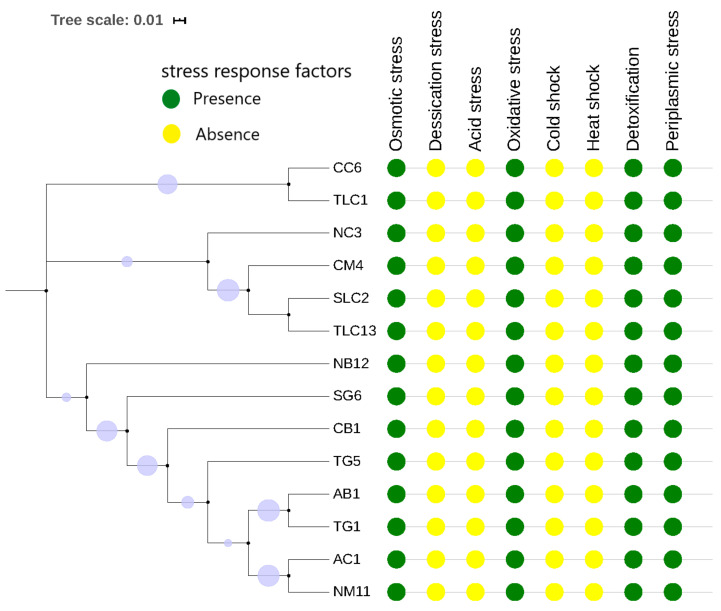
are among the most common foodborne pathogens associated with infections reported from meat sources. This study investigated the virulome, pathogenicity, stress response factors, clonal lineages, and the phylogenomic relationship of isolated from different meat sources in Ghana using whole-genome sequencing. Isolates were screened from five meat sources (beef, chevon, guinea fowl, local chicken, and mutton) and five areas (Aboabo, Central market, Nyorni, Victory cinema, and Tishegu) based in the Tamale Metropolis, Ghana. Following microbial identification, the strains were subjected to whole-genome sequencing. Comparative visualisation analyses showed different DNA synteny of the strains. The isolates consisted of diverse sequence types (STs) with the most common being ST155 ( = 3/14). Based Upon Related Sequence Types (eBURST) analyses of the study sequence types identified four similar clones, five single-locus variants, and two satellite clones (more distantly) with global curated STs. All the isolates possessed at least one restriction-modification (R-M) and CRISPR defence system. Further analysis revealed conserved stress response mechanisms (detoxification, osmotic, oxidative, and periplasmic stress) in the strains. Estimation of pathogenicity predicted a higher average probability score (P ≈ 0.937), supporting their pathogenic potential to humans. Diverse virulence genes that were clonal-specific were identified. Phylogenomic tree analyses coupled with metadata insights depicted the high genetic diversity of the isolates with no correlation with their meat sources and areas. The findings of this bioinformatic analyses further our understanding of in meat sources and are broadly relevant to the design of contamination control strategies in meat retail settings in Ghana.
是与肉类来源相关的感染报告中最常见的食源性病原体之一。本研究使用全基因组测序技术,调查了从加纳不同肉类来源中分离出的 的毒力组、致病性、应激反应因子、克隆谱系和系统发育关系。从加纳塔马利大都市区的五个肉类来源(牛肉、羊肉、珍珠鸡、本地鸡和羊肉)和五个地区(Aboabo、中央市场、Nyorni、胜利电影院和Tishegu)筛选分离株。在微生物鉴定后,对 菌株进行全基因组测序。比较可视化分析显示了菌株的不同 DNA 同线性。这些分离株包含多种序列类型(STs),最常见的是 ST155( = 3/14)。根据研究序列类型的相关序列类型(eBURST)分析,确定了四个相似克隆、五个单基因座变体和两个卫星克隆(更远),其中包含全球 curated STs。所有分离株都至少具有一个限制修饰(R-M)和 CRISPR 防御系统。进一步分析揭示了菌株中保守的应激反应机制(解毒、渗透、氧化和周质应激)。致病性预测的平均概率评分较高(P ≈ 0.937),支持了它们对人类的潜在致病性。鉴定了具有克隆特异性的多种毒力基因。系统发育树分析结合元数据洞察,描绘了 分离株的高遗传多样性,与它们的肉类来源和地区没有相关性。本生物信息学分析的结果进一步加深了我们对肉类来源中 的理解,并广泛适用于加纳肉类零售环境中污染控制策略的设计。