Department of Engineering Science, University of Oxford, Oxford, UK.
The Gurdon Institute, University of Cambridge, Cambridge, UK.
Nat Protoc. 2021 Feb;16(2):677-727. doi: 10.1038/s41596-020-00428-7. Epub 2020 Dec 16.
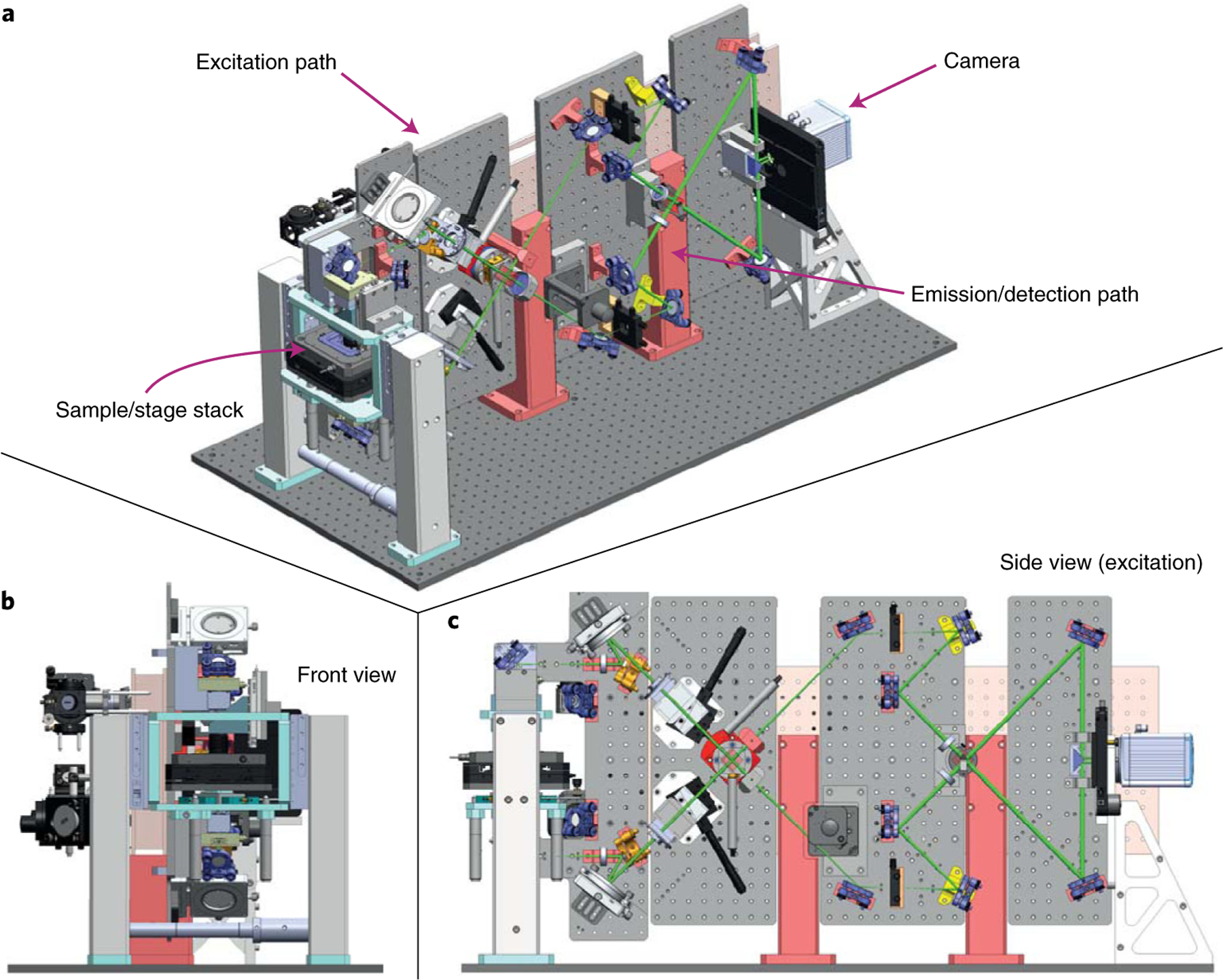
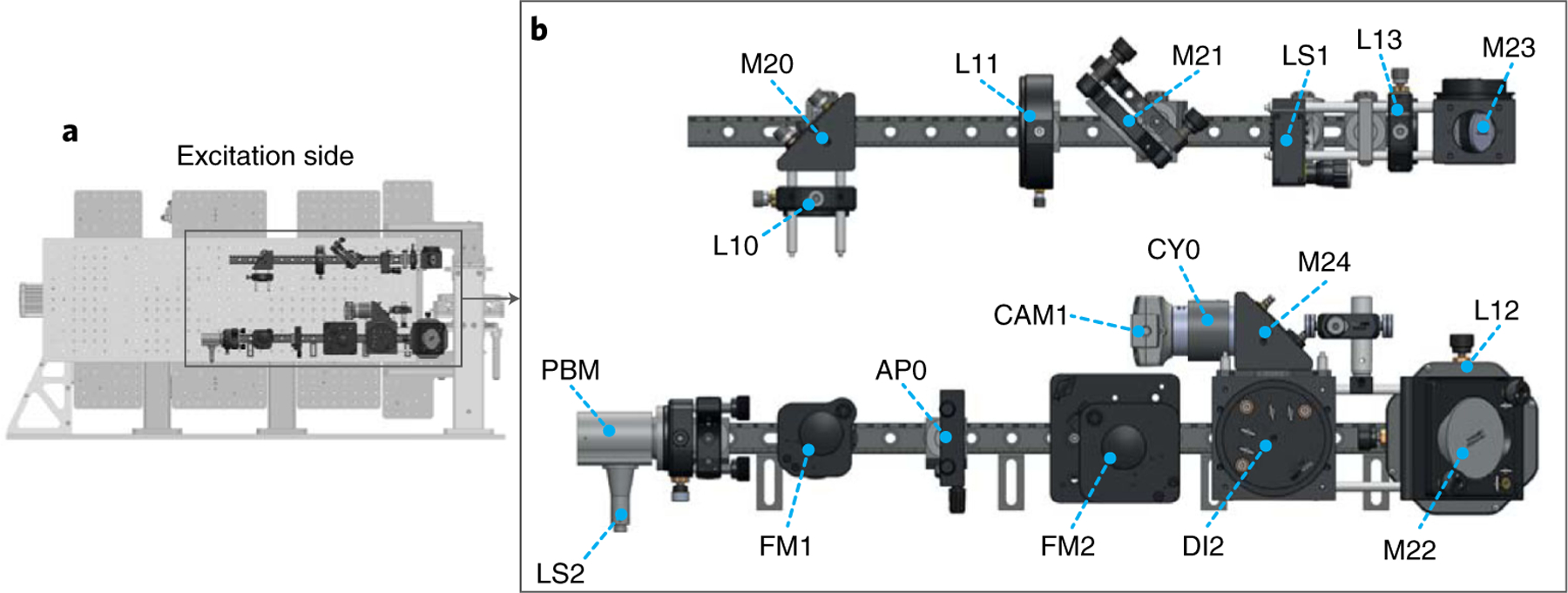
The development of single-molecule switching (SMS) fluorescence microscopy (also called single-molecule localization microscopy) over the last decade has enabled researchers to image cell biological structures at unprecedented resolution. Using two opposing objectives in a so-called 4Pi geometry doubles the available numerical aperture, and coupling this with interferometric detection has demonstrated 3D resolution down to 10 nm over entire cellular volumes. The aim of this protocol is to enable interested researchers to establish 4Pi-SMS super-resolution microscopy in their laboratories. We describe in detail how to assemble the optomechanical components of a 4Pi-SMS instrument, align its optical beampath and test its performance. The protocol further provides instructions on how to prepare test samples of fluorescent beads, operate this instrument to acquire images of whole cells and analyze the raw image data to reconstruct super-resolution 3D data sets. Furthermore, we provide a troubleshooting guide and present examples of anticipated results. An experienced optical instrument builder will require ~12 months from the start of ordering hardware components to acquiring high-quality biological images.
过去十年中,单分子荧光显微镜(也称为单分子定位显微镜)的发展使研究人员能够以前所未有的分辨率对细胞生物结构进行成像。在所谓的 4Pi 几何结构中使用两个相对的物镜可以将可用的数值孔径增加一倍,并且将其与干涉检测相结合,已经证明在整个细胞体积中可以达到 3D 分辨率低至 10nm。本协议的目的是使有兴趣的研究人员能够在他们的实验室中建立 4Pi-SMS 超分辨率显微镜。我们详细描述了如何组装 4Pi-SMS 仪器的光机组件,对准其光学光路并测试其性能。该协议还提供了有关如何制备荧光珠测试样品、操作该仪器以获取整个细胞图像以及分析原始图像数据以重建超分辨率 3D 数据集的说明。此外,我们提供了故障排除指南,并展示了预期结果的示例。有经验的光学仪器制造商从开始订购硬件组件到获得高质量的生物图像,大约需要 12 个月的时间。