Jeon Julie, Lourenco Jeferson, Kaiser Erin E, Waters Elizabeth S, Scheulin Kelly M, Fang Xi, Kinder Holly A, Platt Simon R, Rothrock Michael J, Callaway Todd R, West Franklin D, Park Hea Jin
Department of Foods and Nutrition, College of Family and Consumer Sciences, University of Georgia, Athens, GA, United States.
Department of Animal and Dairy Sciences, College of Agricultural and Environmental Sciences, University of Georgia, Athens, GA, United States.
Front Neurosci. 2020 Dec 3;14:587986. doi: 10.3389/fnins.2020.587986. eCollection 2020.
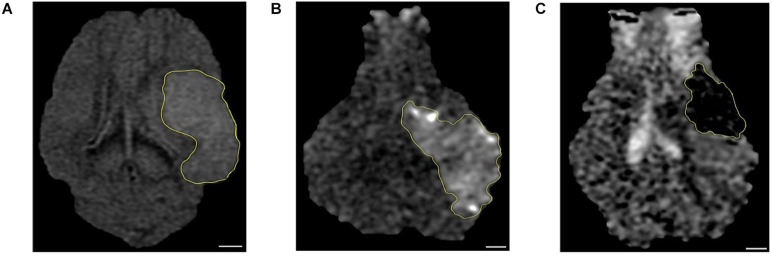
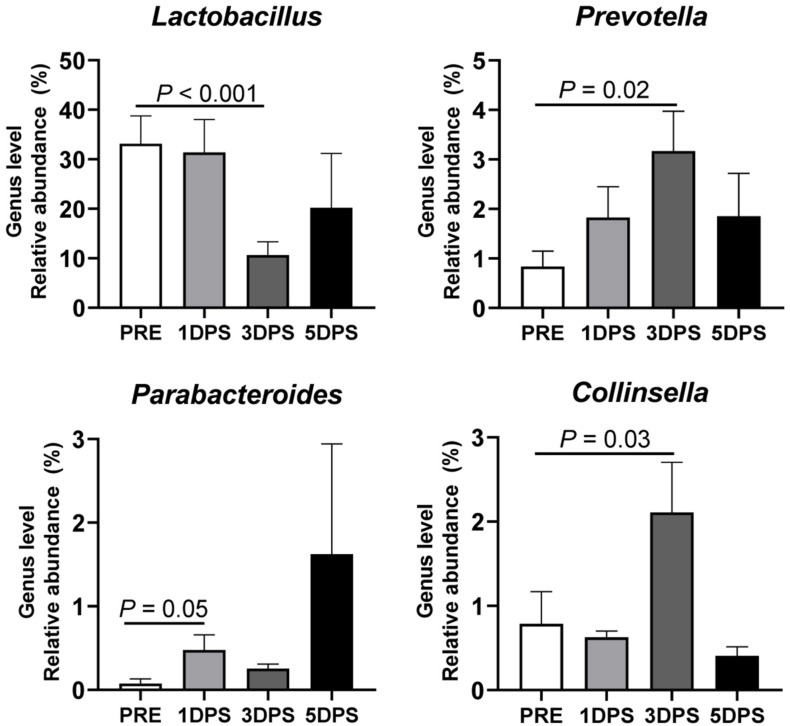
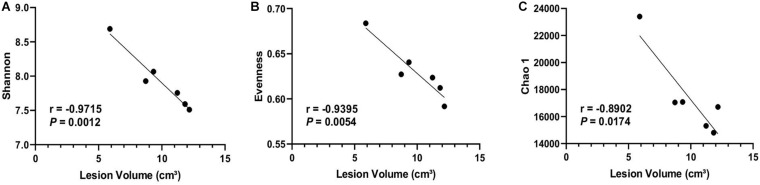
Stroke is a major cause of death and long-term disability affecting seven million adults in the United States each year. Recently, it has been demonstrated that neurological diseases, associated pathology, and susceptibility changes correlated with changes in the gut microbiota. However, changes in the microbial community in stroke has not been well characterized. The acute stage of stroke is a critical period for assessing injury severity, therapeutic intervention, and clinical prognosis. We investigated the changes in the gut microbiota composition and diversity using a middle cerebral artery (MCA) occlusion ischemic stroke pig model. Ischemic stroke was induced by cauterization of the MCA in pigs. Blood samples were collected prestroke and 4 h, 12 h, 1 day, and 5 days poststroke to evaluate circulating proinflammatory cytokines. Fecal samples were collected prestroke and 1, 3, and 5 days poststroke to assess gut microbiome changes. Results showed elevated systemic inflammation with increased plasma levels of tumor necrosis factor alpha at 4 h and interleukin-6 at 12 h poststroke, relative to prestroke. Microbial diversity and evenness were reduced at 1 day poststroke compared to prestroke. Microbial diversity at 3 days poststroke was negatively correlated with lesion volume. Moreover, beta-diversity analysis revealed trending overall differences over time, with the most significant changes in microbial patterns observed between prestroke and 3 days poststroke. Abundance of the Proteobacteria was significantly increased, while Firmicutes decreased at 3 days poststroke, compared to prestroke populations. Abundance of the lactic acid bacteria was reduced at 3 days poststroke. By day 5, the microbial pattern returned to similar values as prestroke, suggesting the plasticity of gut microbiome in an acute period of stroke in a pig model. These findings provide a basis for characterizing gut microbial changes during the acute stage of stroke, which can be used to assess stroke pathology and the potential development of therapeutic targets.
中风是导致死亡和长期残疾的主要原因,每年影响美国700万成年人。最近,有研究表明,神经疾病、相关病理学以及易感性变化与肠道微生物群的变化相关。然而,中风时微生物群落的变化尚未得到充分表征。中风急性期是评估损伤严重程度、治疗干预和临床预后的关键时期。我们使用大脑中动脉(MCA)闭塞性缺血性中风猪模型研究了肠道微生物群组成和多样性的变化。通过烧灼猪的MCA诱导缺血性中风。在中风前以及中风后4小时、12小时、1天和5天采集血样,以评估循环促炎细胞因子。在中风前以及中风后1天、3天和5天采集粪便样本,以评估肠道微生物组的变化。结果显示,与中风前相比,中风后4小时血浆肿瘤坏死因子α水平和12小时白细胞介素-6水平升高,全身炎症反应增强。与中风前相比,中风后1天微生物多样性和均匀度降低。中风后3天的微生物多样性与病变体积呈负相关。此外,β多样性分析显示,随着时间的推移总体存在差异趋势,中风前和中风后3天之间观察到微生物模式的最显著变化。与中风前菌群相比,中风后3天变形菌门的丰度显著增加,而厚壁菌门减少。中风后3天乳酸菌的丰度降低。到第5天,微生物模式恢复到与中风前相似的值,表明在猪模型中风急性期肠道微生物组具有可塑性。这些发现为表征中风急性期肠道微生物变化提供了依据,可用于评估中风病理学和治疗靶点的潜在开发。