Central Laboratory, First Affiliated Hospital, Harbin Medical University, Harbin, China.
College of Life Science, Northeast Agricultural University, Harbin, China.
Front Immunol. 2020 Dec 4;11:568741. doi: 10.3389/fimmu.2020.568741. eCollection 2020.
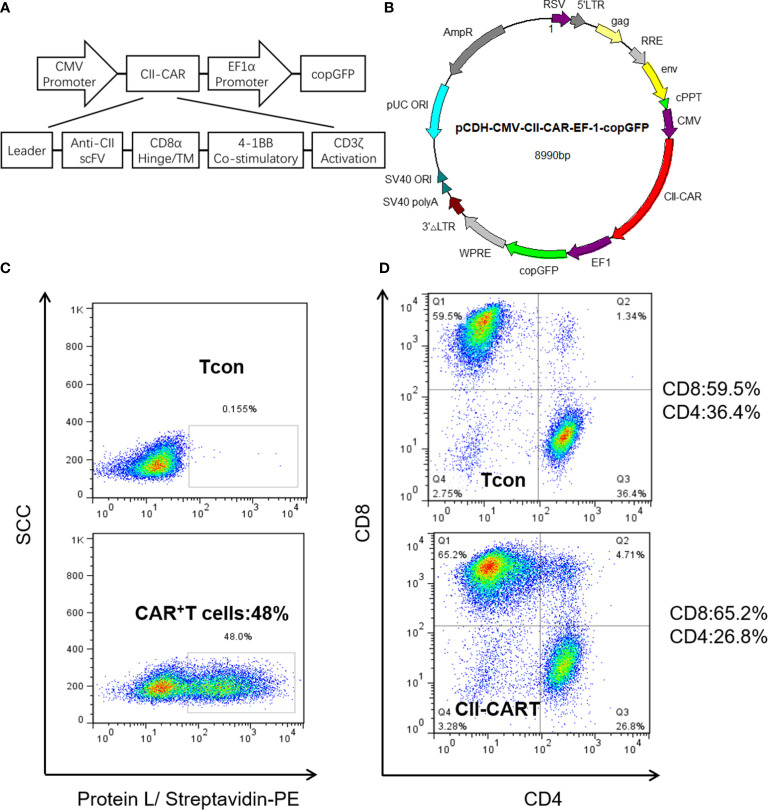
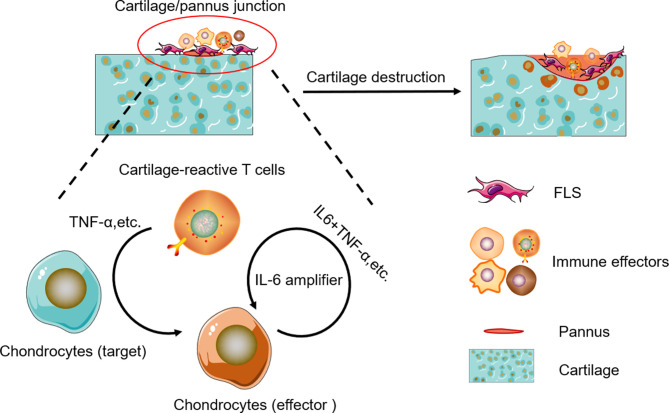
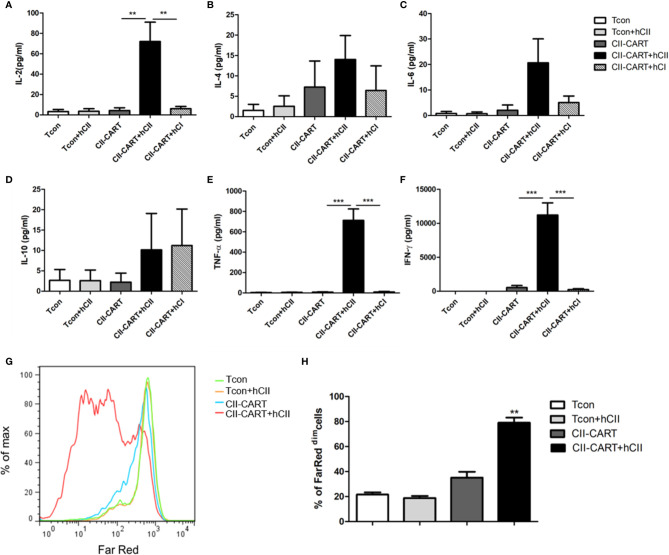
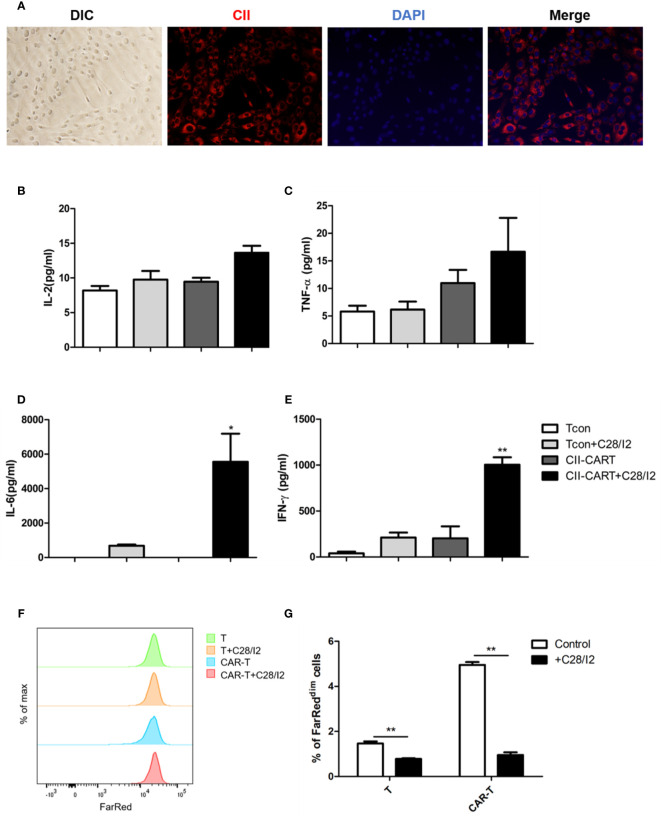
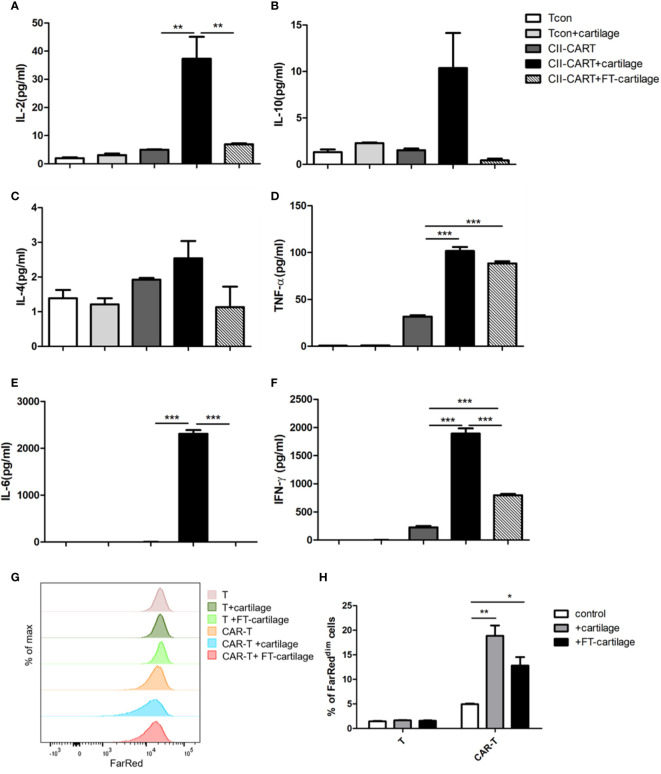
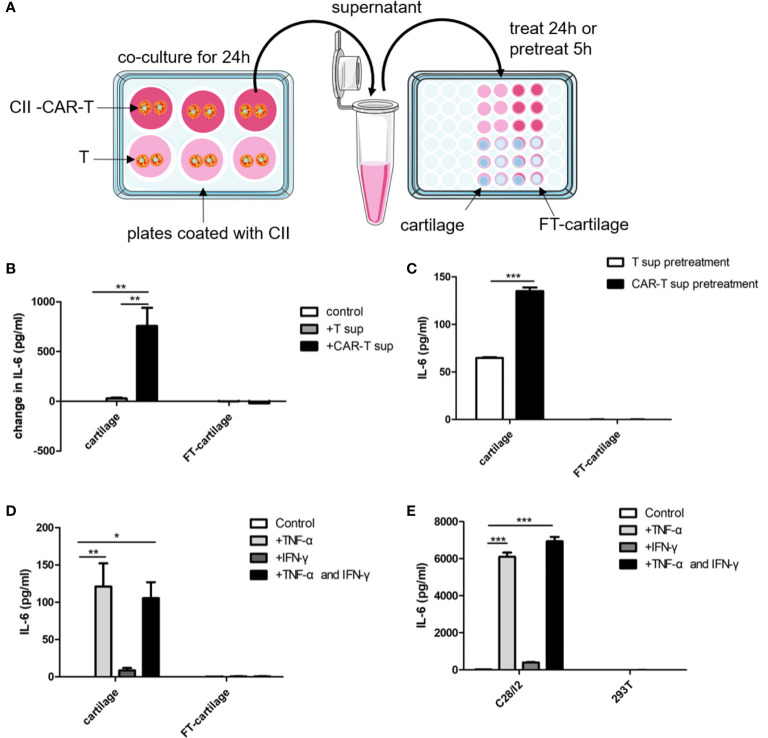
Cytokine cascades exist in many autoimmune disorders which amplify and sustain the autoimmune process and lead to chronic inflammatory injury to the host tissues. Increasing evidence indicates that chondrocytes can interact with T cells, which may be a crucial event in inflammatory arthritis. To address the reciprocal influences of cartilage-reactive T cells and chondrocytes, we constructed cartilage-reactive T cells by developing a type II collagen-specific chimeric antigen receptor (CII-CAR). An co-culture model of CII-CAR-T cells and fresh cartilage was developed, in which CII-CAR-T displayed specific proliferative capacity and cytokine release against fresh cartilage samples, and chondrocytes could respond to CII-CAR-T cells by secreting IL-6. The proposed model will help us to explore the possible cytokine cascades between cartilage-reactive T cells and cartilage.
细胞因子级联反应存在于许多自身免疫性疾病中,这些级联反应放大并维持自身免疫过程,导致宿主组织的慢性炎症损伤。越来越多的证据表明,软骨细胞可以与 T 细胞相互作用,这可能是炎症性关节炎的一个关键事件。为了研究软骨反应性 T 细胞和软骨细胞之间的相互影响,我们通过构建 II 型胶原特异性嵌合抗原受体(CII-CAR)来构建软骨反应性 T 细胞。建立了 CII-CAR-T 细胞与新鲜软骨的共培养模型,该模型中 CII-CAR-T 细胞对新鲜软骨样本表现出特异性增殖能力和细胞因子释放,软骨细胞可以通过分泌 IL-6 对 CII-CAR-T 细胞做出反应。该模型将有助于我们探讨软骨反应性 T 细胞和软骨之间可能存在的细胞因子级联反应。