Zhao Mei, Liu Min, Chen Wei, Zhang Haiping, Bai Yuxing, Ren Wen
Department of Preventive Dentistry, School of Stomatology, Capital Medical University, Beijing, China.
Department of Orthodontics, School of Stomatology, Capital Medical University, Beijing, China.
PeerJ. 2020 Dec 1;8:e10446. doi: 10.7717/peerj.10446. eCollection 2020.
Orthodontic treatment is widely used to treat malocclusion. However, the influence of treatment on the oral microbiome remains unclear. In this study, we investigated salivary microbial changes in patients undergoing orthodontic treatment.
In total, 19 orthodontic patients participated in this study. Saliva samples were collected at the following three timepoints: before (T0) and 3 months (T1) and 6 months (T2) after the placement of orthodontic appliances. High-throughput sequencing was performed based on the 16S rRNA gene V4 region.
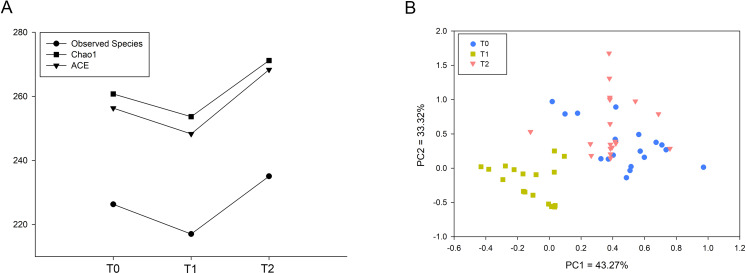
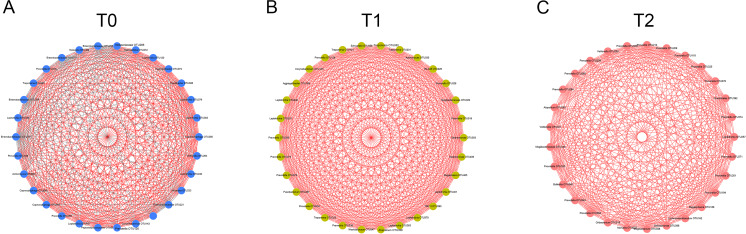
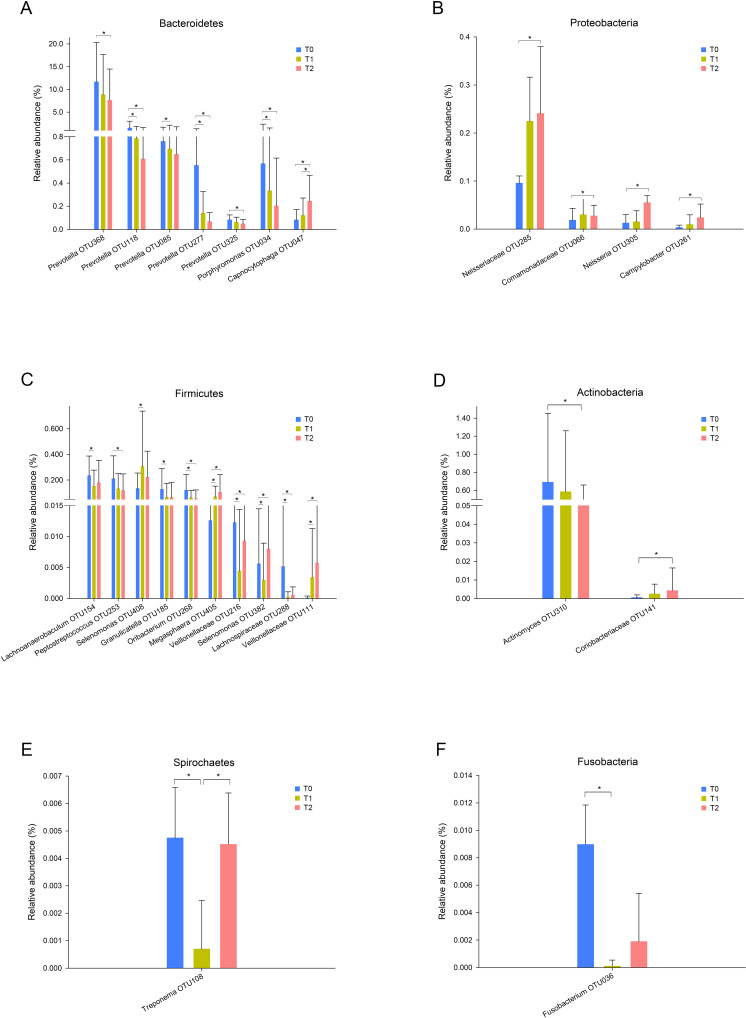
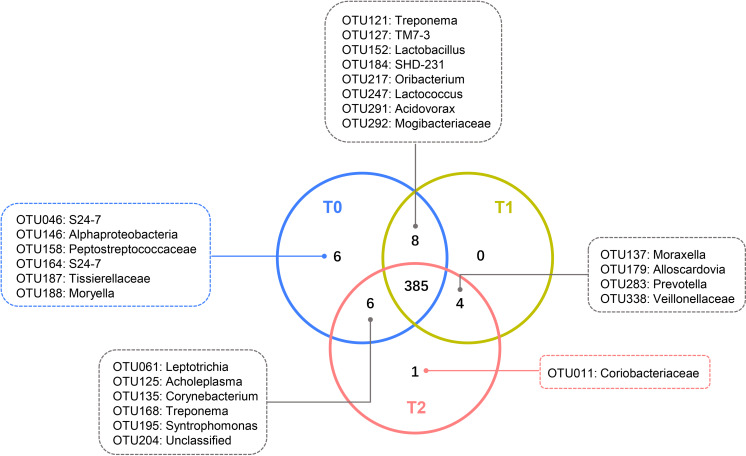
The phyla of Proteobacteria, Bacteroidetes, Firmicutes, Actinobacteria and Fusobacteria were predominant. Observed Species, Chao1 and ACE, which represent diversity, were significantly decreased at T1 and subsequently increased at T2. In addition, the diversity at T1 based on the Bray-Curtis distances differed from T0 and T2. The relative abundances of , and were decreased with treatment, whereas those of and exhibited the opposite results. In total, 385 of 410 operational taxonomic units were shared at T0, T1 and T2. The co-occurrence networks with hub nodes at T1 were the most complex.
Orthodontic treatment temporarily affected the saliva microbial community. This dynamic alteration in species did not induce deterioration in oral health. Oral hygiene instructions were necessary and should be emphasized during each visit. Further studies with longer observation periods and more participants are required.
正畸治疗被广泛用于治疗错牙合畸形。然而,治疗对口腔微生物群的影响仍不清楚。在本研究中,我们调查了接受正畸治疗患者的唾液微生物变化。
共有19名正畸患者参与本研究。在以下三个时间点收集唾液样本:正畸矫治器放置前(T0)、放置后3个月(T1)和6个月(T2)。基于16S rRNA基因V4区域进行高通量测序。
变形菌门、拟杆菌门、厚壁菌门、放线菌门和梭杆菌门为主要菌门。代表多样性的观测物种数、Chao1指数和ACE指数在T1时显著下降,随后在T2时上升。此外,基于Bray-Curtis距离的T1时的多样性与T0和T2时不同。随着治疗的进行,[此处原文缺失部分菌属名称]、[此处原文缺失部分菌属名称]和[此处原文缺失部分菌属名称]的相对丰度下降,而[此处原文缺失部分菌属名称]和[此处原文缺失部分菌属名称]的相对丰度则呈现相反的结果。在T0、T1和T2时,410个可操作分类单元中共有385个。T1时具有中心节点的共现网络最为复杂。
正畸治疗暂时影响唾液微生物群落。这种物种的动态变化并未导致口腔健康恶化。口腔卫生指导是必要的,并且在每次就诊时都应强调。需要进行更长观察期和更多参与者的进一步研究。