IMPACT, the Institute for Mental and Physical Health and Clinical Translation, Food & Mood Centre, School of Medicine, Barwon Health, Deakin University , Geelong, Australia.
Monash Alfred Psychiatry Research Centre (Maprc), Central Clinical School, Faculty of Medicine Nursing and Health Sciences, Monash University , Melbourne, Australia.
Gut Microbes. 2020 Nov 9;12(1):1-25. doi: 10.1080/19490976.2020.1854640.
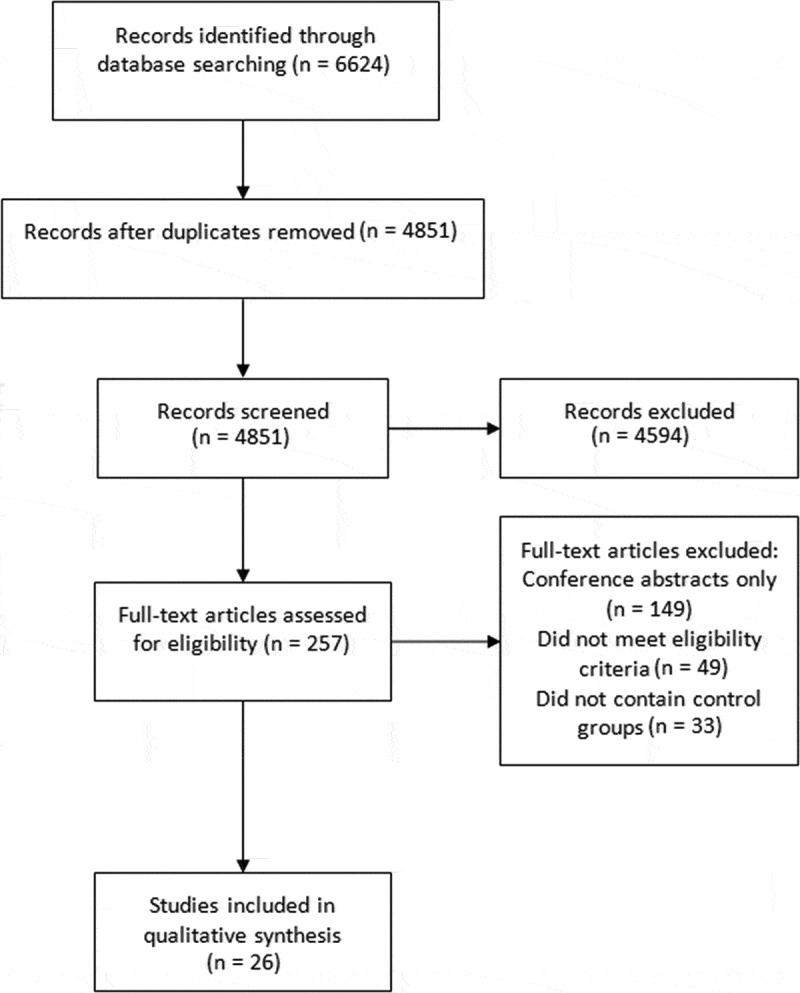
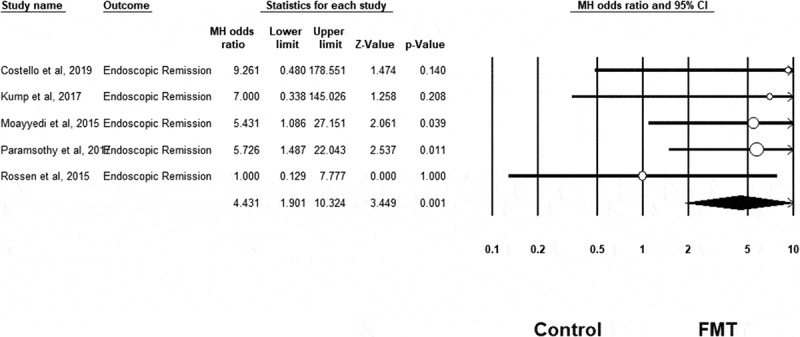
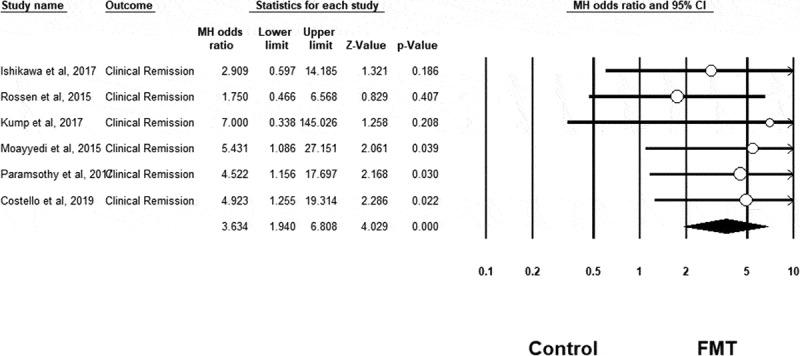
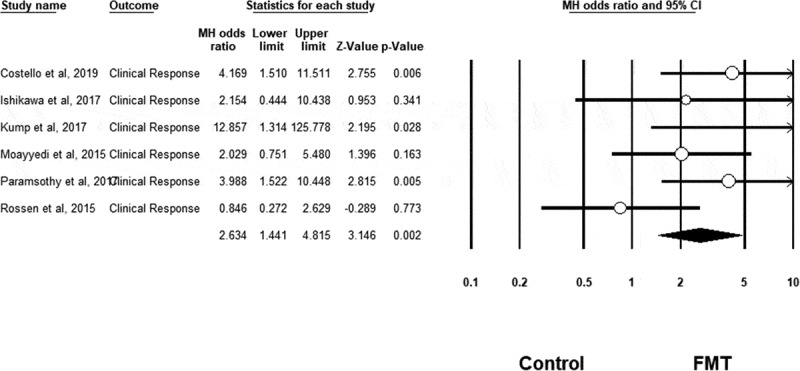
The intestinal microbiome has been identified as a key modifier for a variety of health conditions. Fecal Microbiota Transplantation (FMT) has emerged as a fast, safe, and effective means by which to modify the intestinal microbiome and potentially treat a variety of health conditions. Despite extensive research of FMT for CDI, there is a lack of clarity informed by systematic synthesis of data regarding the safety and efficacy of FMT for other health conditions. This systematic review used PRISMA guidelines and was prospectively registered with PROSPERO (CRD42018104243). In March 2020, a search of MEDLINE, EMBASE, and PsycINFO was conducted. We identified 26 eligible studies. A meta-analysis of FMT for active Ulcerative Colitis (UC) showed that FMT significantly improved rates of clinical remission (OR = 3.634, 95% CI = 1.940 to 6.808, I = 0%, < .001), clinical response (OR = 2.634, 95% CI = 1.441 to 4.815, I = 33%, = .002) and endoscopic remission (OR = 4.431, 95% CI = 1.901 to 10.324, I = 0%, = .001). With respect to Irritable Bowel Syndrome, a meta-analysis showed no significant change in symptoms following FMT ( = .739). Hepatic disorders, metabolic syndrome, and antibiotic-resistant organisms were conditions with emerging data on FMT. Serious adverse events (AE) were more often reported in control group participants (n = 43) compared with FMT group participants (n = 26). There were similar rates of mild to moderate AE in both groups. Preliminary data suggest that FMT is a potentially safe, well-tolerated and efficacious treatment for certain conditions other than CDI, with evidence for active UC being the most compelling.
肠道微生物群已被确定为多种健康状况的关键调节剂。粪便微生物群移植(FMT)已成为一种快速、安全、有效的方法,可以改变肠道微生物群,并可能治疗多种健康状况。尽管对 CDI 的 FMT 进行了广泛的研究,但缺乏系统综合数据来明确 FMT 治疗其他健康状况的安全性和有效性。这项系统评价使用了 PRISMA 指南,并在 PROSPERO(CRD42018104243)中进行了前瞻性注册。2020 年 3 月,对 MEDLINE、EMBASE 和 PsycINFO 进行了检索。我们确定了 26 项合格的研究。FMT 治疗活动性溃疡性结肠炎(UC)的荟萃分析表明,FMT 显著提高了临床缓解率(OR=3.634,95%CI=1.940 至 6.808,I=0%,<0.001)、临床反应率(OR=2.634,95%CI=1.441 至 4.815,I=33%,=0.002)和内镜缓解率(OR=4.431,95%CI=1.901 至 10.324,I=0%,=0.001)。关于肠易激综合征,荟萃分析显示 FMT 后症状没有显著变化(=0.739)。肝性疾病、代谢综合征和抗生素耐药菌是 FMT 新兴数据的疾病。与 FMT 组参与者(n=26)相比,对照组参与者(n=43)报告的严重不良事件(AE)更多。两组的轻度至中度 AE 发生率相似。初步数据表明,FMT 是一种潜在安全、耐受良好且有效的治疗方法,可治疗 CDI 以外的某些疾病,其中活动性 UC 的证据最具说服力。