Department of Poultry Science, Texas A&M University, College Station, USA.
Department of Poultry Science, Texas A&M University, College Station, USA.
Poult Sci. 2021 Jan;100(1):47-54. doi: 10.1016/j.psj.2020.09.085. Epub 2020 Oct 8.
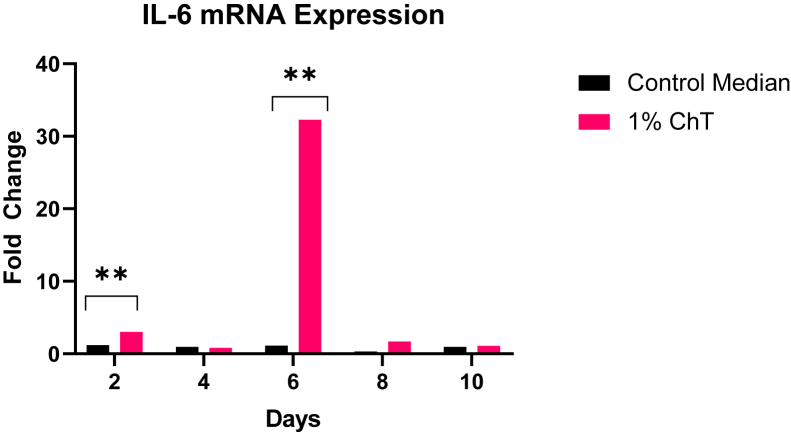
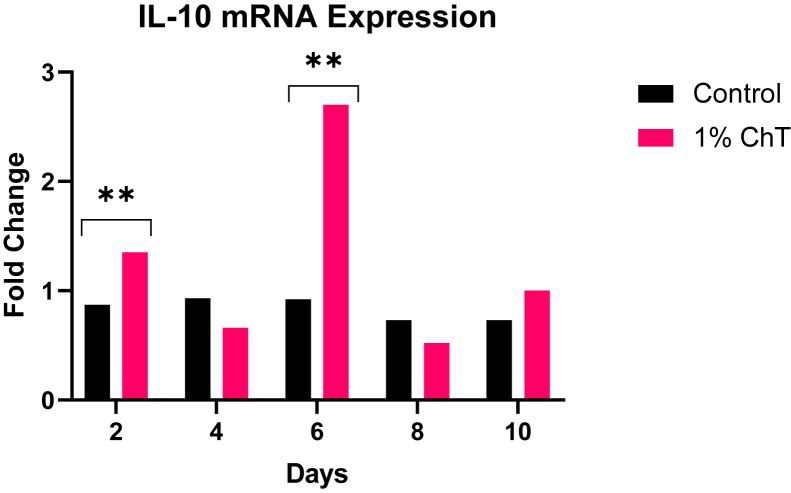
As the demand for alternatives to antibiotic growth promoters (AGP) increases in food animal production, phytobiotic compounds gain popularity because of their ability to mimic the desirable bioactive properties of AGP. Chestnut tannins (ChT) are one of many phytobiotic compounds used as feed additives, particularly in South America, for broilers because of its favorable antimicrobial and growth promotion capabilities. Although studies have observed the microbiological and immunologic effects of ChT, there is a lack of studies evaluating the metabolic function of ChT. Therefore, the objective of this study was to characterize the cecal metabolic changes induced by ChT inclusion and how they relate to growth promotion. A total of 200 day-of-hatch broiler chicks were separated into 2 feed treatment groups: control and 1% ChT. The ceca from all the chicks in the treatment groups were collected on day 2, 4, 6, 8, and 10 after hatch. The cytokine mRNA quantitative RT-PCR was determined using TaqMan gene expression assays for IL-1B, IL-6, IL-8, IL-10, and interferon gamma quantification. The cytokine expression showed highly significant increased expressions of IL-6 and IL-10 on day 2 and 6, whereas the other proinflammatory cytokines did not have significantly increased expression. The results from the kinome array demonstrated that the ceca from birds fed with 1% ChT had significant (P < 0.05) metabolic alterations based on the number of peptides when compared with the control group across all day tested. The increased expression of IL-6 appeared to be strongly indicative of altered metabolism, whereas the increased expression of IL-10 indicated the regulatory effect against other proinflammatory cytokines other than IL-6. The ChT initiate a metabolic mechanism during the first 10 d in the broiler. For the first time, we show that a phytobiotic product initially modulates metabolism while also potentially supporting growth and feed efficiency downstream. In conclusion, a metabolic phenotype alteration in the ceca of chickens fed ChT may indicate the importance of enhanced broiler gut health.
随着在食品动物生产中对抗生素生长促进剂(AGP)替代品的需求增加,植物生物活性化合物因其能够模拟 AGP 的理想生物活性特性而受到关注。栗木单宁(ChT)是用作饲料添加剂的众多植物生物活性化合物之一,特别是在南美,由于其有利的抗菌和促进生长的特性,在肉鸡中使用。尽管已经观察到 ChT 的微生物和免疫作用,但缺乏评估 ChT 代谢功能的研究。因此,本研究的目的是描述 ChT 摄入引起的盲肠代谢变化及其与生长促进的关系。总共 200 只孵化日龄的肉鸡雏鸡被分为 2 个饲料处理组:对照组和 1% ChT。在孵化后第 2、4、6、8 和 10 天,从处理组中所有小鸡的盲肠中收集样本。使用 TaqMan 基因表达分析试剂盒测定细胞因子 mRNA 定量 RT-PCR,以定量 IL-1B、IL-6、IL-8、IL-10 和干扰素γ的表达。细胞因子表达显示,在第 2 和第 6 天,IL-6 和 IL-10 的表达显著增加,而其他促炎细胞因子的表达没有显著增加。激酶组阵列的结果表明,与对照组相比,在所有检测的天中,喂食 1% ChT 的鸡的盲肠根据肽的数量具有显著的代谢变化(P < 0.05)。IL-6 的表达增加似乎强烈表明代谢发生了改变,而 IL-10 的表达增加表明除了 IL-6 之外,对其他促炎细胞因子的调节作用。ChT 在肉鸡的前 10 天内启动了一种代谢机制。这是首次表明,植物生物活性产品最初会调节代谢,同时也可能支持下游的生长和饲料效率。总之,喂食 ChT 的鸡盲肠代谢表型的改变可能表明增强肉鸡肠道健康的重要性。