Research Center for High Performance Sport, Campus de los Jerónimos Nº 135, Catholic University of Murcia, UCAM, 30107 Murcia, Spain.
Health, Economy, Motricity and Education Research Group (HEME), Faculty of Sport Sciences, University of Extremadura. Avda. de la Universidad, s/n., 10003 Cáceres, Spain.
Nutrients. 2020 Dec 21;12(12):3911. doi: 10.3390/nu12123911.
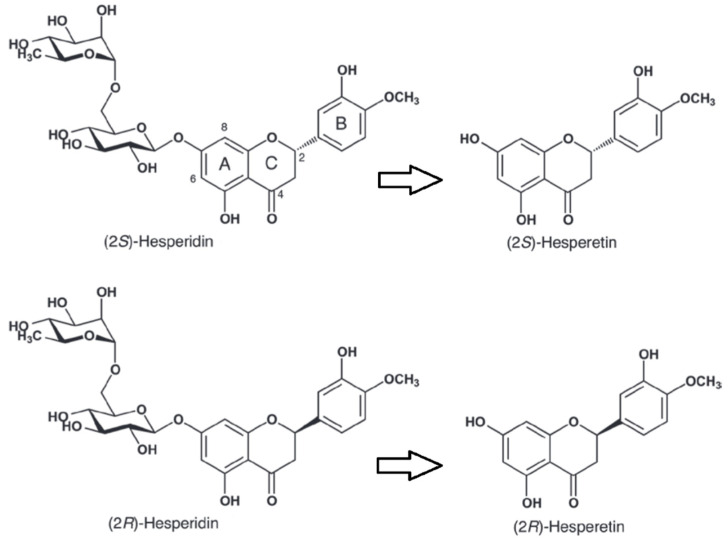
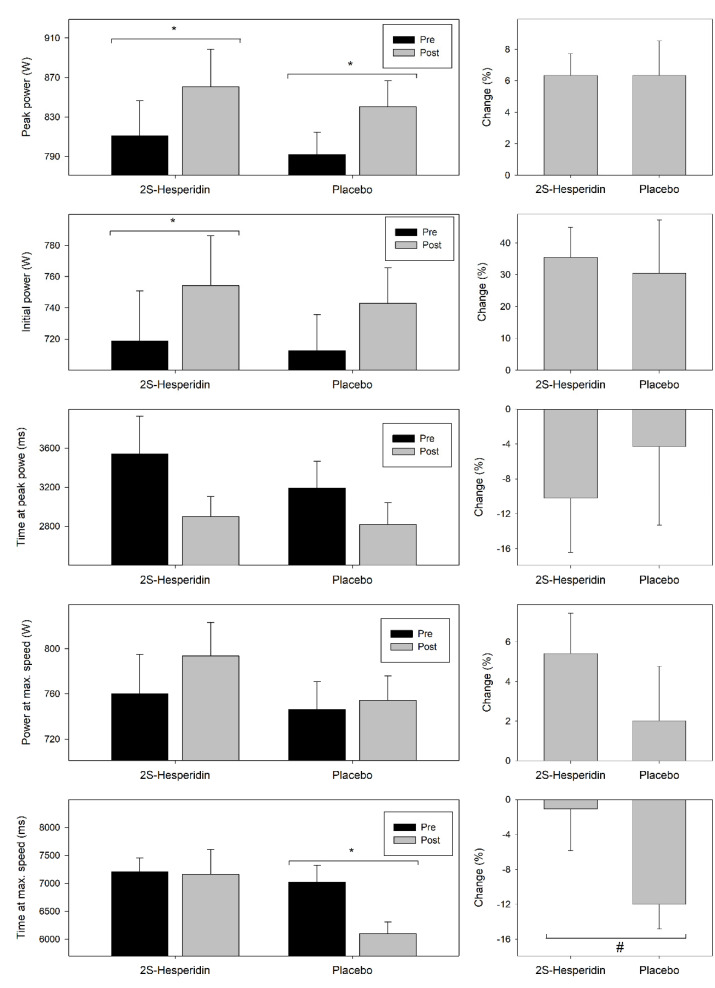
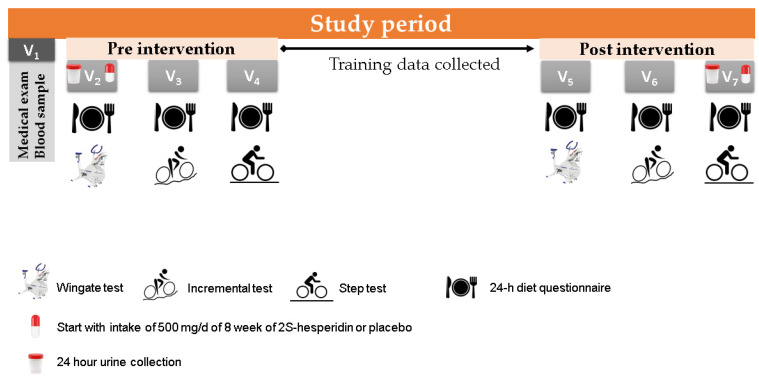
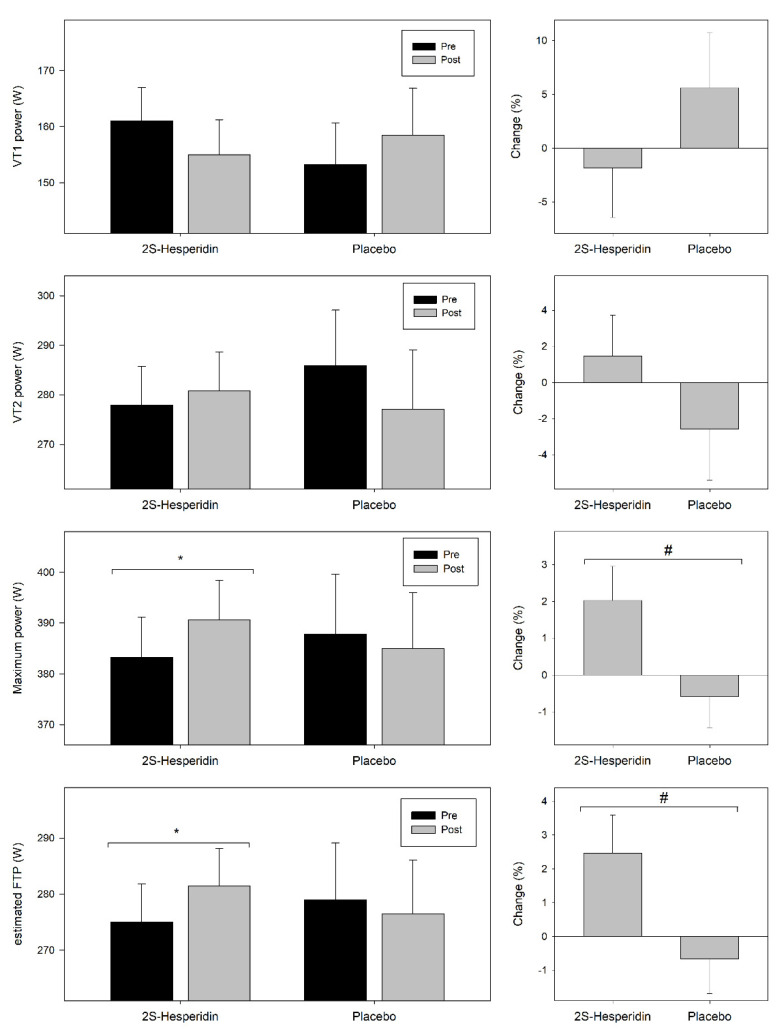
2S-Hesperidin is a flavanone (flavonoid) found in high concentrations in citrus fruits. It has an antioxidant and anti-inflammatory effects, improving performance in animals. This study investigated the effects of chronic intake of an orange extract (2S-hesperidin) or placebo on non-oxidative/glycolytic and oxidative metabolism markers and performance markers in amateur cyclists. A double-blind, randomized, placebo-controlled trial was carried out between late September and December 2018. Forty amateur cyclists were randomized into two groups: one taking 500 mg/day 2S-hesperidin and the other taking 500 mg/day placebo (microcellulose) for eight weeks. All participants completed the study. An incremental test was used to evaluate performance, and a step test was used to measure oxygen consumption, carbon dioxide, efficiency and oxidation of carbohydrates and fat by indirect calorimetry. The anaerobic power (non-oxidative) was determined using Wingate tests (30 s). After eight weeks supplementation, there was an increase in the incremental test in estimated functional threshold power (FTP) (3.2%; ≤ 0.05) and maximum power (2.7%; ≤ 0.05) with 2S-hesperdin compared to placebo. In the step test, there was a decrease in VO (L/min) (-8.3%; ≤ 0.01) and VOR (mL/kg/min) (-8.9%; ≤ 0.01) at VT2 in placebo. However, there were no differences between groups. In the Wingate test, there was a significant increase ( ≤ 0.05) in peak and relative power in both groups, but without differences between groups. Supplementation with an orange extract (2S-hesperdin) 500 mg/day improves estimated FTP and maximum power performance in amateur cyclists.
2S-橘皮素是一种在柑橘类水果中高浓度存在的类黄酮(类黄酮)。它具有抗氧化和抗炎作用,可提高动物的性能。本研究调查了慢性摄入橙子提取物(2S-橘皮素)或安慰剂对业余自行车运动员非氧化/糖酵解和氧化代谢标志物以及运动表现标志物的影响。 2018 年 9 月下旬至 12 月进行了一项双盲、随机、安慰剂对照试验。将 40 名业余自行车运动员随机分为两组:一组每天服用 500 毫克 2S-橘皮素,另一组每天服用 500 毫克安慰剂(微纤维素),持续八周。所有参与者均完成了研究。递增测试用于评估表现,台阶测试用于通过间接测热法测量氧气消耗、二氧化碳、碳水化合物和脂肪的效率和氧化。使用测功计测试(30 秒)确定无氧能力(非氧化)。 八周补充后,与安慰剂相比,2S-橘皮素组的递增测试中估计的功能阈值功率(FTP)(3.2%;≤0.05)和最大功率(2.7%;≤0.05)增加。在台阶测试中,安慰剂组在 VT2 时 VO(L/min)(-8.3%;≤0.01)和 VOR(mL/kg/min)(-8.9%;≤0.01)下降。但是,两组之间没有差异。在测功计测试中,两组的峰值和相对功率均有显著增加(≤0.05),但两组之间没有差异。每天补充橙子提取物(2S-橘皮素)500 毫克可提高业余自行车运动员的估计 FTP 和最大功率表现。