Department of Global Health, Global Studies Institute, University of Geneva, 1211 Geneva, Switzerland.
Faculty of Medicine, Institute of Global Health, University of Geneva, 1211 Geneva, Switzerland.
Int J Environ Res Public Health. 2020 Dec 21;17(24):9593. doi: 10.3390/ijerph17249593.
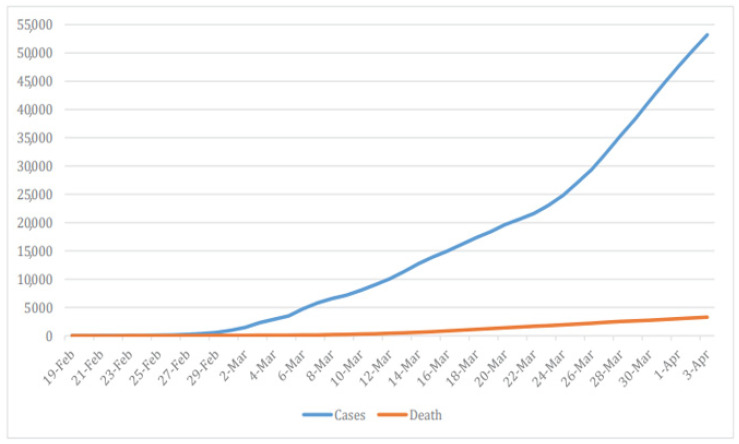
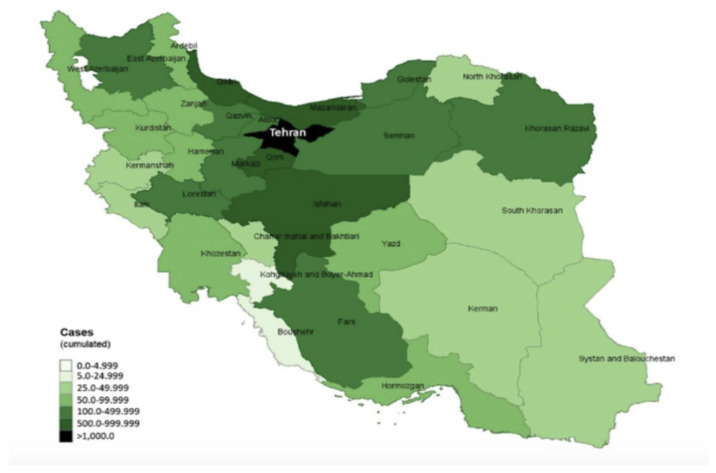
The coronavirus disease 2019 (COVID-19) pandemic has affected millions of people worldwide. It brought about the implementation of various measures and restrictions at a global level. Iran has been one of the countries with the highest rates of COVID-19 cases. This study reviews the initial outbreak of COVID-19 in Iran and examines the mitigation strategies adopted by the country. Moreover, it reports the socioeconomic challenges faced by the authorities during the efforts to contain the virus. A transdisciplinary literature review was carried out and a political measures timeline was constructed. A broad overview of the initial phase of the COVID-19 outbreak in Iran is presented, starting from the first confirmed case on 19 February 2020 until April 2020. The results of this epidemiological and socioeconomic case review of Iran suggests that the political measures undertaken by the Republic of Iran contributed to the decrease of the prevalence of COVID-19. However, due to the existing financial bottleneck, Iran has faced limited health system resources. Therefore, the response was not sufficient to restrict the spread and the efficient handling of the virus in the long-term.
2019 年冠状病毒病(COVID-19)大流行影响了全球数百万人。它在全球范围内实施了各种措施和限制。伊朗是 COVID-19 病例率最高的国家之一。本研究回顾了伊朗 COVID-19 的最初爆发,并考察了该国采取的缓解策略。此外,它还报告了当局在努力遏制病毒过程中面临的社会经济挑战。进行了跨学科文献回顾,并构建了政治措施时间表。本文对伊朗 COVID-19 最初爆发的初始阶段进行了广泛的概述,从 2020 年 2 月 19 日首次确诊病例开始,直至 2020 年 4 月。对伊朗进行的 COVID-19 流行的流行病学和社会经济案例回顾的结果表明,伊朗伊斯兰共和国采取的政治措施有助于降低 COVID-19 的流行率。但是,由于存在财务瓶颈,伊朗的卫生系统资源有限。因此,这种反应不足以限制病毒的传播和长期有效处理。