Houvast Ruben D, Vankemmelbeke Mireille, Durrant Lindy G, Wuhrer Manfred, Baart Victor M, Kuppen Peter J K, de Geus-Oei Lioe-Fee, Vahrmeijer Alexander L, Sier Cornelis F M
Department of Surgery, Leiden University Medical Center, 2333 ZA Leiden, The Netherlands.
Scancell Limited, University of Nottingham Biodiscovery Institute, University Park, Nottingham NG7 2RD, UK.
Cancers (Basel). 2020 Dec 21;12(12):3870. doi: 10.3390/cancers12123870.
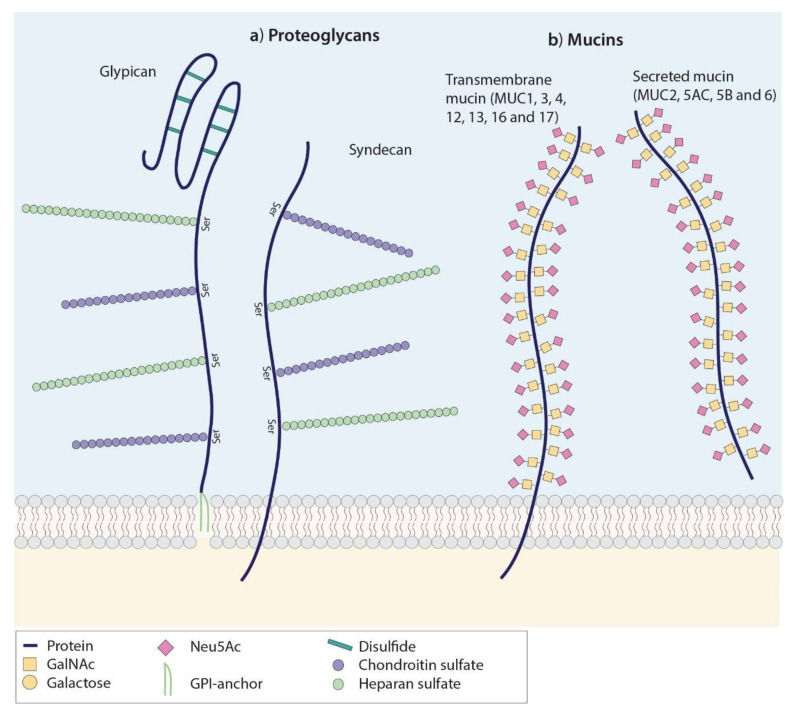
Real-time tumor imaging techniques are increasingly used in oncological surgery, but still need to be supplemented with novel targeted tracers, providing specific tumor tissue detection based on intra-tumoral processes or protein expression. To maximize tumor/non-tumor contrast, targets should be highly and homogenously expressed on tumor tissue only, preferably from the earliest developmental stage onward. Unfortunately, most evaluated tumor-associated proteins appear not to meet all of these criteria. Thus, the quest for ideal targets continues. Aberrant glycosylation of proteins and lipids is a fundamental hallmark of almost all cancer types and contributes to tumor progression. Additionally, overexpression of glycoproteins that carry aberrant glycans, such as mucins and proteoglycans, is observed. Selected tumor-associated glyco-antigens are abundantly expressed and could, thus, be ideal candidates for targeted tumor imaging. Nevertheless, glycan-based tumor imaging is still in its infancy. In this review, we highlight the potential of glycans, and heavily glycosylated proteoglycans and mucins as targets for multimodal tumor imaging by discussing the preclinical and clinical accomplishments within this field. Additionally, we describe the major advantages and limitations of targeting glycans compared to cancer-associated proteins. Lastly, by providing a brief overview of the most attractive tumor-associated glycans and glycosylated proteins in association with their respective tumor types, we set out the way for implementing glycan-based imaging in a clinical practice.
实时肿瘤成像技术在肿瘤外科手术中的应用越来越广泛,但仍需要补充新型靶向示踪剂,以基于肿瘤内过程或蛋白质表达实现特定肿瘤组织的检测。为了最大化肿瘤/非肿瘤对比度,靶点应仅在肿瘤组织上高度且均匀地表达,最好从最早的发育阶段开始。不幸的是,大多数评估的肿瘤相关蛋白似乎并不满足所有这些标准。因此,对理想靶点的探索仍在继续。蛋白质和脂质的异常糖基化是几乎所有癌症类型的一个基本特征,并有助于肿瘤进展。此外,还观察到携带异常聚糖的糖蛋白(如粘蛋白和蛋白聚糖)的过表达。选定的肿瘤相关糖抗原大量表达,因此可能是靶向肿瘤成像的理想候选物。然而,基于聚糖的肿瘤成像仍处于起步阶段。在本综述中,我们通过讨论该领域的临床前和临床成果,强调聚糖、高度糖基化的蛋白聚糖和粘蛋白作为多模态肿瘤成像靶点的潜力。此外,我们描述了与癌症相关蛋白相比,靶向聚糖的主要优点和局限性。最后,通过简要概述最具吸引力的肿瘤相关聚糖和糖基化蛋白及其各自的肿瘤类型,我们为在临床实践中实施基于聚糖的成像指明了方向。