Liu Yingmiao, Paauwe Madelon, Nixon Andrew B, Hawinkels Lukas J A C
Department of Medicine, Duke University Medical Center, Durham, NC 27710, USA.
Department of Gastroenterology and Hepatology, Leiden University Medical Center, 2300 RC Leiden, The Netherlands.
Int J Mol Sci. 2020 Dec 25;22(1):147. doi: 10.3390/ijms22010147.
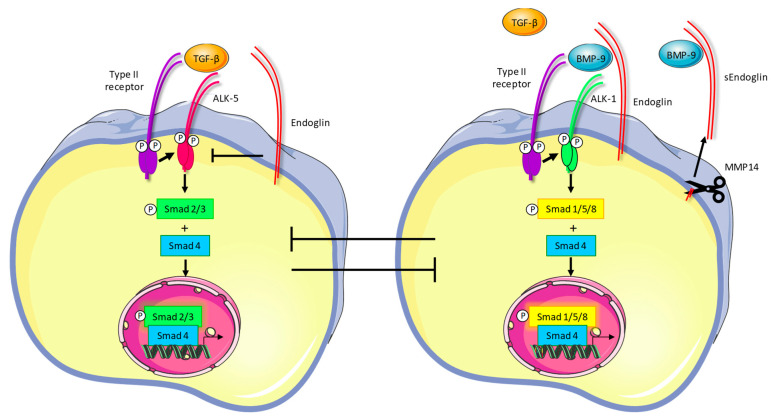
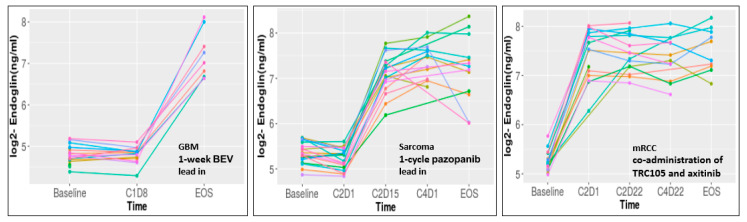
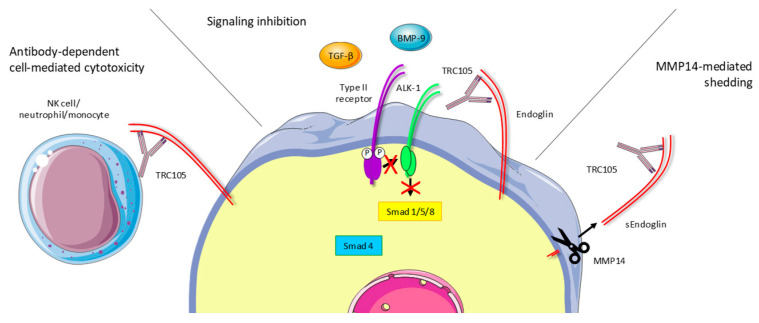
Approximately 30 years ago, endoglin was identified as a transforming growth factor (TGF)-β coreceptor with a crucial role in developmental biology and tumor angiogenesis. Its selectively high expression on tumor vessels and its correlation with poor survival in cancer patients led to the exploration of endoglin as a therapeutic target for cancer. The endoglin neutralizing antibody TRC105 (Carotuximab, Tracon Pharmaceuticals (San Diego, CA, USA) was subsequently tested in a wide variety of preclinical cancer models before being tested in phase I-III clinical studies in cancer patients as both a monotherapy and in combination with other chemotherapeutic and anti-angiogenic therapies. The combined data of these studies have revealed new insights into the role of endoglin in angiogenesis and its expression and functional role on other cells in the tumor microenvironment. In this review, we will summarize the preclinical work, clinical trials and biomarker studies of TRC105 and explore what these studies have enabled us to learn and what questions remain unanswered.
大约30年前,内皮糖蛋白被鉴定为一种转化生长因子(TGF)-β共受体,在发育生物学和肿瘤血管生成中起关键作用。它在肿瘤血管上选择性高表达,且与癌症患者的不良生存相关,这促使人们探索将内皮糖蛋白作为癌症的治疗靶点。内皮糖蛋白中和抗体TRC105(卡罗妥昔单抗,美国加利福尼亚州圣地亚哥市Tracon制药公司)随后在多种临床前癌症模型中进行了测试,然后在癌症患者的I-III期临床研究中作为单一疗法以及与其他化疗和抗血管生成疗法联合进行测试。这些研究的综合数据揭示了关于内皮糖蛋白在血管生成中的作用及其在肿瘤微环境中其他细胞上的表达和功能作用的新见解。在本综述中,我们将总结TRC105的临床前工作、临床试验和生物标志物研究,并探讨这些研究使我们学到了什么以及哪些问题仍未得到解答。