
青蒿素及其衍生物在2型糖尿病治疗中的潜在作用
The Potential Roles of Artemisinin and Its Derivatives in the Treatment of Type 2 Diabetes Mellitus.
作者信息
Jiang Ya-Yi, Shui Jia-Cheng, Zhang Bo-Xun, Chin Jia-Wei, Yue Ren-Song
机构信息
Hospital of Chengdu University of Traditional Chinese Medicine, Chengdu, China.
Department of Endocrinology, Guang'anmen Hospital of China, China Academy of Chinese Medical Sciences, Beijing, China.
出版信息
Front Pharmacol. 2020 Nov 26;11:585487. doi: 10.3389/fphar.2020.585487. eCollection 2020.
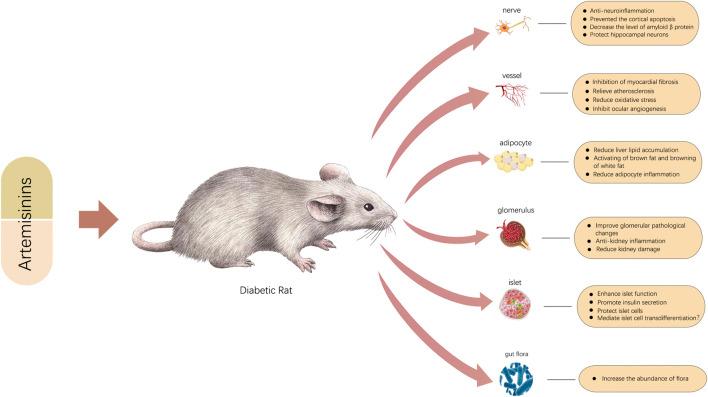
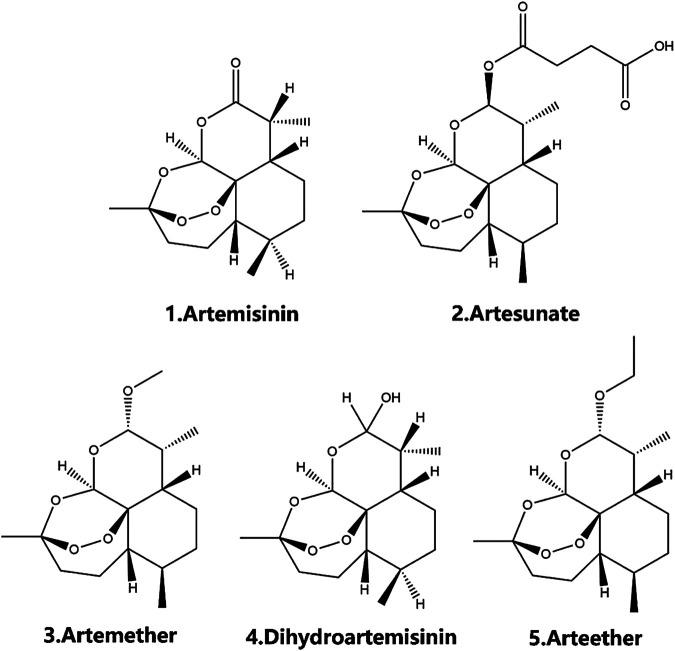
Type 2 diabetes mellitus (T2DM) is a chronic disease that has become a global public health problem. Studies on T2DM prevention and treatment mostly focus on discovering therapeutic drugs. Artemisinin and its derivatives were originally used as antimalarial treatments. In recent years, the roles of artemisinins in T2DM have attracted much attention. Artemisinin treatments not only attenuate insulin resistance and restore islet ß-cell function in T2DM but also have potential therapeutic effects on diabetic complications, including diabetic kidney disease, cognitive impairment, diabetic retinopathy, and diabetic cardiovascular disease. Many and experiments have confirmed the therapeutic utility of artemisinin and its derivatives on T2DM, but no article has systematically demonstrated the specific role artemisinin plays in the treatment of T2DM. This review summarizes the potential therapeutic effects and mechanism of artemisinin and its derivatives in T2DM and associated complications, providing a reference for subsequent related research.
2型糖尿病(T2DM)是一种已成为全球公共卫生问题的慢性疾病。关于T2DM预防和治疗的研究大多集中在发现治疗药物上。青蒿素及其衍生物最初用作抗疟治疗。近年来,青蒿素在T2DM中的作用备受关注。青蒿素治疗不仅可减轻T2DM中的胰岛素抵抗并恢复胰岛β细胞功能,而且对糖尿病并发症,包括糖尿病肾病、认知障碍、糖尿病视网膜病变和糖尿病心血管疾病具有潜在治疗作用。许多体内和体外实验已证实青蒿素及其衍生物对T2DM的治疗效用,但尚无文章系统地论证青蒿素在T2DM治疗中所起的具体作用。本综述总结了青蒿素及其衍生物在T2DM及相关并发症中的潜在治疗作用和机制,为后续相关研究提供参考。
 Zotero 插件