Centre for Complex Disease and Precision Medicine, School of Biomedical Sciences and Pharmacy, The University of Newcastle, Callaghan, NSW, Australia; Precision Medicine Research Program, Hunter Medical Research Institute, Newcastle, NSW, Australia.
Kinghorn Centre for Clinical Genomics, Garvan Medical Research Institute, Darlinghurst, NSW, Australia.
Am J Hum Genet. 2022 Sep 1;109(9):1620-1637. doi: 10.1016/j.ajhg.2022.07.011.
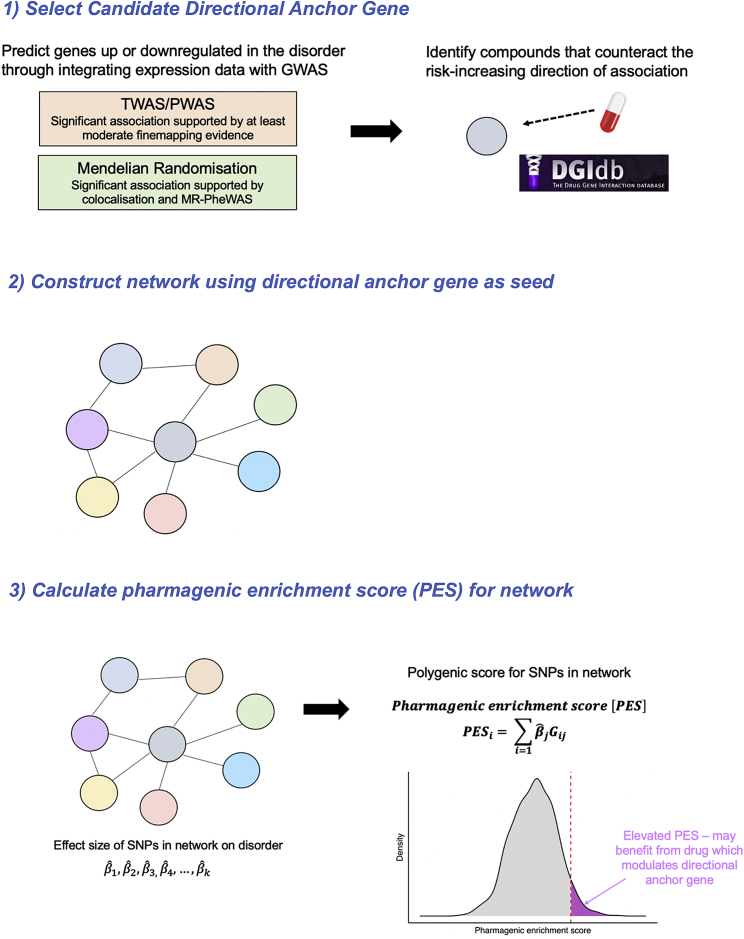
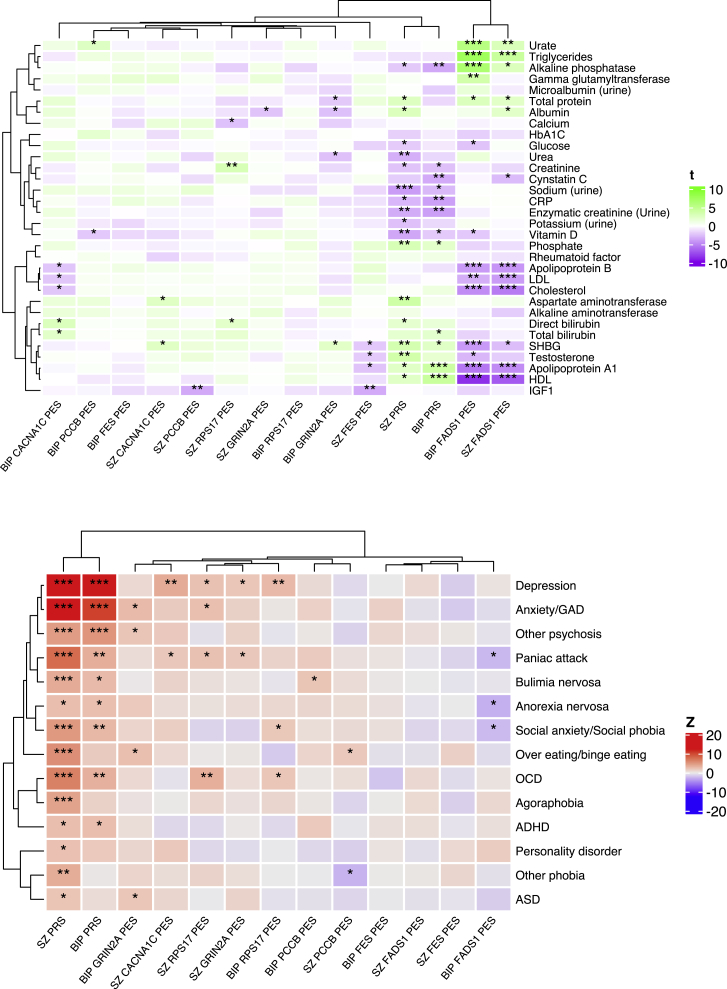
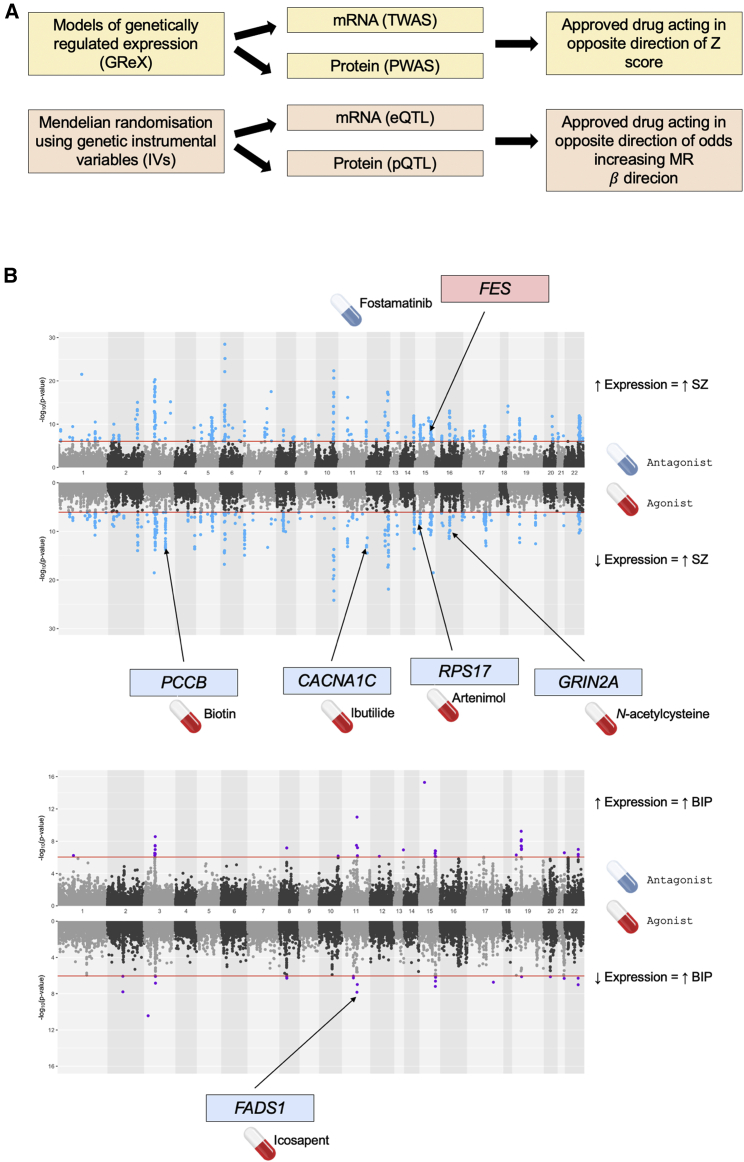
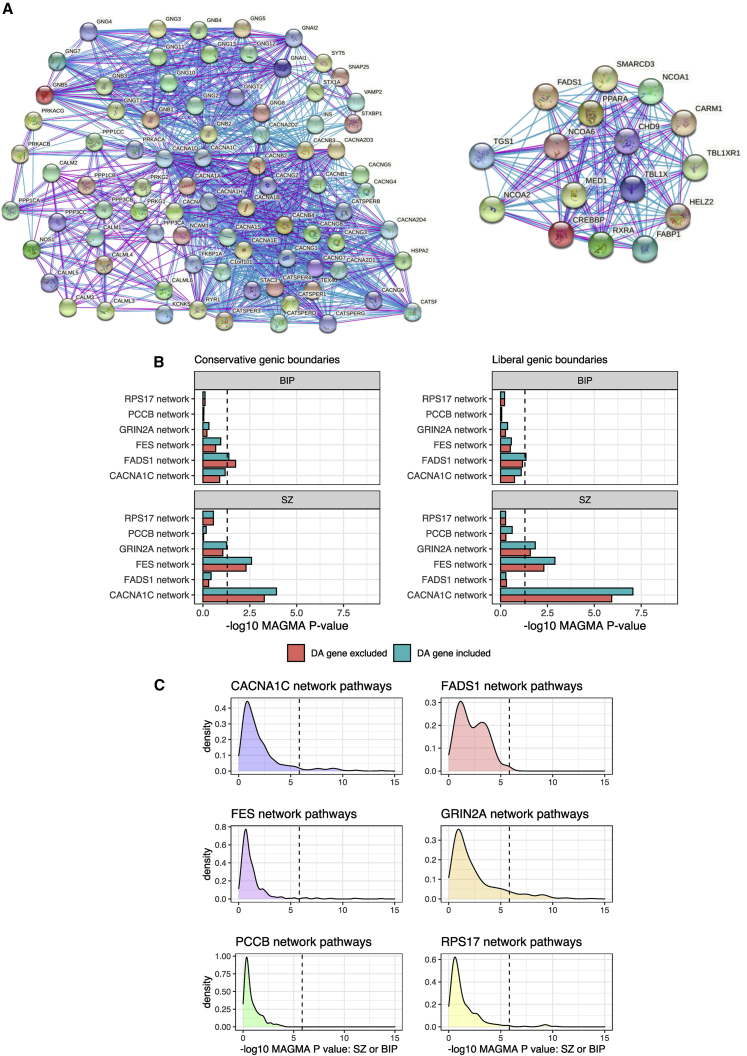
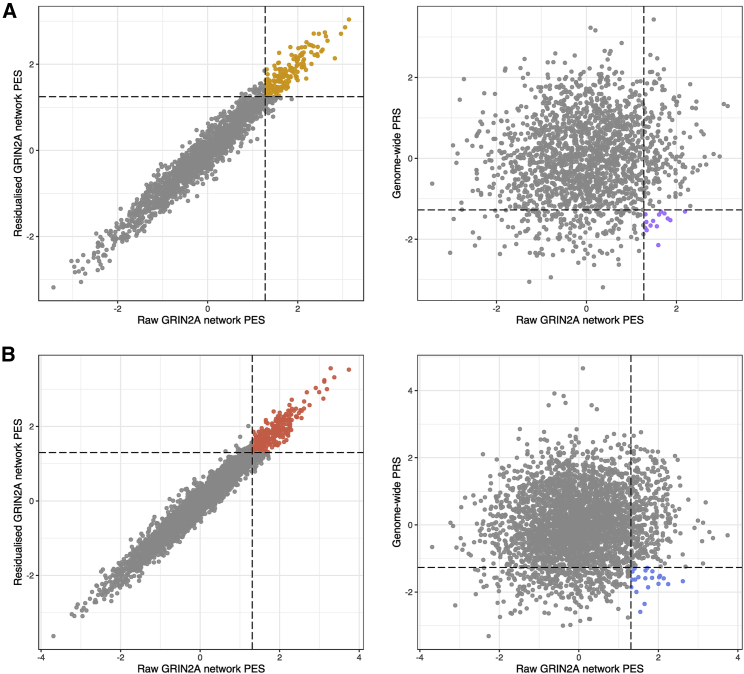
Genetically informed drug development and repurposing is an attractive prospect for improving patient outcomes in psychiatry; however, the effectiveness of these endeavors is confounded by heterogeneity. We propose an approach that links interventions implicated by disorder-associated genetic risk, at the population level, to a framework that can target these compounds to individuals. Specifically, results from genome-wide association studies are integrated with expression data to prioritize individual "directional anchor" genes for which the predicted risk-increasing direction of expression could be counteracted by an existing drug. While these compounds represent plausible therapeutic candidates, they are not likely to be equally efficacious for all individuals. To account for this heterogeneity, we constructed polygenic scores restricted to variants annotated to the network of genes that interact with each directional anchor gene. These metrics, which we call a pharmagenic enrichment score (PES), identify individuals with a higher burden of genetic risk, localized in biological processes related to the candidate drug target, to inform precision drug repurposing. We used this approach to investigate schizophrenia and bipolar disorder and reveal several compounds targeting specific directional anchor genes that could be plausibly repurposed. These genetic risk scores, mapped to the networks associated with target genes, revealed biological insights that cannot be observed in undifferentiated genome-wide polygenic risk score (PRS). For example, an enrichment of these partitioned scores in schizophrenia cases with otherwise low PRS. In summary, genetic risk could be used more specifically to direct drug repurposing candidates that target particular genes implicated in psychiatric and other complex disorders.
基于遗传学的药物研发和再利用是改善精神疾病患者治疗效果的一个很有吸引力的前景;然而,这些努力的效果受到异质性的影响。我们提出了一种方法,将与疾病相关的遗传风险所涉及的干预措施与一个框架联系起来,该框架可以将这些化合物靶向个体。具体来说,全基因组关联研究的结果与表达数据相结合,以确定个体的“定向锚”基因,这些基因的表达预测风险增加的方向可以被现有药物抵消。虽然这些化合物代表了合理的治疗候选物,但它们不太可能对所有个体都同样有效。为了考虑这种异质性,我们构建了仅针对与每个定向锚基因相互作用的基因网络注释变体的多基因评分。我们将这些指标称为 Pharmagenic 富集评分 (PES),它可以识别出具有更高遗传风险负担的个体,这些风险负担集中在与候选药物靶点相关的生物学过程中,从而实现精准药物再利用。我们使用这种方法研究了精神分裂症和双相情感障碍,并揭示了几种可能被合理重新利用的靶向特定定向锚基因的化合物。这些遗传风险评分映射到与目标基因相关的网络上,揭示了在未分化的全基因组多基因风险评分 (PRS) 中无法观察到的生物学见解。例如,这些分区评分在 PRS 较低的精神分裂症病例中富集。总之,遗传风险可以更具体地用于指导针对特定基因的药物再利用候选物,这些基因与精神疾病和其他复杂疾病有关。