Department of Computer Engineering, Istanbul Sabahattin Zaim University, 34303, Istanbul, Turkey.
Department of Mathematics and Computer Science, Larbi Tebessi University, 12018, Tébessa, Algeria.
Interdiscip Sci. 2021 Mar;13(1):103-117. doi: 10.1007/s12539-020-00403-6. Epub 2021 Jan 2.
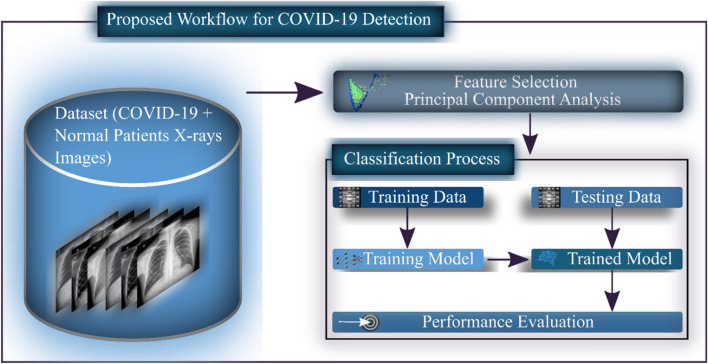
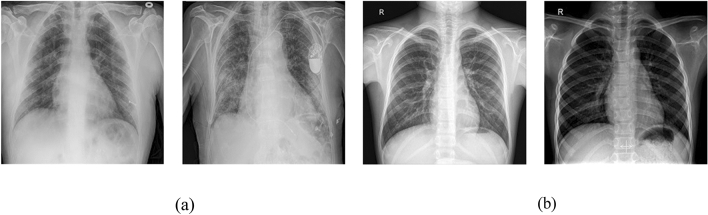
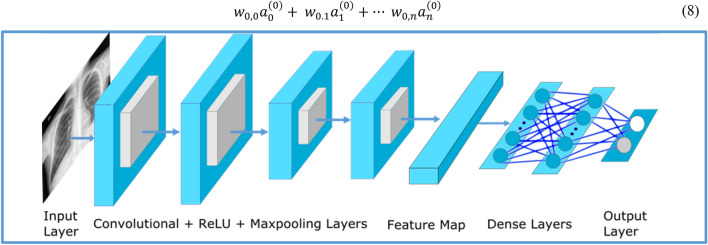
Corona virus disease (COVID-19) acknowledged as a pandemic by the WHO and mankind all over the world is vulnerable to this virus. Alternative tools are needed that can help in diagnosis of the coronavirus. Researchers of this article investigated the potential of machine learning methods for automatic diagnosis of corona virus with high accuracy from X-ray images. Two most commonly used classifiers were selected: logistic regression (LR) and convolutional neural networks (CNN). The main reason was to make the system fast and efficient. Moreover, a dimensionality reduction approach was also investigated based on principal component analysis (PCA) to further speed up the learning process and improve the classification accuracy by selecting the highly discriminate features. The deep learning-based methods demand large amount of training samples compared to conventional approaches, yet adequate amount of labelled training samples was not available for COVID-19 X-ray images. Therefore, data augmentation technique using generative adversarial network (GAN) was employed to further increase the training samples and reduce the overfitting problem. We used the online available dataset and incorporated GAN to have 500 X-ray images in total for this study. Both CNN and LR showed encouraging results for COVID-19 patient identification. The LR and CNN models showed 95.2-97.6% overall accuracy without PCA and 97.6-100% with PCA for positive cases identification, respectively.
世界卫生组织(WHO)宣布冠状病毒病(COVID-19)为大流行疾病,全世界的人类都容易感染这种病毒。需要有替代的工具来帮助诊断冠状病毒。本文的研究人员研究了机器学习方法从 X 射线图像中自动诊断冠状病毒的潜力,以实现高精度。选择了两种最常用的分类器:逻辑回归(LR)和卷积神经网络(CNN)。主要原因是使系统快速高效。此外,还研究了基于主成分分析(PCA)的降维方法,通过选择高度可区分的特征,进一步加快学习过程并提高分类准确性。与传统方法相比,基于深度学习的方法需要大量的训练样本,但 COVID-19 X 射线图像的可用标记训练样本数量不足。因此,使用生成对抗网络(GAN)进行了数据扩充技术,进一步增加了训练样本数量,并减少了过拟合问题。我们使用了在线可用的数据集,并结合 GAN 总共获得了 500 张 X 射线图像用于本研究。LR 和 CNN 模型在没有 PCA 的情况下对 COVID-19 患者识别的总准确率分别为 95.2-97.6%,而在使用 PCA 时的总准确率为 97.6-100%。