• 文献检索
  • 文档翻译
  • 深度研究
  • 学术资讯
  • Suppr Zotero 插件Zotero 插件
  • 邀请有礼
  • 套餐&价格
  • 历史记录
应用&插件
Suppr Zotero 插件Zotero 插件浏览器插件Mac 客户端Windows 客户端微信小程序
定价
高级版会员购买积分包购买API积分包
服务
文献检索文档翻译深度研究API 文档MCP 服务
关于我们
关于 Suppr公司介绍联系我们用户协议隐私条款
关注我们

Suppr 超能文献

核心技术专利:CN118964589B侵权必究
粤ICP备2023148730 号-1Suppr @ 2026

文献检索

告别复杂PubMed语法,用中文像聊天一样搜索,搜遍4000万医学文献。AI智能推荐,让科研检索更轻松。

立即免费搜索

文件翻译

保留排版,准确专业,支持PDF/Word/PPT等文件格式,支持 12+语言互译。

免费翻译文档

深度研究

AI帮你快速写综述,25分钟生成高质量综述,智能提取关键信息,辅助科研写作。

立即免费体验

基于 X 射线的肺部疾病与冠状病毒 COVID-19 可解释深度学习检测

Explainable Deep Learning for Pulmonary Disease and Coronavirus COVID-19 Detection from X-rays.

机构信息

Department of Medicine and Health Sciences "Vincenzo Tiberio", University of Molise, Campobasso, Italy.

Department of Medicine and Health Sciences "Vincenzo Tiberio", University of Molise, Campobasso, Italy; Institute for Informatics and Telematics, National Research Council of Italy (CNR), Pisa, Italy.

出版信息

Comput Methods Programs Biomed. 2020 Nov;196:105608. doi: 10.1016/j.cmpb.2020.105608. Epub 2020 Jun 20.

DOI:10.1016/j.cmpb.2020.105608
PMID:32599338
原文链接:https://pmc.ncbi.nlm.nih.gov/articles/PMC7831868/
Abstract

BACKGROUND AND OBJECTIVE

Coronavirus disease (COVID-19) is an infectious disease caused by a new virus never identified before in humans. This virus causes respiratory disease (for instance, flu) with symptoms such as cough, fever and, in severe cases, pneumonia. The test to detect the presence of this virus in humans is performed on sputum or blood samples and the outcome is generally available within a few hours or, at most, days. Analysing biomedical imaging the patient shows signs of pneumonia. In this paper, with the aim of providing a fully automatic and faster diagnosis, we propose the adoption of deep learning for COVID-19 detection from X-rays.

METHOD

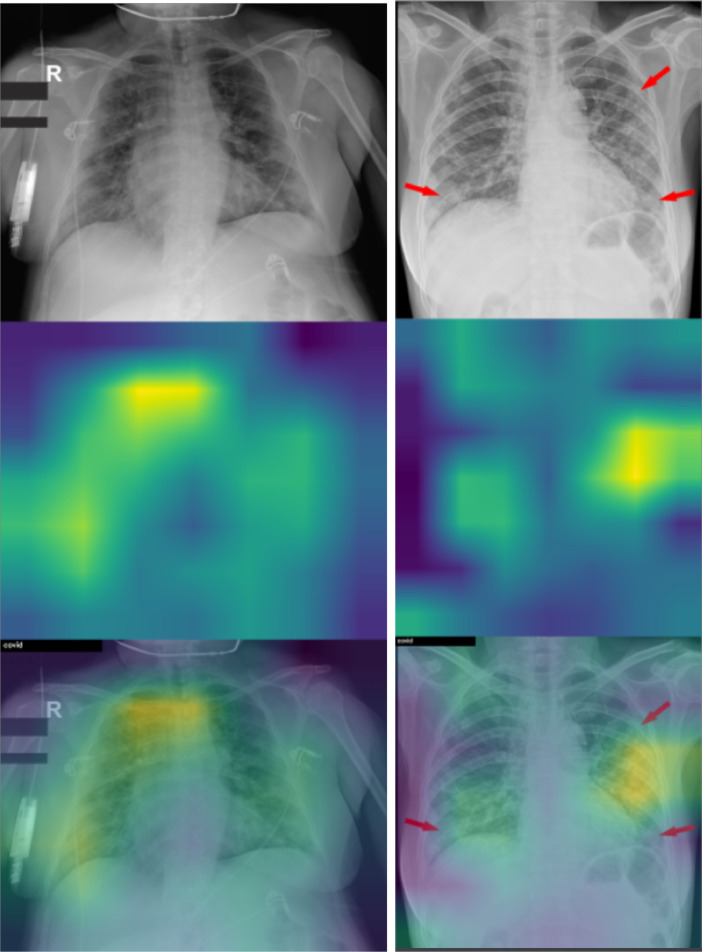
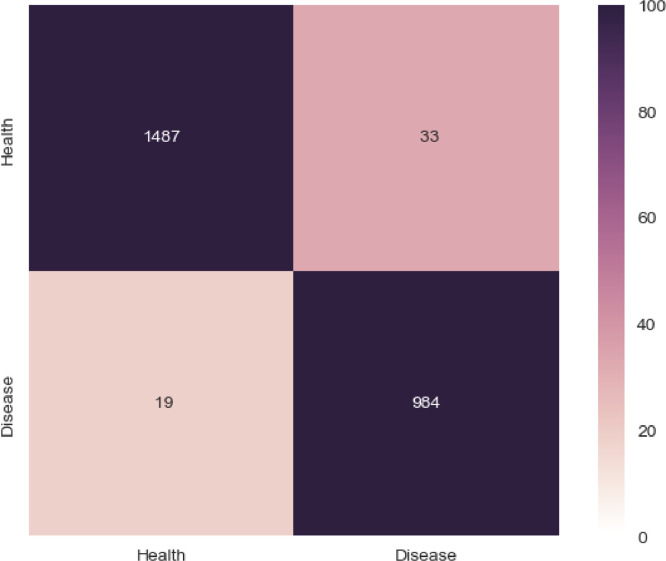
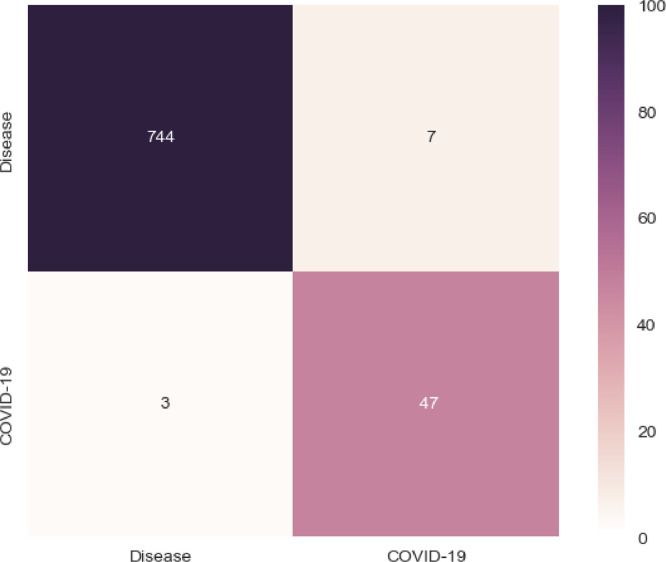
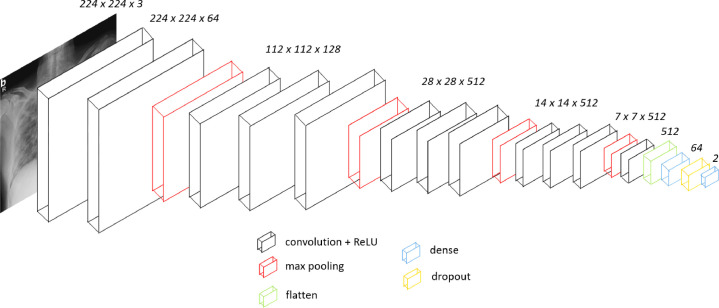
In particular, we propose an approach composed by three phases: the first one to detect if in a chest X-ray there is the presence of a pneumonia. The second one to discern between COVID-19 and pneumonia. The last step is aimed to localise the areas in the X-ray symptomatic of the COVID-19 presence.

RESULTS AND CONCLUSION

Experimental analysis on 6,523 chest X-rays belonging to different institutions demonstrated the effectiveness of the proposed approach, with an average time for COVID-19 detection of approximately 2.5 seconds and an average accuracy equal to 0.97.

摘要

背景与目的

由一种新型人类从未识别过的病毒引起的传染病被称为冠状病毒病(COVID-19)。该病毒会引起呼吸道疾病(例如流感),症状包括咳嗽、发热,在严重情况下会引起肺炎。用于检测人类体内是否存在这种病毒的方法是对痰液或血液样本进行检测,结果通常在数小时内,或最多在数天内得出。对患者的生物医学影像进行分析会显示出肺炎的迹象。在本文中,我们旨在提供一种全自动且更快的诊断方法,因此提出采用深度学习技术从 X 光片中检测 COVID-19。

方法

具体而言,我们提出了一种由三个阶段组成的方法:第一个阶段是检测胸部 X 光片中是否存在肺炎。第二个阶段是区分 COVID-19 和肺炎。最后一个步骤旨在定位 X 光片中 COVID-19 存在的症状区域。

结果与结论

对来自不同机构的 6523 张胸部 X 光片进行的实验分析证明了所提出方法的有效性,COVID-19 检测的平均时间约为 2.5 秒,平均准确率等于 0.97。
https://cdn.ncbi.nlm.nih.gov/pmc/blobs/cb43/7831868/f32d5ced4150/gr9_lrg.jpg
https://cdn.ncbi.nlm.nih.gov/pmc/blobs/cb43/7831868/a8e94e3ce7d7/gr1_lrg.jpg
https://cdn.ncbi.nlm.nih.gov/pmc/blobs/cb43/7831868/c94da1e26934/gr2_lrg.jpg
https://cdn.ncbi.nlm.nih.gov/pmc/blobs/cb43/7831868/21e162035f4c/gr3_lrg.jpg
https://cdn.ncbi.nlm.nih.gov/pmc/blobs/cb43/7831868/a32e5def333d/gr4_lrg.jpg
https://cdn.ncbi.nlm.nih.gov/pmc/blobs/cb43/7831868/38c0a4b559ba/gr5_lrg.jpg
https://cdn.ncbi.nlm.nih.gov/pmc/blobs/cb43/7831868/5e70b09f2344/gr6_lrg.jpg
https://cdn.ncbi.nlm.nih.gov/pmc/blobs/cb43/7831868/34320089472d/gr7_lrg.jpg
https://cdn.ncbi.nlm.nih.gov/pmc/blobs/cb43/7831868/9443022ea3dd/gr8_lrg.jpg
https://cdn.ncbi.nlm.nih.gov/pmc/blobs/cb43/7831868/f32d5ced4150/gr9_lrg.jpg
https://cdn.ncbi.nlm.nih.gov/pmc/blobs/cb43/7831868/a8e94e3ce7d7/gr1_lrg.jpg
https://cdn.ncbi.nlm.nih.gov/pmc/blobs/cb43/7831868/c94da1e26934/gr2_lrg.jpg
https://cdn.ncbi.nlm.nih.gov/pmc/blobs/cb43/7831868/21e162035f4c/gr3_lrg.jpg
https://cdn.ncbi.nlm.nih.gov/pmc/blobs/cb43/7831868/a32e5def333d/gr4_lrg.jpg
https://cdn.ncbi.nlm.nih.gov/pmc/blobs/cb43/7831868/38c0a4b559ba/gr5_lrg.jpg
https://cdn.ncbi.nlm.nih.gov/pmc/blobs/cb43/7831868/5e70b09f2344/gr6_lrg.jpg
https://cdn.ncbi.nlm.nih.gov/pmc/blobs/cb43/7831868/34320089472d/gr7_lrg.jpg
https://cdn.ncbi.nlm.nih.gov/pmc/blobs/cb43/7831868/9443022ea3dd/gr8_lrg.jpg
https://cdn.ncbi.nlm.nih.gov/pmc/blobs/cb43/7831868/f32d5ced4150/gr9_lrg.jpg

相似文献

1
Explainable Deep Learning for Pulmonary Disease and Coronavirus COVID-19 Detection from X-rays.基于 X 射线的肺部疾病与冠状病毒 COVID-19 可解释深度学习检测
Comput Methods Programs Biomed. 2020 Nov;196:105608. doi: 10.1016/j.cmpb.2020.105608. Epub 2020 Jun 20.
2
CovXNet: A multi-dilation convolutional neural network for automatic COVID-19 and other pneumonia detection from chest X-ray images with transferable multi-receptive feature optimization.CovXNet:一种多扩张卷积神经网络,用于从胸部 X 光图像中自动检测 COVID-19 和其他肺炎,具有可转移的多感受野特征优化。
Comput Biol Med. 2020 Jul;122:103869. doi: 10.1016/j.compbiomed.2020.103869. Epub 2020 Jun 20.
3
CoroNet: A deep neural network for detection and diagnosis of COVID-19 from chest x-ray images.CoroNet:一种用于从胸部 X 光图像中检测和诊断 COVID-19 的深度神经网络。
Comput Methods Programs Biomed. 2020 Nov;196:105581. doi: 10.1016/j.cmpb.2020.105581. Epub 2020 Jun 5.
4
Generalizability of Deep Learning Tuberculosis Classifier to COVID-19 Chest Radiographs: New Tricks for an Old Algorithm?深度学习肺结核分类器对COVID-19胸部X光片的可推广性:旧算法的新技巧?
J Thorac Imaging. 2020 Jul;35(4):W102-W104. doi: 10.1097/RTI.0000000000000532.
5
Covid-19: automatic detection from X-ray images utilizing transfer learning with convolutional neural networks.新冠病毒(Covid-19):利用卷积神经网络的迁移学习从 X 光图像中自动检测。
Phys Eng Sci Med. 2020 Jun;43(2):635-640. doi: 10.1007/s13246-020-00865-4. Epub 2020 Apr 3.
6
COVIDiagnosis-Net: Deep Bayes-SqueezeNet based diagnosis of the coronavirus disease 2019 (COVID-19) from X-ray images.COVIDiagnosis-Net:基于深度贝叶斯和 SqueezeNet 的 X 射线影像 2019 冠状病毒病(COVID-19)诊断。
Med Hypotheses. 2020 Jul;140:109761. doi: 10.1016/j.mehy.2020.109761. Epub 2020 Apr 23.
7
Detection of coronavirus disease from X-ray images using deep learning and transfer learning algorithms.利用深度学习和迁移学习算法从 X 光图像中检测冠状病毒病。
J Xray Sci Technol. 2020;28(5):841-850. doi: 10.3233/XST-200720.
8
Deep-COVID: Predicting COVID-19 from chest X-ray images using deep transfer learning.深度 COVID:使用深度迁移学习从胸部 X 光图像预测 COVID-19。
Med Image Anal. 2020 Oct;65:101794. doi: 10.1016/j.media.2020.101794. Epub 2020 Jul 21.
9
COVID19XrayNet: A Two-Step Transfer Learning Model for the COVID-19 Detecting Problem Based on a Limited Number of Chest X-Ray Images.COVID19XrayNet:一种基于少量胸部 X 光图像的 COVID-19 检测问题的两步迁移学习模型。
Interdiscip Sci. 2020 Dec;12(4):555-565. doi: 10.1007/s12539-020-00393-5. Epub 2020 Sep 21.
10
COVID-19 identification in chest X-ray images on flat and hierarchical classification scenarios.基于平面和分层分类场景的胸部 X 射线图像中的 COVID-19 识别。
Comput Methods Programs Biomed. 2020 Oct;194:105532. doi: 10.1016/j.cmpb.2020.105532. Epub 2020 May 8.

引用本文的文献

1
Explainable AI for Oral Cancer Diagnosis: Multiclass Classification of Histopathology Images and Grad-CAM Visualization.用于口腔癌诊断的可解释人工智能:组织病理学图像的多类分类与Grad-CAM可视化
Biology (Basel). 2025 Jul 22;14(8):909. doi: 10.3390/biology14080909.
2
Pulmonary diseases accurate recognition using adaptive multiscale feature fusion in chest radiography.在胸部X光片中使用自适应多尺度特征融合进行肺部疾病的准确识别。
Sci Rep. 2025 Aug 10;15(1):29243. doi: 10.1038/s41598-025-13479-1.
3
Deep Learning Network Selection and Optimized Information Fusion for Enhanced COVID-19 Detection: A Literature Review.

本文引用的文献

1
RETRACTED ARTICLE: Deep learning system to screen coronavirus disease 2019 pneumonia.撤稿文章:用于筛查2019冠状病毒病肺炎的深度学习系统。
Appl Intell (Dordr). 2023;53(4):4874. doi: 10.1007/s10489-020-01714-3. Epub 2020 Apr 22.
2
Automatic detection of coronavirus disease (COVID-19) using X-ray images and deep convolutional neural networks.使用X射线图像和深度卷积神经网络自动检测冠状病毒病(COVID-19)。
Pattern Anal Appl. 2021;24(3):1207-1220. doi: 10.1007/s10044-021-00984-y. Epub 2021 May 9.
3
Imaging Profile of the COVID-19 Infection: Radiologic Findings and Literature Review.
用于增强COVID-19检测的深度学习网络选择与优化信息融合:文献综述
Diagnostics (Basel). 2025 Jul 21;15(14):1830. doi: 10.3390/diagnostics15141830.
4
A hybrid segmentation and classification CAD framework for automated myocardial infarction prediction from MRI images.一种用于从MRI图像自动预测心肌梗死的混合分割与分类CAD框架。
Sci Rep. 2025 Apr 23;15(1):14196. doi: 10.1038/s41598-025-98893-1.
5
Reformulating patient stratification for targeting interventions by accounting for severity of downstream outcomes resulting from disease onset: a case study in sepsis.通过考虑疾病发作导致的下游结果的严重程度来重新制定患者分层以进行靶向干预:脓毒症的案例研究
J Am Med Inform Assoc. 2025 May 1;32(5):905-913. doi: 10.1093/jamia/ocaf036.
6
Classification of pulmonary diseases from chest radiographs using deep transfer learning.使用深度迁移学习从胸部X光片对肺部疾病进行分类。
PLoS One. 2025 Mar 17;20(3):e0316929. doi: 10.1371/journal.pone.0316929. eCollection 2025.
7
A comparative analysis of the binary and multiclass classified chest X-ray images of pneumonia and COVID-19 with ML and DL models.使用机器学习(ML)和深度学习(DL)模型对肺炎和新冠病毒病(COVID-19)的二分类和多分类胸部X光图像进行比较分析。
Open Med (Wars). 2025 Feb 4;20(1):20241110. doi: 10.1515/med-2024-1110. eCollection 2025.
8
A Survey on Explainable Artificial Intelligence (XAI) Techniques for Visualizing Deep Learning Models in Medical Imaging.用于医学成像中深度学习模型可视化的可解释人工智能(XAI)技术综述。
J Imaging. 2024 Sep 25;10(10):239. doi: 10.3390/jimaging10100239.
9
Deep Learning for Pneumonia Detection in Chest X-ray Images: A Comprehensive Survey.胸部X光图像中肺炎检测的深度学习:全面综述。
J Imaging. 2024 Jul 23;10(8):176. doi: 10.3390/jimaging10080176.
10
Towards Improved XAI-Based Epidemiological Research into the Next Potential Pandemic.迈向基于可解释人工智能的流行病学研究,以应对下一次潜在的大流行。
Life (Basel). 2024 Jun 21;14(7):783. doi: 10.3390/life14070783.
新型冠状病毒肺炎感染的影像学表现:放射学发现与文献综述
Radiol Cardiothorac Imaging. 2020 Feb 13;2(1):e200034. doi: 10.1148/ryct.2020200034. eCollection 2020 Feb.
4
Deep Learning Enables Accurate Diagnosis of Novel Coronavirus (COVID-19) With CT Images.深度学习利用 CT 图像准确诊断新型冠状病毒(COVID-19)。
IEEE/ACM Trans Comput Biol Bioinform. 2021 Nov-Dec;18(6):2775-2780. doi: 10.1109/TCBB.2021.3065361. Epub 2021 Dec 8.
5
A deep learning algorithm using CT images to screen for Corona virus disease (COVID-19).利用 CT 图像进行冠状病毒病(COVID-19)筛查的深度学习算法。
Eur Radiol. 2021 Aug;31(8):6096-6104. doi: 10.1007/s00330-021-07715-1. Epub 2021 Feb 24.
6
COVID-Net: a tailored deep convolutional neural network design for detection of COVID-19 cases from chest X-ray images.COVID-Net:一种针对胸部 X 光图像中 COVID-19 病例检测的定制化深度卷积神经网络设计。
Sci Rep. 2020 Nov 11;10(1):19549. doi: 10.1038/s41598-020-76550-z.
7
Deep learning-based model for detecting 2019 novel coronavirus pneumonia on high-resolution computed tomography.基于深度学习的高分辨率计算机断层扫描 2019 年新型冠状病毒肺炎检测模型。
Sci Rep. 2020 Nov 5;10(1):19196. doi: 10.1038/s41598-020-76282-0.
8
A Deep Learning System to Screen Novel Coronavirus Disease 2019 Pneumonia.一种用于筛查2019冠状病毒病肺炎的深度学习系统。
Engineering (Beijing). 2020 Oct;6(10):1122-1129. doi: 10.1016/j.eng.2020.04.010. Epub 2020 Jun 27.
9
Application of deep learning technique to manage COVID-19 in routine clinical practice using CT images: Results of 10 convolutional neural networks.深度学习技术在 CT 图像指导下常规临床管理 COVID-19:10 个卷积神经网络的结果。
Comput Biol Med. 2020 Jun;121:103795. doi: 10.1016/j.compbiomed.2020.103795. Epub 2020 Apr 30.
10
Automated detection of COVID-19 cases using deep neural networks with X-ray images.使用 X 射线图像的深度学习神经网络自动检测 COVID-19 病例。
Comput Biol Med. 2020 Jun;121:103792. doi: 10.1016/j.compbiomed.2020.103792. Epub 2020 Apr 28.