Fontanillo Lopez Cesar Augusto, Li Guangye, Zhang Dingguo
KU-Leuven Center for IT & IP Law, KU-Leuven, Leuven, Belgium.
The Robotics Institute, School of Mechanical Engineering, Shanghai Jiao Tong University, Shanghai, China.
Front Neurosci. 2020 Dec 17;14:611130. doi: 10.3389/fnins.2020.611130. eCollection 2020.
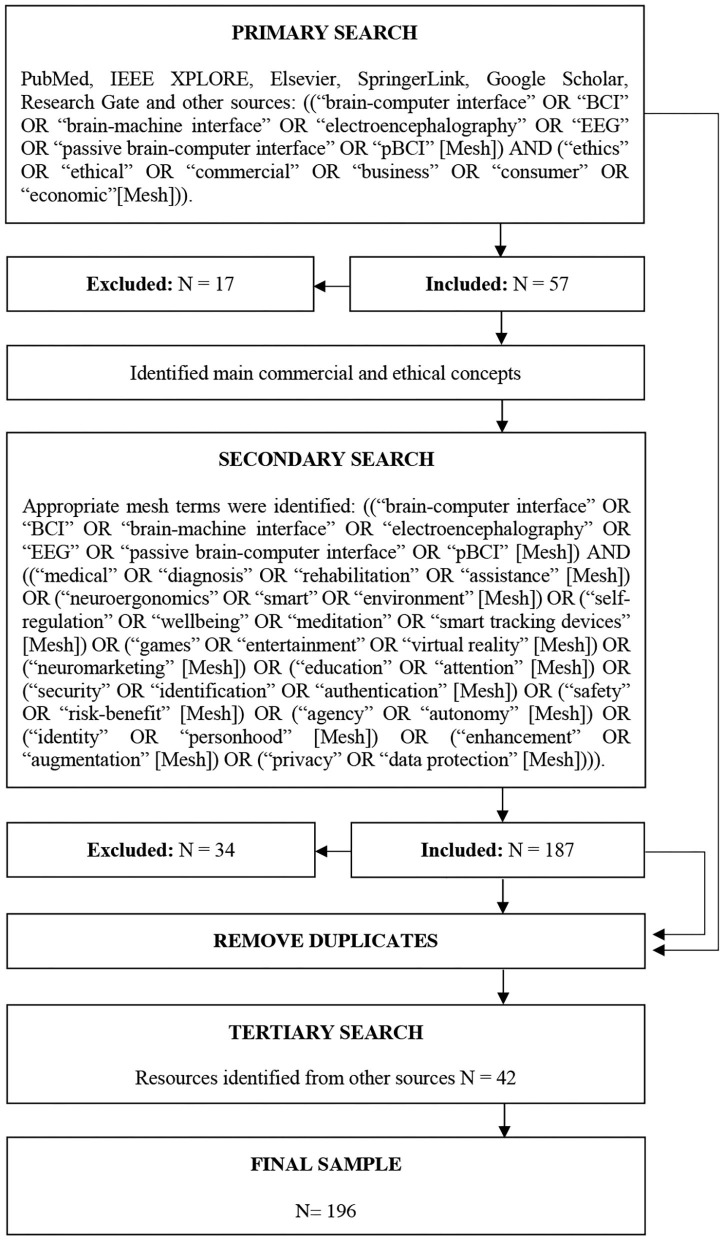
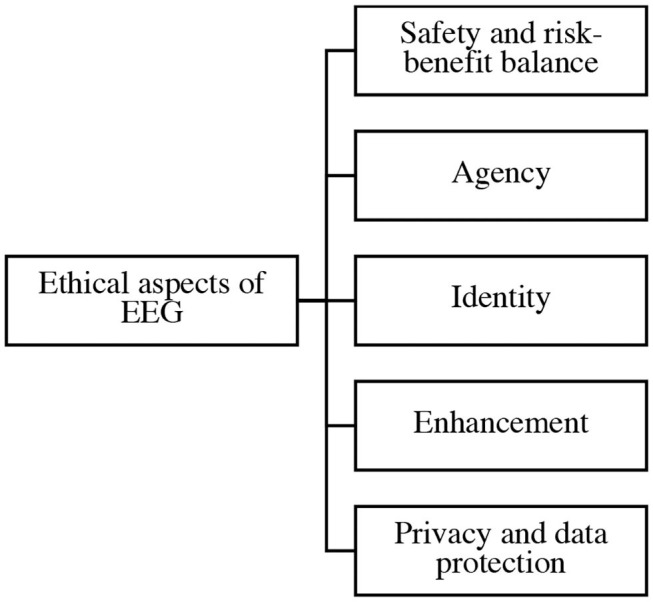
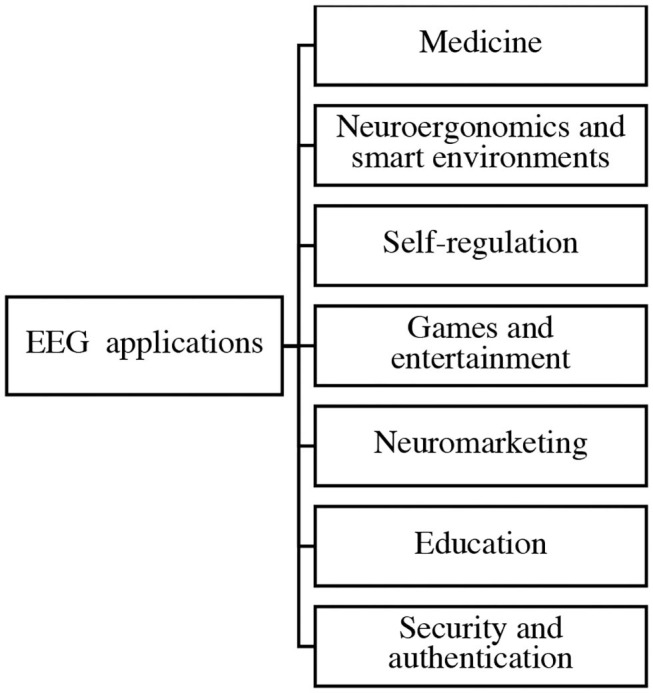
The deployment of electroencephalographic techniques for commercial applications has undergone a rapid growth in recent decades. As they continue to expand in the consumer markets as suitable techniques for monitoring the brain activity, their transformative potential necessitates equally significant ethical inquiries. One of the main questions, which arises then when evaluating these kinds of applications, is whether they should be aligned or not with the main ethical concerns reported by scholars and experts. Thus, the present work attempts to unify these disciplines of knowledge by performing a comprehensive scan of the major electroencephalographic market applications as well as their most relevant ethical concerns arising from the existing literature. In this literature review, different databases were consulted, which presented conceptual and empirical discussions and findings about commercial and ethical aspects of electroencephalography. Subsequently, the content was extracted from the articles and the main conclusions were presented. Finally, an external assessment of the outcomes was conducted in consultation with an expert panel in some of the topic areas such as biomedical engineering, biomechatronics, and neuroscience. The ultimate purpose of this review is to provide a genuine insight into the cutting-edge practical attempts at electroencephalography. By the same token, it seeks to highlight the overlap between the market needs and the ethical standards that should govern the deployment of electroencephalographic consumer-grade solutions, providing a practical approach that overcomes the engineering myopia of certain ethical discussions.
近几十年来,脑电图技术在商业应用中的部署迅速增长。随着它们作为监测大脑活动的合适技术在消费市场中不断扩展,其变革潜力引发了同样重大的伦理问题。在评估这类应用时出现的一个主要问题是,它们是否应与学者和专家报告的主要伦理关切保持一致。因此,本研究试图通过全面审视脑电图在主要市场的应用以及现有文献中出现的最相关伦理问题,将这些知识学科统一起来。在这篇文献综述中,查阅了不同的数据库,这些数据库呈现了关于脑电图商业和伦理方面的概念性和实证性讨论及研究结果。随后,从文章中提取内容并呈现主要结论。最后,与生物医学工程、生物机电一体化和神经科学等一些主题领域的专家小组协商,对结果进行了外部评估。本综述的最终目的是对脑电图的前沿实际应用提供真实见解。同样,它旨在突出市场需求与应指导脑电图消费级解决方案部署的伦理标准之间的重叠,提供一种克服某些伦理讨论中工程短视的实用方法。