Klarenberg Ingeborg J, Keuschnig Christoph, Warshan Denis, Jónsdóttir Ingibjörg Svala, Vilhelmsson Oddur
Natural Resource Sciences, University of Akureyri, Akureyri, Iceland.
Faculty of Life and Environmental Sciences, University of Iceland, Reykjavík, Iceland.
Front Microbiol. 2020 Dec 18;11:540404. doi: 10.3389/fmicb.2020.540404. eCollection 2020.
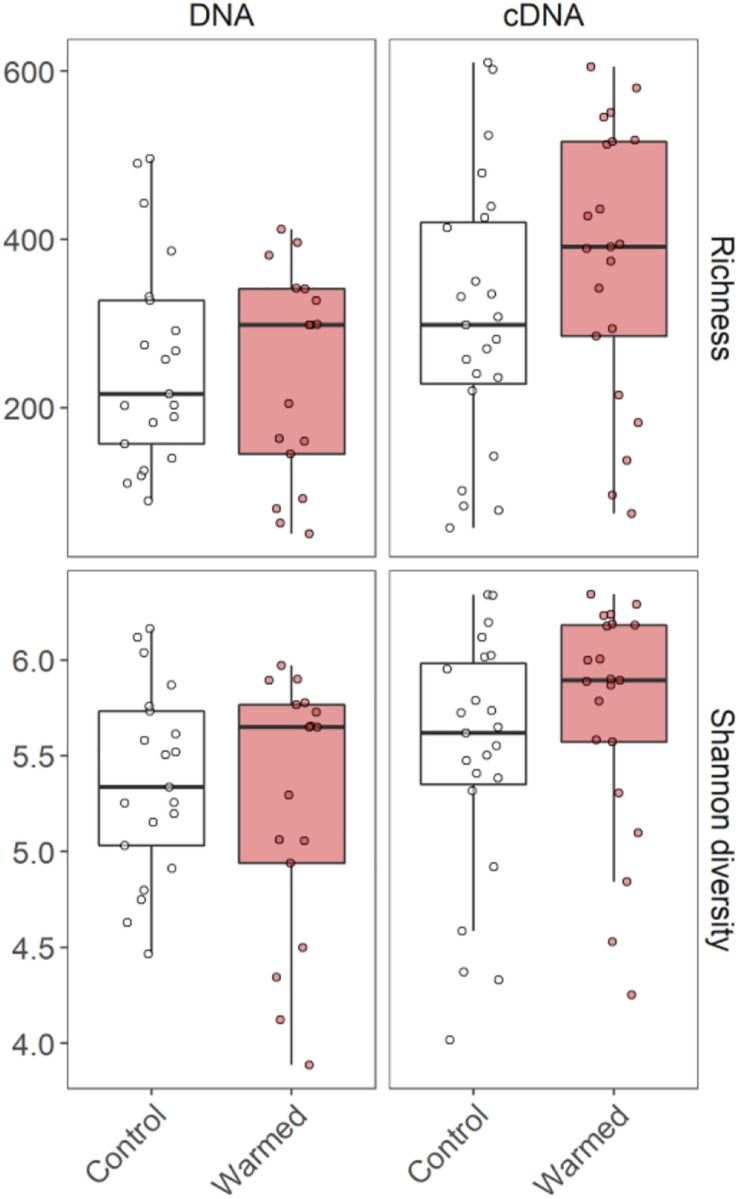
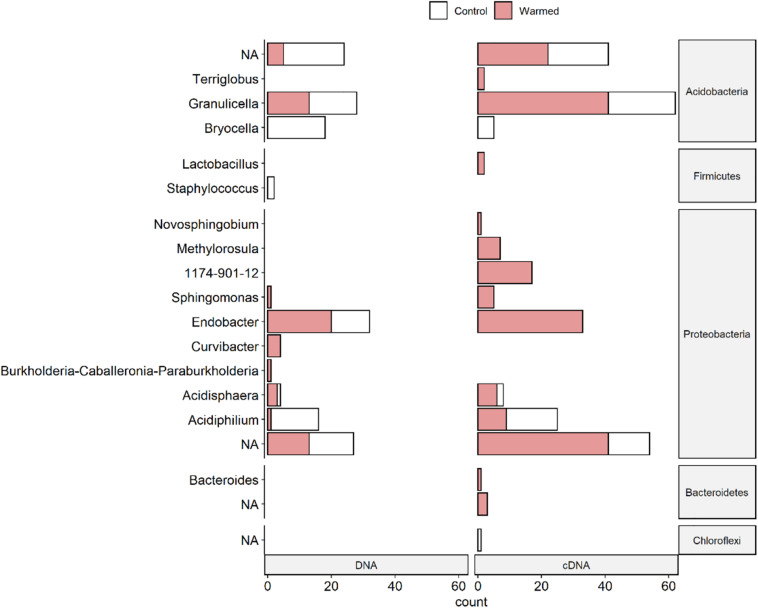
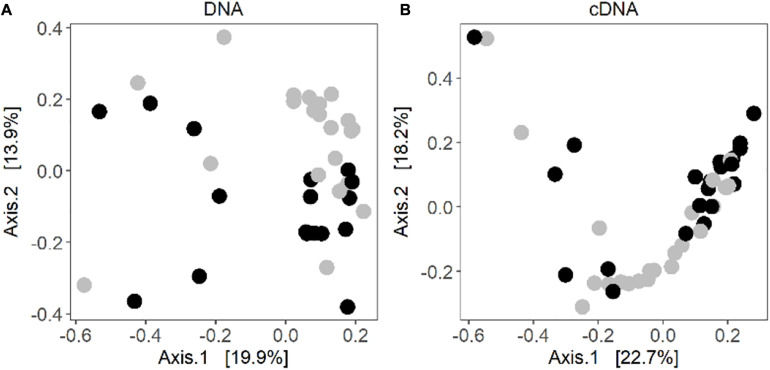
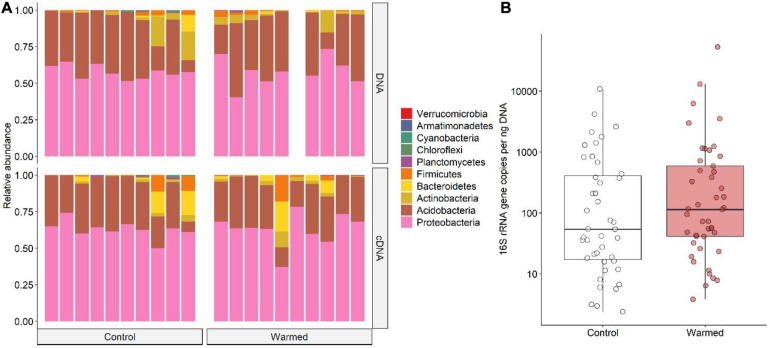
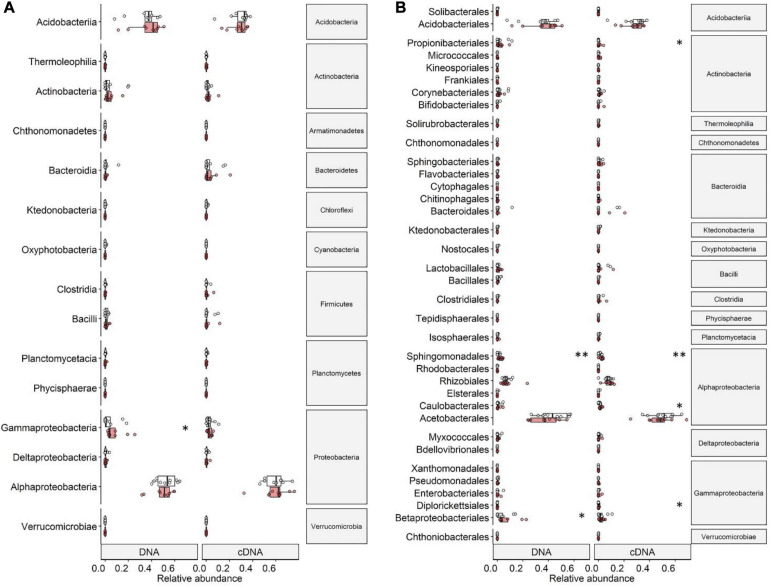
Lichens are traditionally defined as a symbiosis between a fungus and a green alga and or a cyanobacterium. This idea has been challenged by the discovery of bacterial communities inhabiting the lichen thalli. These bacteria are thought to contribute to the survival of lichens under extreme and changing environmental conditions. How these changing environmental conditions affect the lichen-associated bacterial community composition remains unclear. We describe the total (rDNA-based) and potentially metabolically active (rRNA-based) bacterial community of the lichen and its response to long-term warming using a 20-year warming experiment in an Icelandic sub-Arctic tundra. 16S rRNA and rDNA amplicon sequencing showed that the orders Acetobacterales (of the class Alphaproteobacteria) and Acidobacteriales (of the phylum Acidobacteria) dominated the bacterial community. Numerous amplicon sequence variants (ASVs) could only be detected in the potentially active community but not in the total community. Long-term warming led to increases in relative abundance of bacterial taxa on class, order and ASV level. Warming altered the relative abundance of ASVs of the most common bacterial genera, such as and . The potentially metabolically active bacterial community was also more responsive to warming than the total community. Our results suggest that the bacterial community of the lichen is dominated by acidophilic taxa and harbors disproportionally active rare taxa. We also show for the first time that climate warming can lead to shifts in lichen-associated bacterial community composition.
传统上,地衣被定义为一种真菌与绿藻和/或蓝细菌之间的共生关系。地衣菌体中存在细菌群落这一发现对这一观点提出了挑战。这些细菌被认为有助于地衣在极端和不断变化的环境条件下生存。目前尚不清楚这些不断变化的环境条件如何影响与地衣相关的细菌群落组成。我们利用冰岛亚北极苔原地区开展的一项为期20年的变暖实验,描述了地衣的全部(基于rDNA)和潜在代谢活跃(基于rRNA)细菌群落及其对长期变暖的响应。16S rRNA和rDNA扩增子测序表明,醋杆菌目(α-变形菌纲)和酸杆菌目(酸杆菌门)在细菌群落中占主导地位。许多扩增子序列变体(ASV)仅在潜在活跃群落中检测到,而在全部群落中未检测到。长期变暖导致细菌分类群在纲、目和ASV水平上相对丰度增加。变暖改变了最常见细菌属(如[此处原文缺失属名]和[此处原文缺失属名])ASV的相对丰度。潜在代谢活跃细菌群落对变暖的响应也比全部群落更敏感。我们的结果表明,地衣的细菌群落以嗜酸类群为主,并且含有不成比例的活跃稀有类群。我们还首次表明气候变暖可导致与地衣相关的细菌群落组成发生变化。