Levy Jeremy, Álvarez Daniel, Rosenberg Aviv A, Alexandrovich Alexandra, Del Campo Félix, Behar Joachim A
Faculty of Biomedical Engineering, Technion Institute of Technology, Haifa, Israel.
Faculty of Electrical Engineering, Technion Institute of Technology, Haifa, Israel.
NPJ Digit Med. 2021 Jan 4;4(1):1. doi: 10.1038/s41746-020-00373-5.
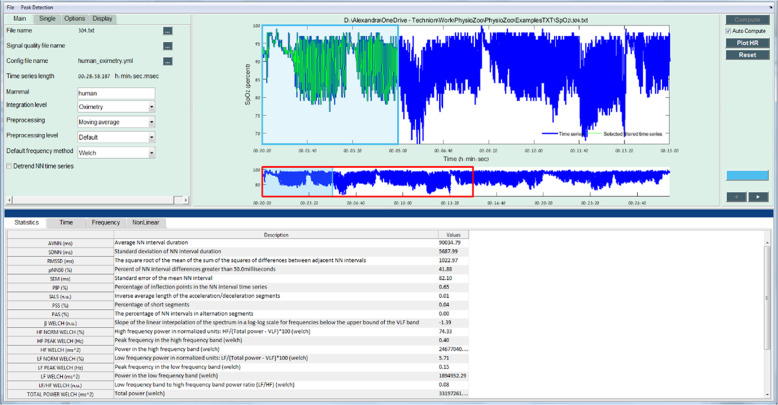
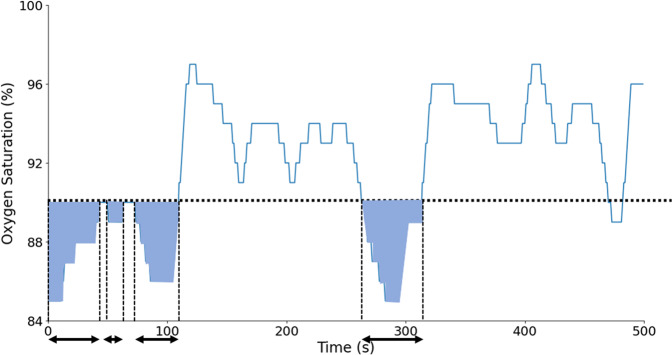
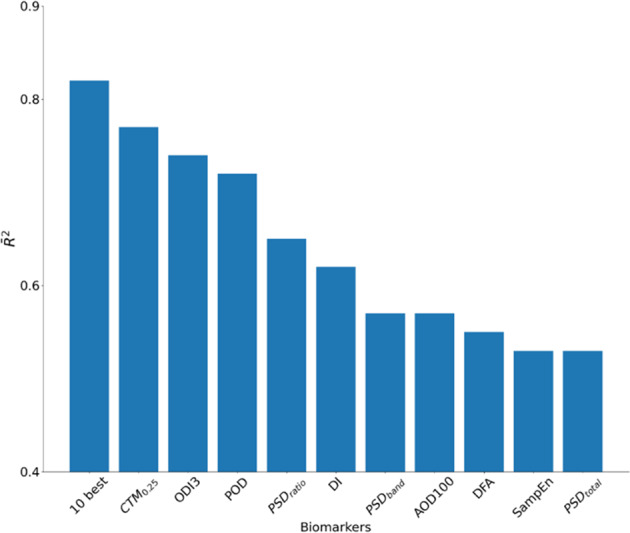
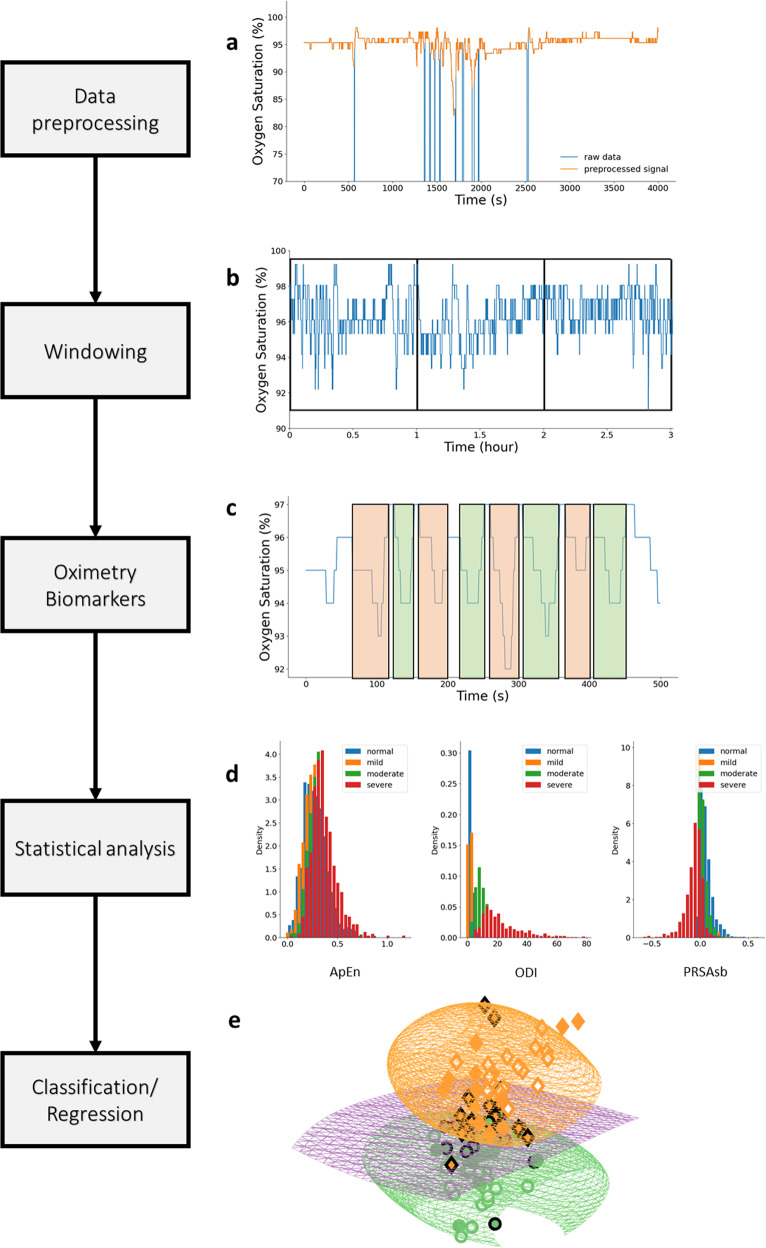
Pulse oximetry is routinely used to non-invasively monitor oxygen saturation levels. A low oxygen level in the blood means low oxygen in the tissues, which can ultimately lead to organ failure. Yet, contrary to heart rate variability measures, a field which has seen the development of stable standards and advanced toolboxes and software, no such standards and open tools exist for continuous oxygen saturation time series variability analysis. The primary objective of this research was to identify, implement and validate key digital oximetry biomarkers (OBMs) for the purpose of creating a standard and associated reference toolbox for continuous oximetry time series analysis. We review the sleep medicine literature to identify clinically relevant OBMs. We implement these biomarkers and demonstrate their clinical value within the context of obstructive sleep apnea (OSA) diagnosis on a total of n = 3806 individual polysomnography recordings totaling 26,686 h of continuous data. A total of 44 digital oximetry biomarkers were implemented. Reference ranges for each biomarker are provided for individuals with mild, moderate, and severe OSA and for non-OSA recordings. Linear regression analysis between biomarkers and the apnea hypopnea index (AHI) showed a high correlation, which reached [Formula: see text]. The resulting python OBM toolbox, denoted "pobm", was contributed to the open software PhysioZoo ( physiozoo.org ). Studying the variability of the continuous oxygen saturation time series using pbom may provide information on the underlying physiological control systems and enhance our understanding of the manifestations and etiology of diseases, with emphasis on respiratory diseases.
脉搏血氧饱和度测定法通常用于无创监测血氧饱和度水平。血液中的低氧水平意味着组织中的低氧,最终可能导致器官衰竭。然而,与心率变异性测量领域不同,心率变异性测量领域已经有了稳定的标准以及先进的工具箱和软件,而对于连续血氧饱和度时间序列变异性分析,目前尚无此类标准和开放工具。本研究的主要目的是识别、实施和验证关键的数字血氧测定生物标志物(OBM),以便为连续血氧测定时间序列分析创建一个标准和相关的参考工具箱。我们回顾了睡眠医学文献以识别临床相关的OBM。我们实施了这些生物标志物,并在总共n = 3806份个体多导睡眠图记录(总计26686小时的连续数据)的阻塞性睡眠呼吸暂停(OSA)诊断背景下展示了它们的临床价值。总共实施了44种数字血氧测定生物标志物。为轻度、中度和重度OSA个体以及非OSA记录提供了每种生物标志物的参考范围。生物标志物与呼吸暂停低通气指数(AHI)之间的线性回归分析显示出高度相关性,最高达到[公式:见原文]。由此产生的Python OBM工具箱,命名为“pobm”,已贡献给开源软件PhysioZoo(physiozoo.org)。使用pbom研究连续血氧饱和度时间序列的变异性可能会提供有关潜在生理控制系统的信息,并增强我们对疾病表现和病因的理解,尤其是呼吸系统疾病。