Head of Thoracic Oncology Unit, Unidad Funcional de Oncología Torácica, Instituto Nacional de Cancerología (INCan), Av. San Fernando #22, Sección XVI, Tlalpan, 14080, México City, CDMX, México.
Departamento de Radioncología, Hospital Universitario HM Sanchinarro, Caracas, Venezuela.
BMC Pulm Med. 2021 Jan 6;21(1):9. doi: 10.1186/s12890-020-01376-4.
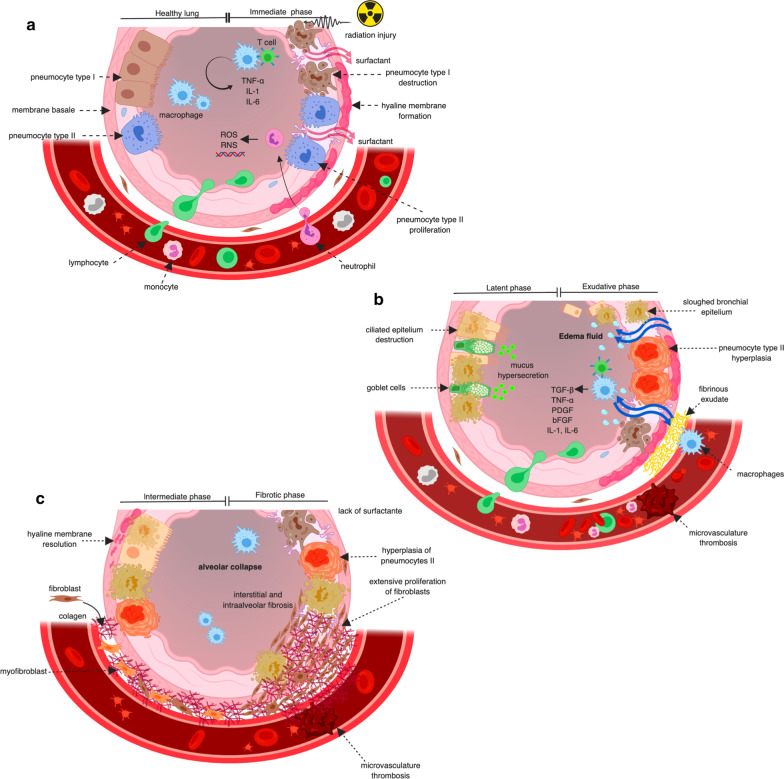
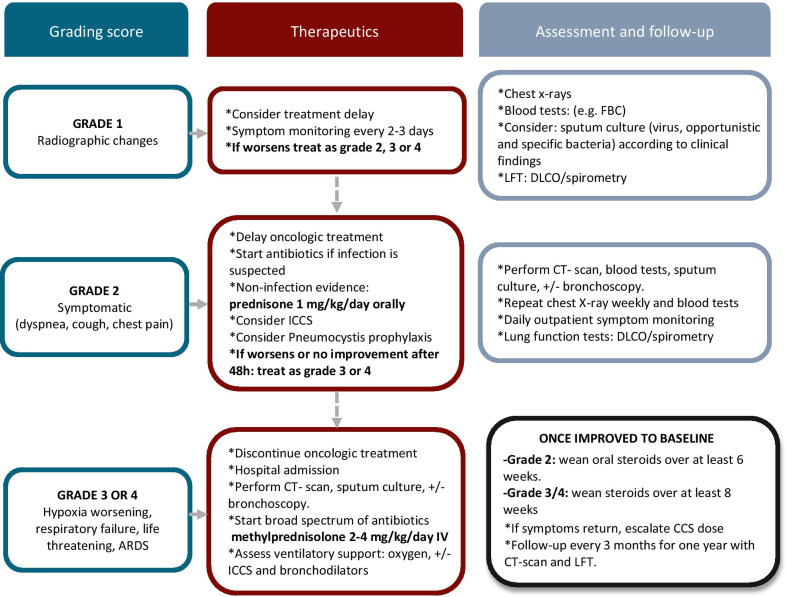
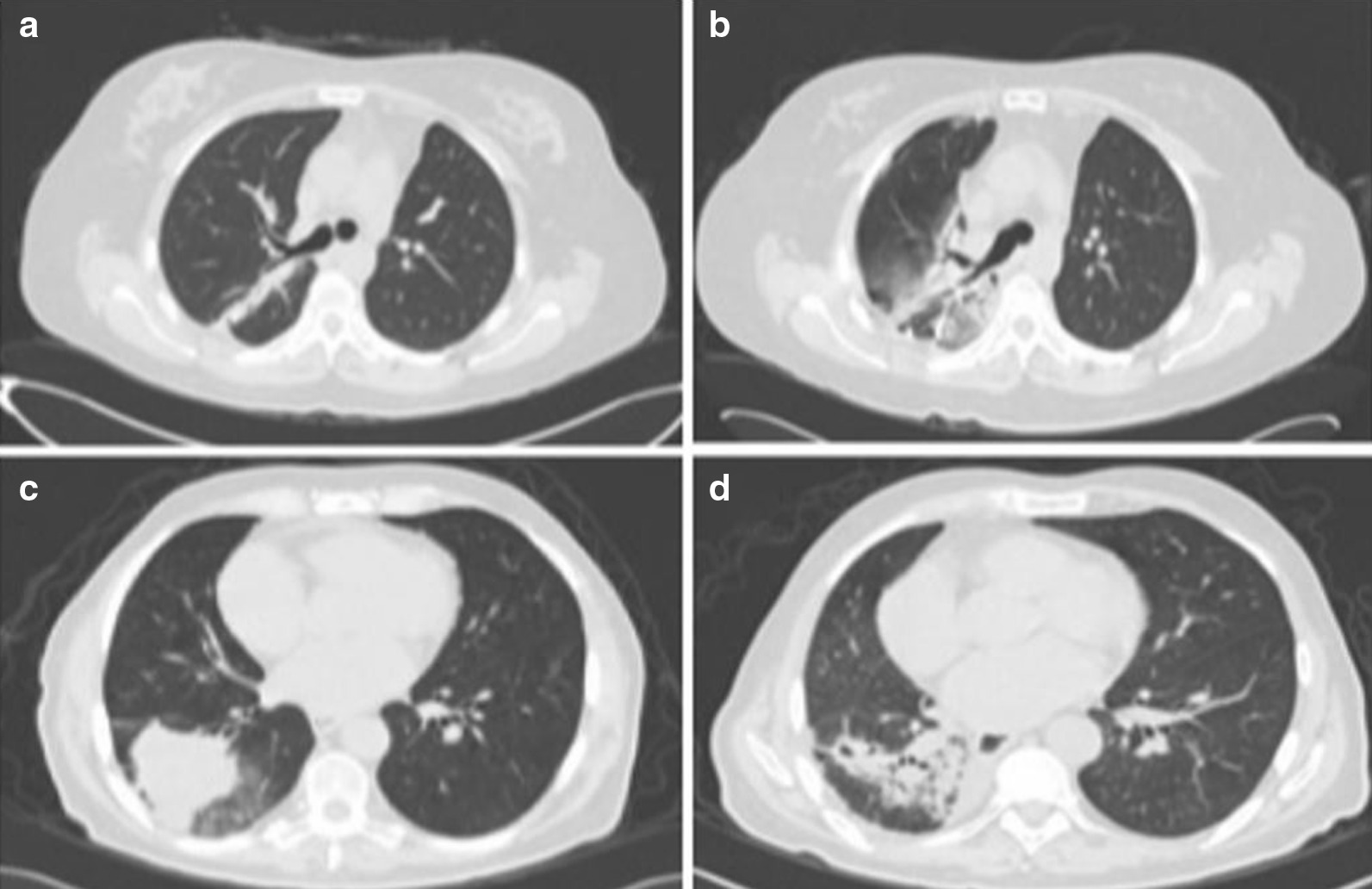
Chemo-radiotherapy and systemic therapies have proven satisfactory outcomes as standard treatments for various thoracic malignancies; however, adverse pulmonary effects, like pneumonitis, can be life-threatening. Pneumonitis is caused by direct cytotoxic effect, oxidative stress, and immune-mediated injury. Radiotherapy Induced Lung Injury (RILI) encompasses two phases: an early phase known as Radiation Pneumonitis (RP), characterized by acute lung tissue inflammation as a result of exposure to radiation; and a late phase called Radiation Fibrosis (RF), a clinical syndrome that results from chronic pulmonary tissue damage. Currently, diagnoses are made by exclusion using clinical assessment and radiological findings. Pulmonary function tests have constituted a significant step in evaluating lung function status during radiotherapy and useful predictive tools to avoid complications or limit toxicity. Systemic corticosteroids are widely used to treat pneumonitis complications, but its use must be standardized, and consider in the prophylaxis setting given the fatal outcome of this adverse event. This review aims to discuss the clinicopathological features of pneumonitis and provide practical clinical recommendations for prevention, diagnosis, and management.
放化疗和系统治疗已被证明是治疗各种胸部恶性肿瘤的标准治疗方法,疗效令人满意;然而,放射性肺炎等肺部不良反应可能危及生命。放射性肺炎是由直接细胞毒性作用、氧化应激和免疫介导的损伤引起的。放射性肺损伤(RILI)包括两个阶段:早期阶段称为放射性肺炎(RP),其特征是由于暴露于辐射而导致急性肺组织炎症;晚期阶段称为放射性肺纤维化(RF),是一种临床综合征,由慢性肺组织损伤引起。目前,通过临床评估和影像学发现排除法进行诊断。肺功能检查是评估放疗期间肺功能状况的重要步骤,也是避免并发症或限制毒性的有用预测工具。全身皮质类固醇被广泛用于治疗放射性肺炎并发症,但必须标准化使用,并在预防设置中考虑,因为这种不良反应的结局是致命的。本综述旨在讨论放射性肺炎的临床病理特征,并为预防、诊断和管理提供实用的临床建议。