The Department of Emergency, Cangzhou Central Hospital, Cangzhou, 061000, China.
The Department of Orthopedics, Cangzhou Central Hospital, No. 16 Xinhua West Road, Cangzhou, 061000, Hebei Province, China.
J Orthop Surg Res. 2021 Jan 6;16(1):10. doi: 10.1186/s13018-020-02147-x.
Osteoporosis (OP) is an age-related systemic bone disease. MicroRNAs (miRNAs) are involved in the regulation of osteogenic differentiation. The purpose of this study was to explore the role and mechanism of miR-1249-5p for promoting osteogenic differentiation of adipose-derived stem cells (ADSCs).
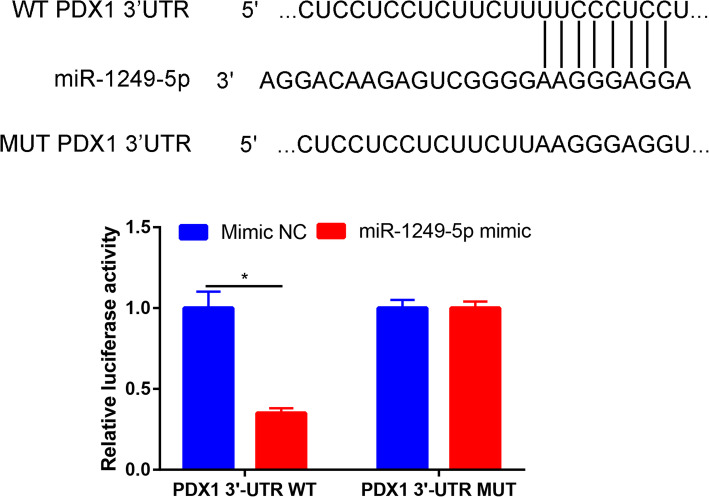
GSE74209 dataset was retrieved from NCBI Gene Expression Omnibus (GEO) database and performed bioinformatic analyses. OP tissue and healthy control tissues were obtained and used for RT-PCR analyses. ADSCs were incubated with miR-1249-5p mimic, inhibitor and corresponding negative control (NC), alkaline phosphatase (ALP) staining, and Alizarin Red Staining (ARS) were then performed to assess the role of miR-1249-5p for osteogenesis of ADSCs. Targetscan online website and dual-luciferase reporter assay were performed to verify that the 3'-UTR of PDX1 mRNA is a direct target of miR-1249-5p. RT-PCR and western blot were also performed to identify the mechanism of miR-1249-5p for osteogenesis of ADSCs.
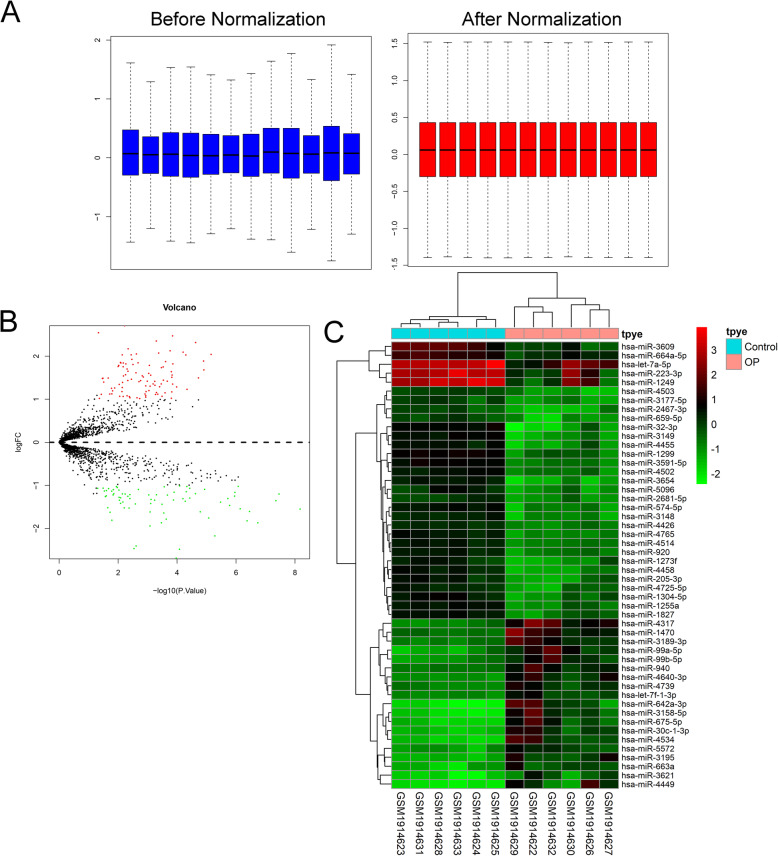
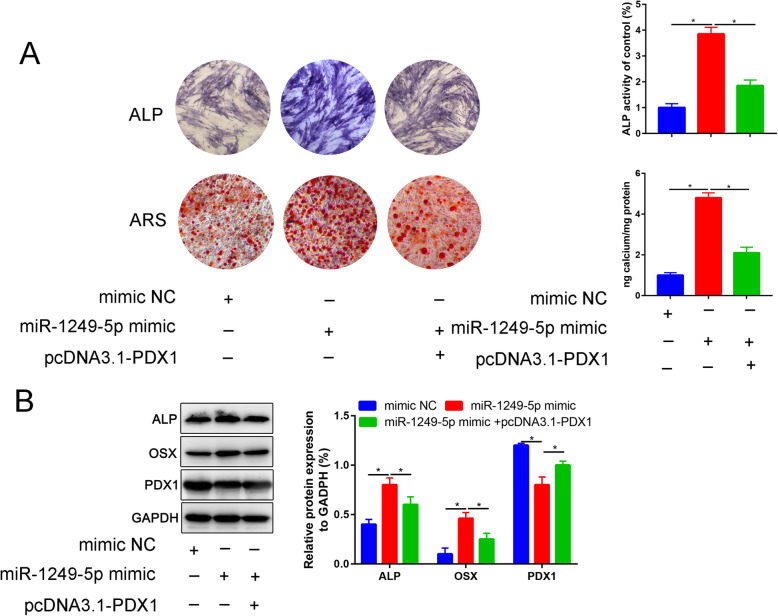
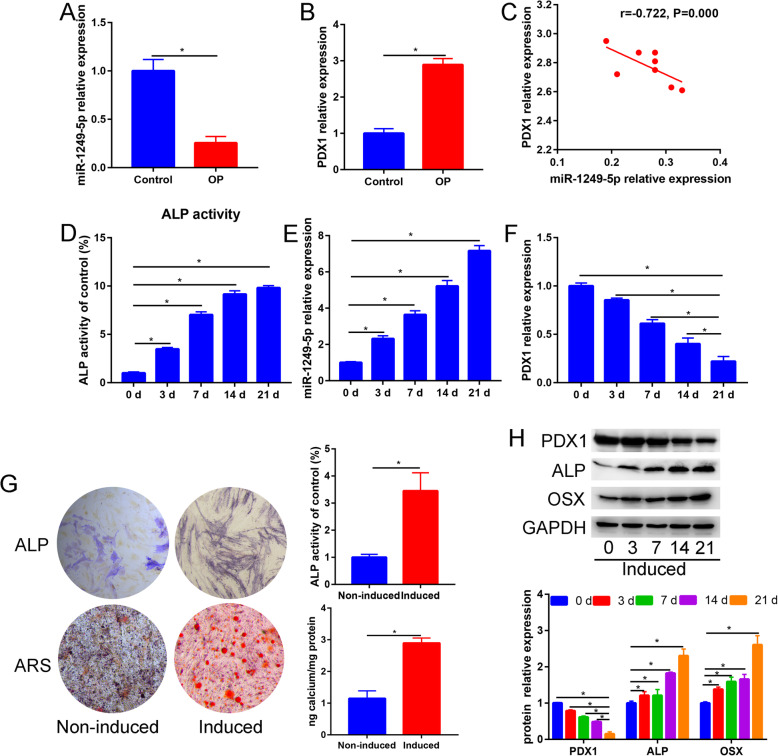
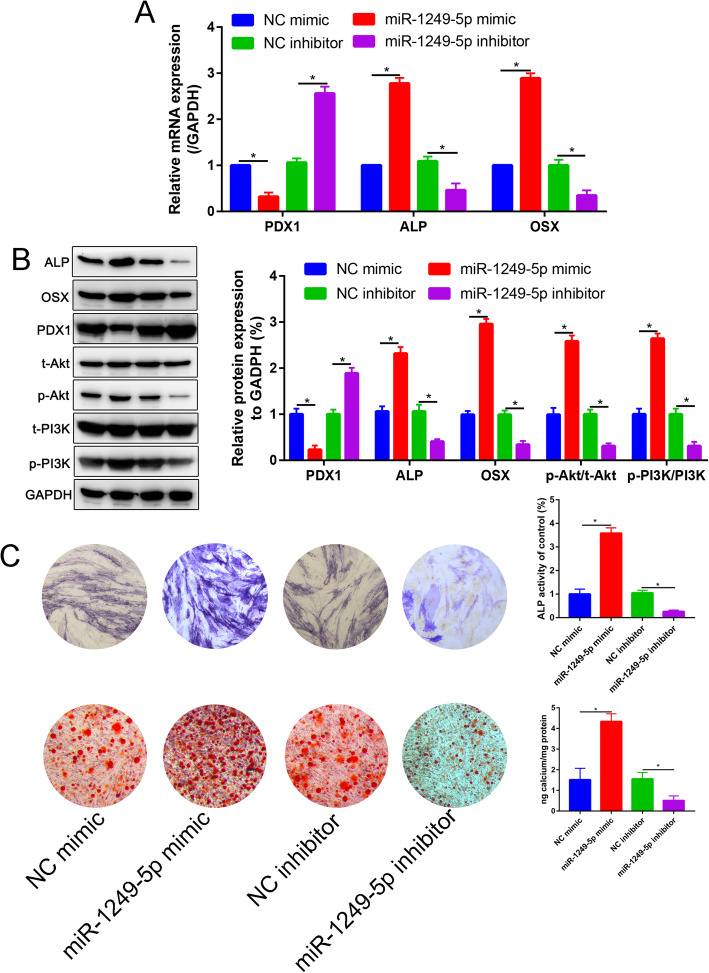
A total of 170 differentially expressed miRNAs were selected, among which, 75 miRNAs were downregulated and 95 miRNAs were upregulated. Moreover, miR-1249-5p was decreased in OP patients, while showed a gradual increase with the extension of induction time. miR-1249-5p mimic significantly increased osteogenic differentiation capacity and p-PI3K and p-Akt protein levels. Luciferase activity in ADSCs co-transfected of miR-1249-5p mimic with PDX1-WT reporter plasmids was remarkably decreased, but there was no obvious change in miR-1249-5p mimic with PDX1-MUT reporter plasmids co-transfection group. Overexpression PDX1 could partially reverse the promotion effects of miR-1249-5p on osteogenesis of ADSCs.
In conclusion, miR-1249-5p promotes osteogenic differentiation of ADSCs by targeting PDX1 through the PI3K/Akt signaling pathway.
骨质疏松症(OP)是一种与年龄相关的系统性骨疾病。微小 RNA(miRNA)参与成骨分化的调节。本研究旨在探讨 miR-1249-5p 促进脂肪来源干细胞(ADSCs)成骨分化的作用和机制。
从 NCBI 基因表达综合数据库(GEO)中检索 GSE74209 数据集,并进行生物信息学分析。获取 OP 组织和健康对照组织,进行 RT-PCR 分析。将 miR-1249-5p 模拟物、抑制剂和相应的阴性对照(NC)孵育 ADSC,然后进行碱性磷酸酶(ALP)染色和茜素红染色(ARS),以评估 miR-1249-5p 对 ADSC 成骨的作用。使用 Targetscan 在线网站和双荧光素酶报告基因检测验证 PDX1 mRNA 的 3'-UTR 是 miR-1249-5p 的直接靶标。还进行了 RT-PCR 和 Western blot 以确定 miR-1249-5p 促进 ADSC 成骨的机制。
共筛选出 170 个差异表达的 miRNA,其中 75 个 miRNA 下调,95 个 miRNA 上调。此外,OP 患者 miR-1249-5p 表达降低,随着诱导时间的延长,表达逐渐增加。miR-1249-5p 模拟物显著增加成骨分化能力和 p-PI3K 和 p-Akt 蛋白水平。与 PDX1-WT 报告质粒共转染 miR-1249-5p 模拟物的荧光素酶活性明显降低,但与共转染 miR-1249-5p 模拟物与 PDX1-MUT 报告质粒的共转染组无明显变化。过表达 PDX1 可部分逆转 miR-1249-5p 对 ADSC 成骨的促进作用。
总之,miR-1249-5p 通过 PI3K/Akt 信号通路靶向 PDX1 促进 ADSC 成骨分化。