Department of Pharmacology and Chemical Biology, Emory University, Atlanta Georgia, USA.
Department of Biochemistry, Emory University, Atlanta Georgia, USA.
J Biol Chem. 2021 Jan-Jun;296:100024. doi: 10.1074/jbc.RA120.016009. Epub 2020 Nov 22.
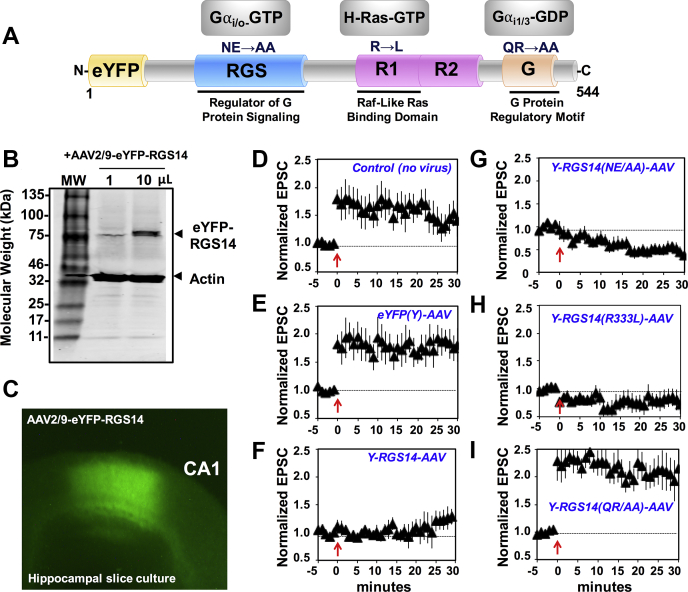
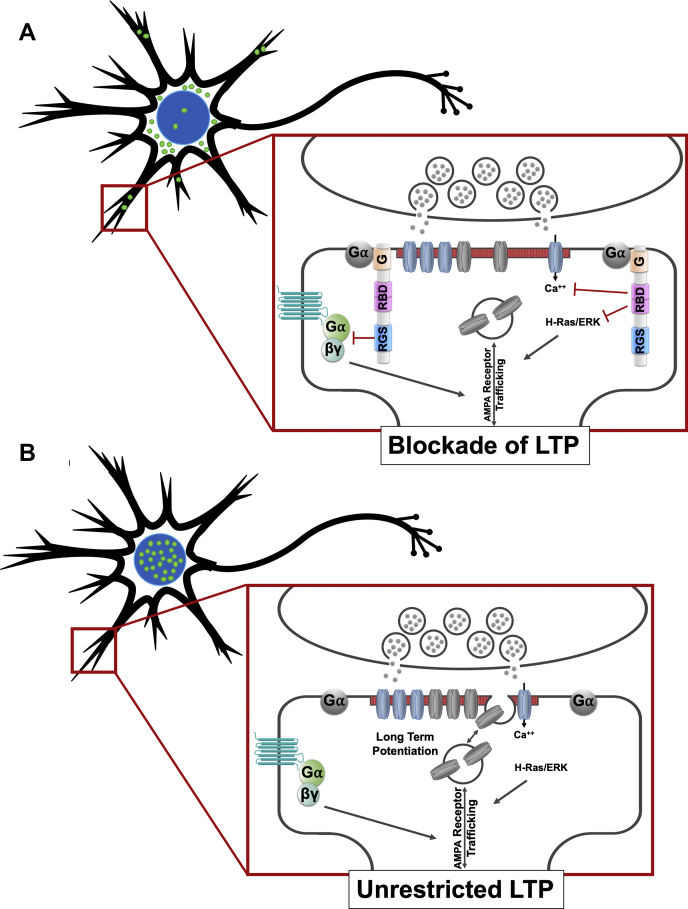
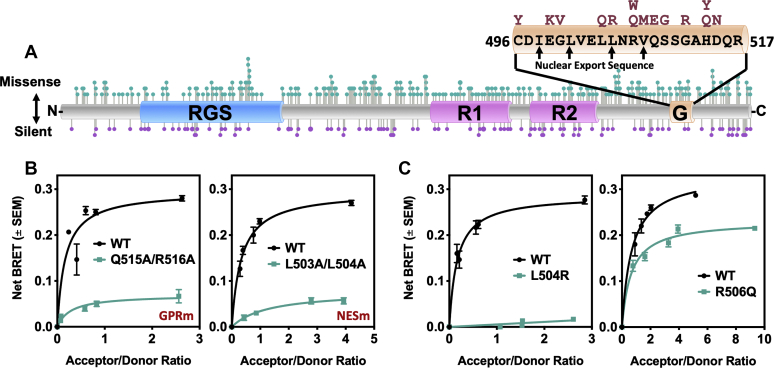
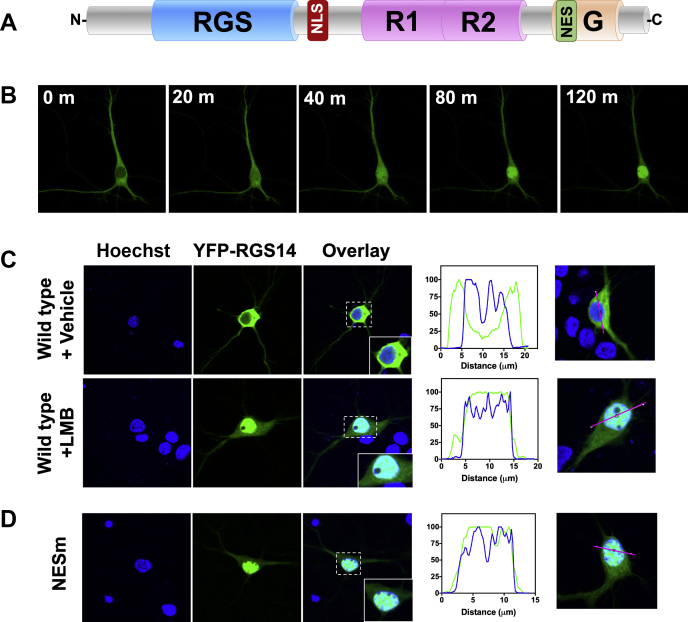
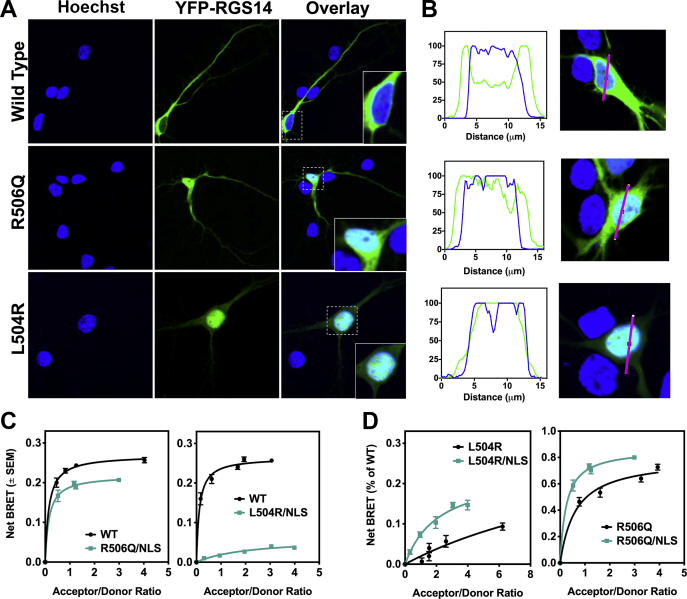
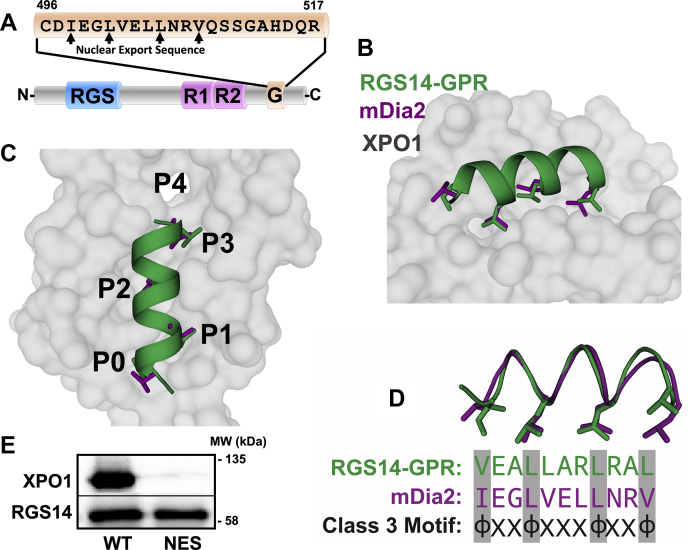
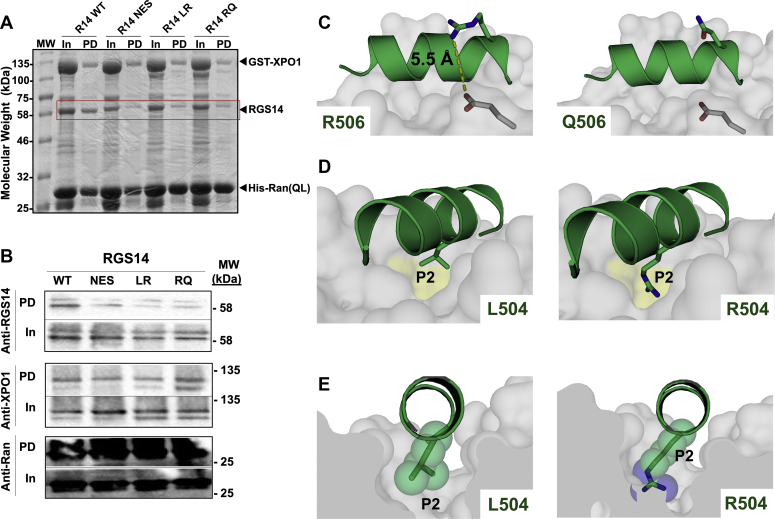
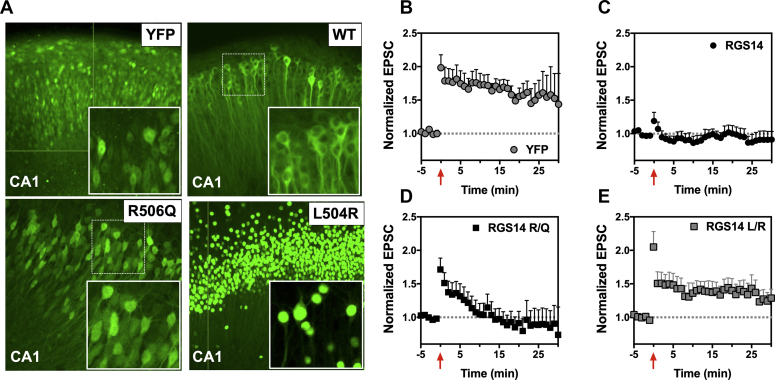
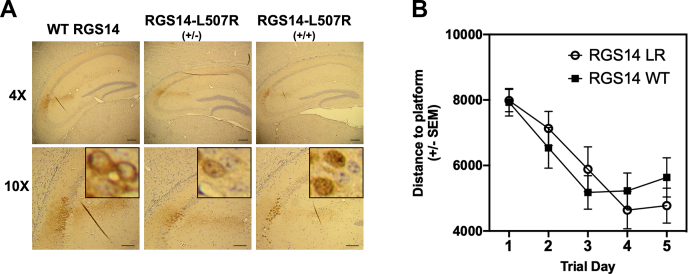
The human genome contains vast genetic diversity as naturally occurring coding variants, yet the impact of these variants on protein function and physiology is poorly understood. RGS14 is a multifunctional signaling protein that suppresses synaptic plasticity in dendritic spines of hippocampal neurons. RGS14 also is a nucleocytoplasmic shuttling protein, suggesting that balanced nuclear import/export and dendritic spine localization are essential for RGS14 functions. We identified genetic variants L505R (LR) and R507Q (RQ) located within the nuclear export sequence (NES) of human RGS14. Here we report that RGS14 encoding LR or RQ profoundly impacts protein functions in hippocampal neurons. RGS14 membrane localization is regulated by binding Gαi-GDP, whereas RGS14 nuclear export is regulated by Exportin 1 (XPO1). Remarkably, LR and RQ variants disrupt RGS14 binding to Gαi1-GDP and XPO1, nucleocytoplasmic equilibrium, and capacity to inhibit long-term potentiation (LTP). Variant LR accumulates irreversibly in the nucleus, preventing RGS14 binding to Gαi1, localization to dendritic spines, and inhibitory actions on LTP induction, while variant RQ exhibits a mixed phenotype. When introduced into mice by CRISPR/Cas9, RGS14-LR protein expression was detected predominantly in the nuclei of neurons within hippocampus, central amygdala, piriform cortex, and striatum, brain regions associated with learning and synaptic plasticity. Whereas mice completely lacking RGS14 exhibit enhanced spatial learning, mice carrying variant LR exhibit normal spatial learning, suggesting that RGS14 may have distinct functions in the nucleus independent from those in dendrites and spines. These findings show that naturally occurring genetic variants can profoundly alter normal protein function, impacting physiology in unexpected ways.
人类基因组包含大量自然发生的编码变异,这些变异对蛋白质功能和生理学的影响知之甚少。RGS14 是一种多功能信号蛋白,可抑制海马神经元树突棘中的突触可塑性。RGS14 也是一种核质穿梭蛋白,这表明平衡的核输入/输出和树突棘定位对于 RGS14 功能至关重要。我们鉴定了位于人 RGS14 核输出序列(NES)内的遗传变异 L505R(LR)和 R507Q(RQ)。在这里,我们报告说,编码 LR 或 RQ 的 RGS14 对海马神经元中的蛋白质功能有深远影响。RGS14 的膜定位受与 Gαi-GDP 的结合调节,而 RGS14 的核输出受 Exportin 1(XPO1)调节。值得注意的是,LR 和 RQ 变体破坏了 RGS14 与 Gαi1-GDP 和 XPO1 的结合、核质平衡以及抑制长时程增强(LTP)的能力。变体 LR 不可逆地积累在核内,防止 RGS14 与 Gαi1 结合、定位到树突棘以及对 LTP 诱导的抑制作用,而变体 RQ 则表现出混合表型。当通过 CRISPR/Cas9 引入小鼠时,RGS14-LR 蛋白表达主要在海马体、中央杏仁核、梨状皮层和纹状体神经元的核内检测到,这些脑区与学习和突触可塑性有关。虽然完全缺乏 RGS14 的小鼠表现出增强的空间学习能力,但携带变体 LR 的小鼠表现出正常的空间学习能力,这表明 RGS14 在核内可能具有与树突和棘突不同的功能。这些发现表明,自然发生的遗传变异可以深刻改变正常的蛋白质功能,以意想不到的方式影响生理学。