Sleep and Circadian Neuroscience Institute (SCNi), Nuffield Department of Clinical Neurosciences, University of Oxford, United Kingdom; Neuro-Bio Ltd., Abingdon, United Kingdom.
Sleep and Circadian Neuroscience Institute (SCNi), Nuffield Department of Clinical Neurosciences, University of Oxford, United Kingdom.
Biochem Pharmacol. 2021 Sep;191:114404. doi: 10.1016/j.bcp.2020.114404. Epub 2021 Jan 4.
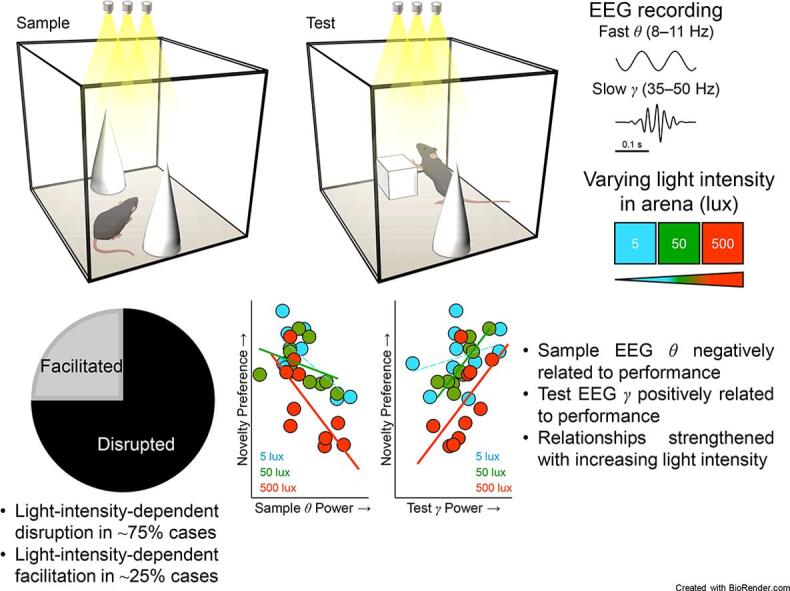
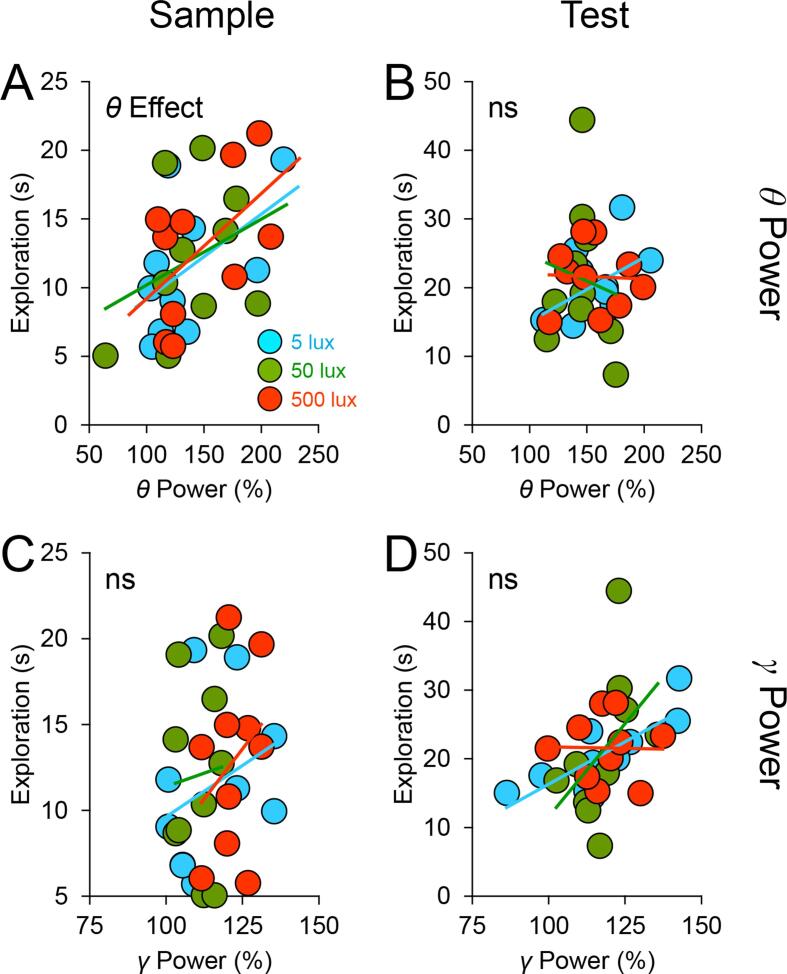
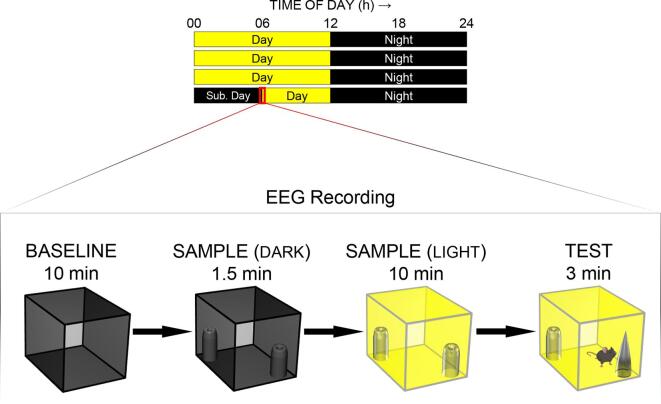
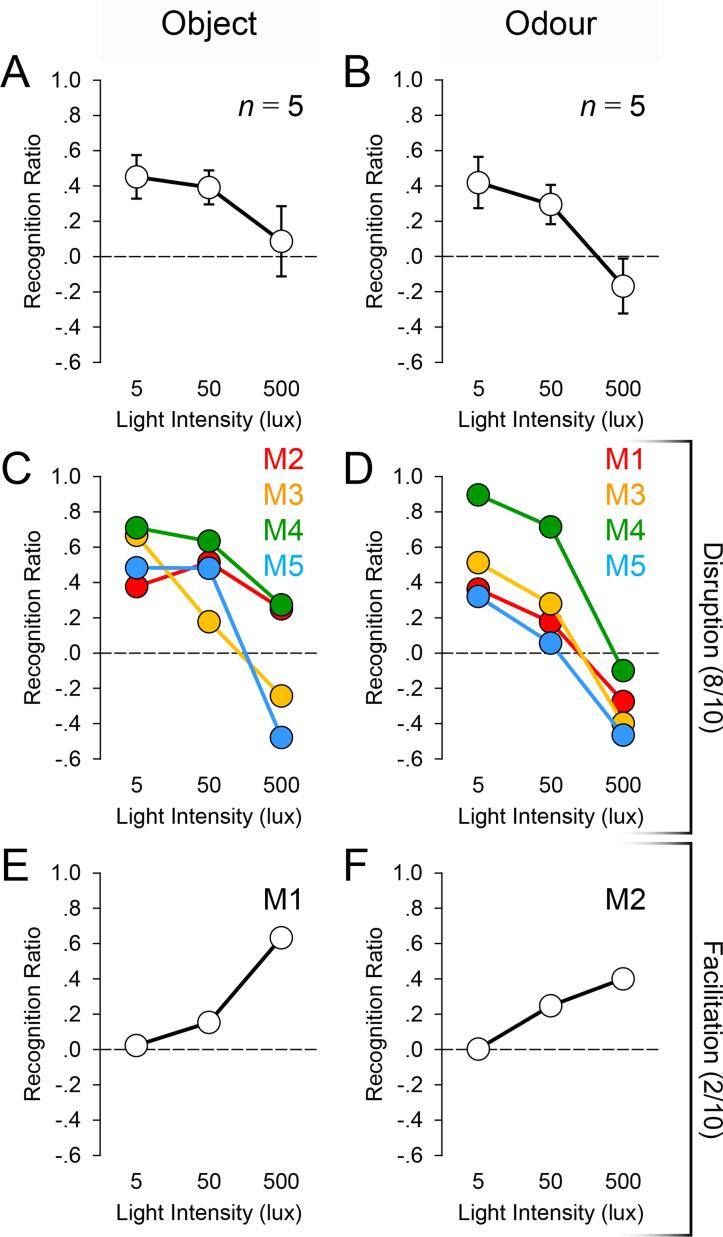
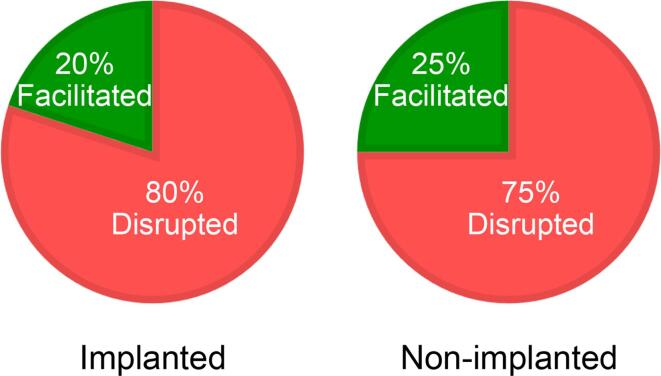
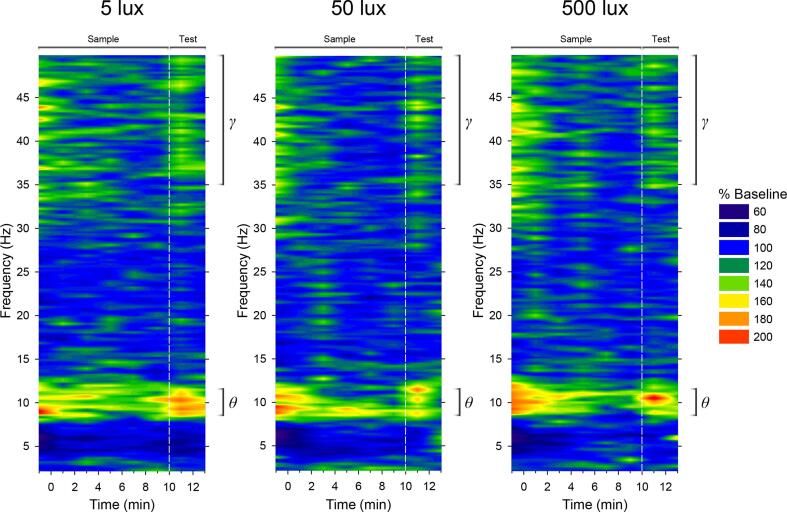
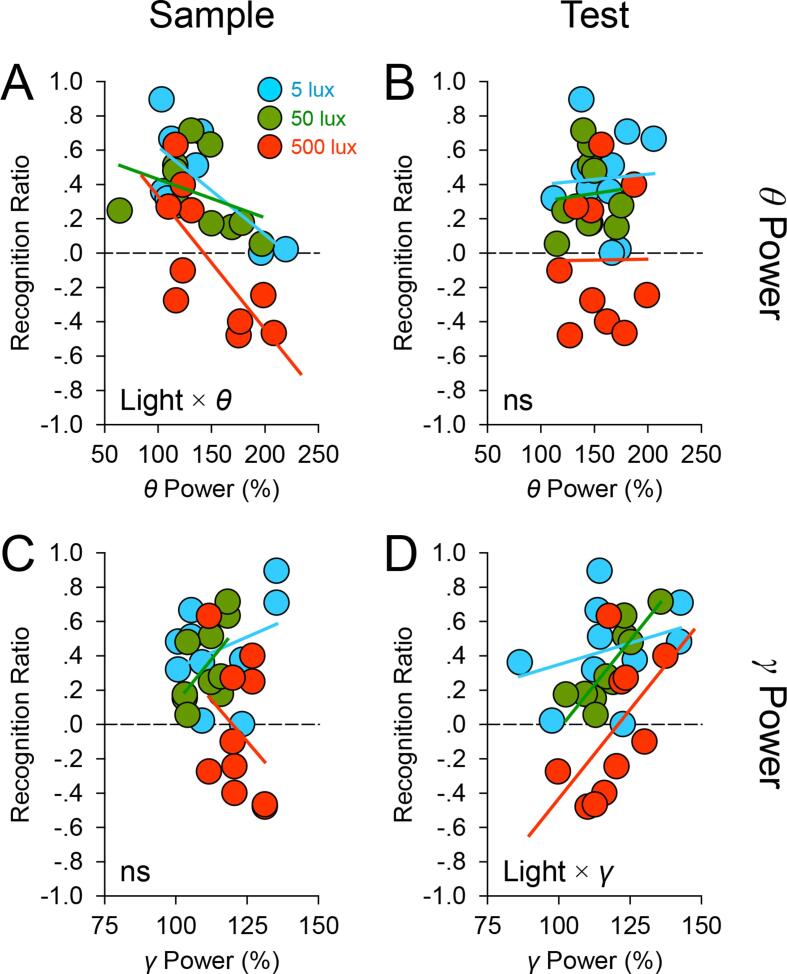
Acute exposure to light exerts widespread effects on physiology, in addition to its key role in photoentrainment. Although the modulatory effect of light on physiological arousal is well demonstrated in mice, its effect on memory performance is inconclusive, as the direction of the effect depends on the nature of the behavioural task employed and/or the type of stimulus utilised. Moreover, in all rodent studies that reported significant effects of light on performance, brain activity was not assessed during the task and thus it is unclear how brain activity was modulated by light or the exact relationship between light-modulated brain activity and performance. Here we examine the modulatory effects of light of varying intensities on recognition memory performance and frontoparietal waking electroencephalography (EEG) in mice using the spontaneous recognition memory task. We report a light-intensity-dependent disruptive effect on recognition memory performance at the group level, but inspection of individual-level data indicates that light-intensity-dependent facilitation is observed in some cases. Using linear mixed-effects models, we then demonstrate that EEG fast theta (θ) activity at the time of encoding negatively predicts recognition memory performance, whereas slow gamma (γ) activity at the time of retrieval positively predicts performance. These relationships between θ/γ activity and performance are strengthened by increasing light intensity. Thus, light modulates θ and γ band activities involved in attentional and mnemonic processes, thereby affecting recognition memory performance. However, extraneous factors including the phase of the internal clock at which light is presented and homeostatic sleep pressure may determine how photic input is translated into behavioural performance.
急性光照暴露除了在光驯化中起关键作用外,还会对生理产生广泛影响。尽管光照对生理唤醒的调节作用在小鼠中得到了很好的证明,但它对记忆表现的影响尚无定论,因为其影响的方向取决于所采用的行为任务的性质和/或所使用的刺激类型。此外,在所有报告光照对性能有显著影响的啮齿动物研究中,在任务期间并未评估大脑活动,因此尚不清楚光照如何调节大脑活动,以及光照调节的大脑活动与性能之间的确切关系。在这里,我们使用自发识别记忆任务,检查不同强度的光照对识别记忆性能和额顶叶清醒脑电图(EEG)的调节作用。我们在群体水平上报告了光照强度依赖性的识别记忆性能破坏效应,但对个体水平数据的检查表明,在某些情况下观察到光照强度依赖性的促进作用。然后,我们使用线性混合效应模型证明,在编码时的 EEG 快θ(θ)活动与识别记忆性能呈负相关,而在检索时的慢γ(γ)活动与性能呈正相关。这些θ/γ 活动与性能之间的关系随着光照强度的增加而增强。因此,光照调节与注意力和记忆过程相关的θ和γ 波段活动,从而影响识别记忆性能。然而,包括光照呈现时内部时钟相位和稳态睡眠压力在内的额外因素可能会决定光输入如何转化为行为表现。