Serra Húnter Fellow, Department of Statistics and Operations Research, Universitat Politècnica de Catalunya-BarcelonaTech, 08028, Spain.
Instituto de Salud Carlos III, Centro de Investigación Biomédica en Red de Salud Mental, CIBERSAM, Monforte de Lemos 3-5, Pabellón 11, 28029, Madrid, Spain, Barcelona, Spain; Parc Sanitari Sant Joan de Déu, Universitat de Barcelona, Fundació Sant Joan de Déu, Dr Antoni Pujades, 42, 08830, Sant Boi de Llobregat, Barcelona, Spain.
Environ Pollut. 2021 Feb 15;271:116326. doi: 10.1016/j.envpol.2020.116326. Epub 2020 Dec 21.
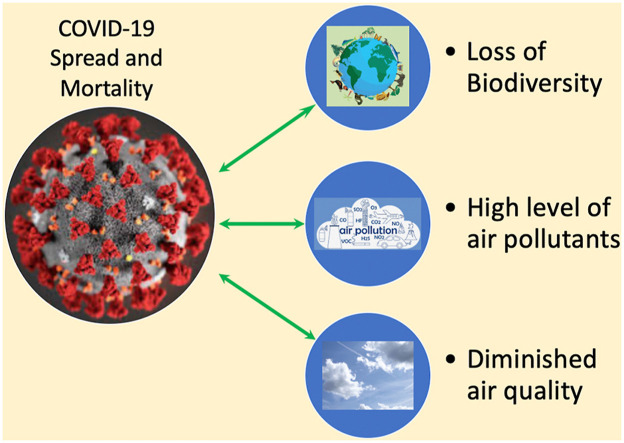
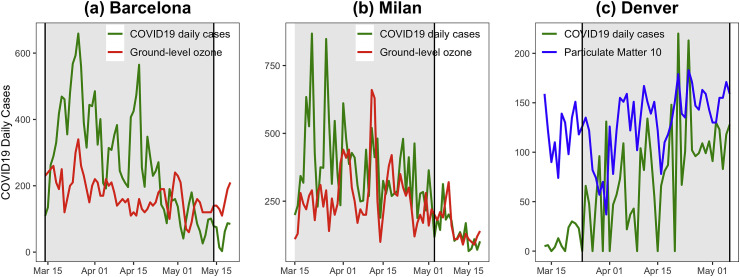
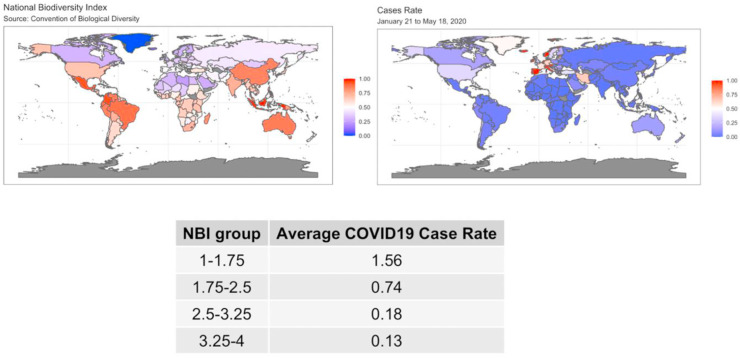
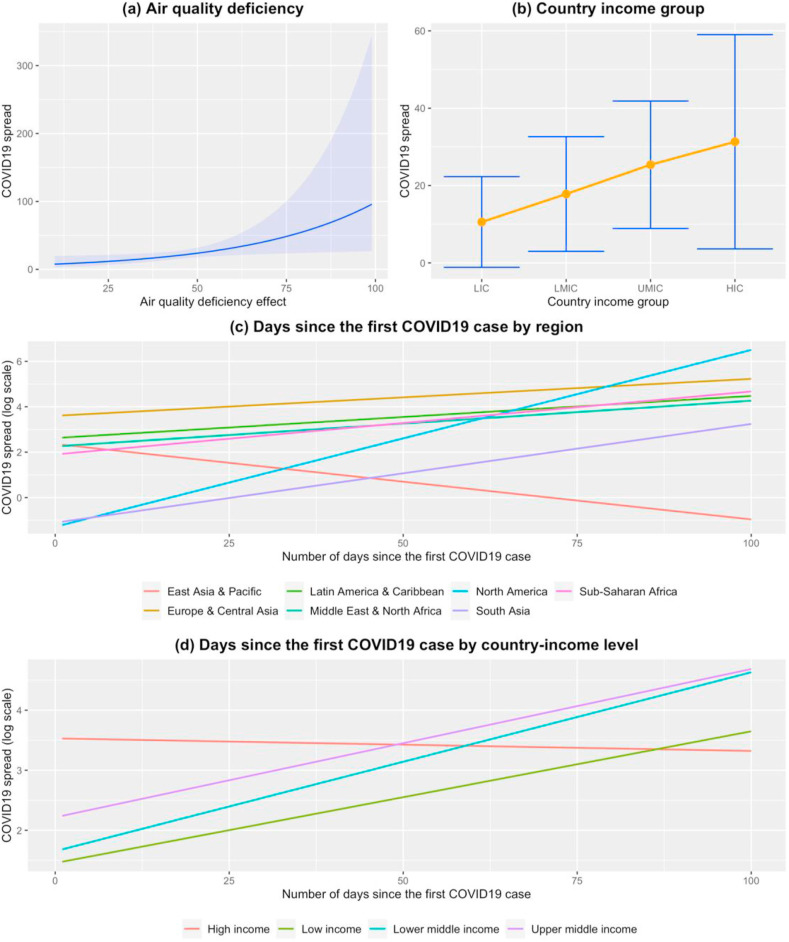
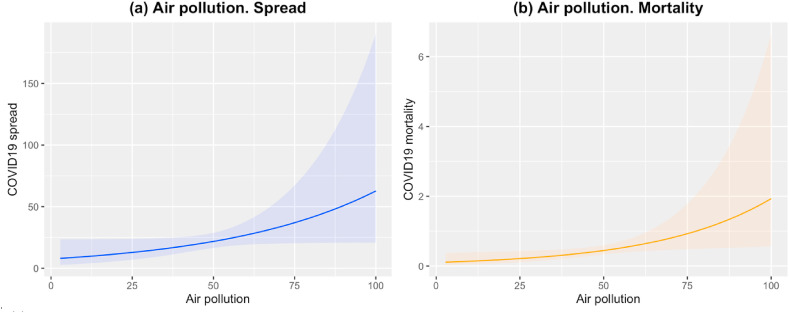
On March 12th, 2020, the WHO declared COVID-19 as a pandemic. The collective impact of environmental and ecosystem factors, as well as biodiversity, on the spread of COVID-19 and its mortality evolution remain empirically unknown, particularly in regions with a wide ecosystem range. The aim of our study is to assess how those factors impact on the COVID-19 spread and mortality by country. This study compiled a global database merging WHO daily case reports with other publicly available measures from January 21st to May 18th, 2020. We applied spatio-temporal models to identify the influence of biodiversity, temperature, and precipitation and fitted generalized linear mixed models to identify the effects of environmental variables. Additionally, we used count time series to characterize the association between COVID-19 spread and air quality factors. All analyses were adjusted by social demographic, country-income level, and government policy intervention confounders, among 160 countries, globally. Our results reveal a statistically meaningful association between COVID-19 infection and several factors of interest at country and city levels such as the national biodiversity index, air quality, and pollutants elements (PM PM and O). Particularly, there is a significant relationship of loss of biodiversity, high level of air pollutants, and diminished air quality with COVID-19 infection spread and mortality. Our findings provide an empirical foundation for future studies on the relationship between air quality variables, a country's biodiversity, and COVID-19 transmission and mortality. The relationships measured in this study can be valuable when governments plan environmental and health policies, as alternative strategy to respond to new COVID-19 outbreaks and prevent future crises.
2020 年 3 月 12 日,世界卫生组织宣布 COVID-19 为大流行疾病。环境和生态系统因素以及生物多样性对 COVID-19 传播及其死亡率演变的集体影响在经验上尚不清楚,尤其是在生态系统范围广泛的地区。我们的研究旨在评估这些因素如何影响 COVID-19 的传播和死亡率。本研究通过合并世界卫生组织每日病例报告与 2020 年 1 月 21 日至 5 月 18 日其他公开可用的措施,编制了一个全球数据库。我们应用时空模型来确定生物多样性、温度和降水的影响,并拟合广义线性混合模型来确定环境变量的影响。此外,我们使用计数时间序列来描述 COVID-19 传播与空气质量因素之间的关联。在全球 160 个国家中,所有分析均通过社会人口统计学、国家收入水平和政府政策干预等混杂因素进行调整。我们的研究结果表明,在国家和城市层面上,COVID-19 感染与几个感兴趣的因素之间存在统计学上的显著关联,例如国家生物多样性指数、空气质量和污染物元素(PM2.5 和 O3)。特别是,生物多样性丧失、高水平的空气污染物和空气质量下降与 COVID-19 的传播和死亡率之间存在显著的关系。本研究为未来关于空气质量变量、国家生物多样性与 COVID-19 传播和死亡率之间关系的研究提供了实证基础。当政府规划环境和卫生政策时,本研究中测量的关系可以作为应对新的 COVID-19 爆发和预防未来危机的替代策略,具有重要价值。