Tran Song-Toan, Cheng Ching-Hwa, Nguyen Thanh-Tuan, Le Minh-Hai, Liu Don-Gey
Program of Electrical and Communications Engineering, Feng Chia University, Taichung 40724, Taiwan.
Department of Electrical and Electronics, Tra Vinh University, Tra Vinh 87000, Vietnam.
Healthcare (Basel). 2021 Jan 6;9(1):54. doi: 10.3390/healthcare9010054.
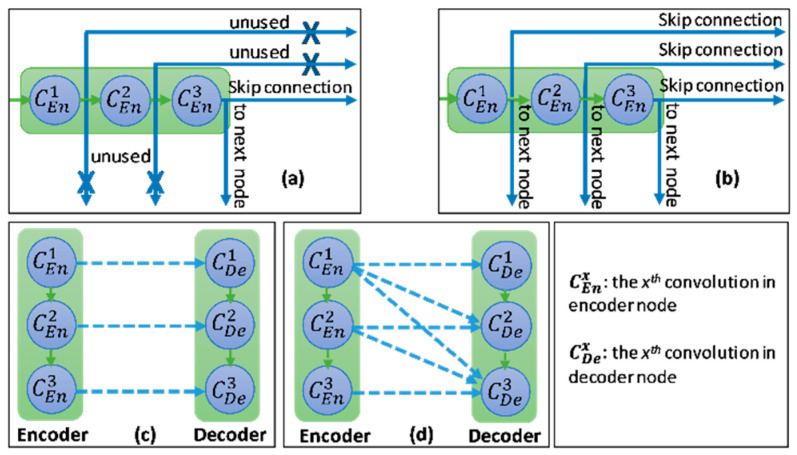
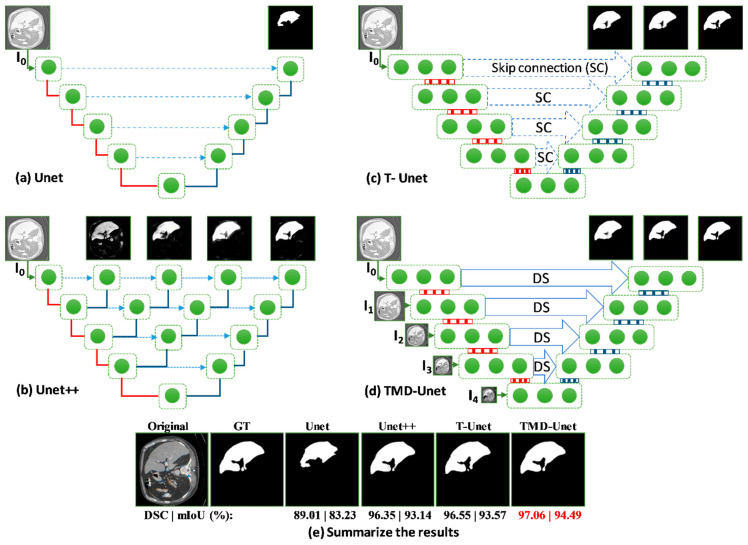
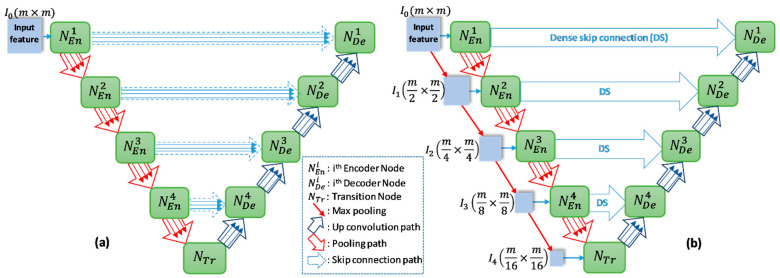
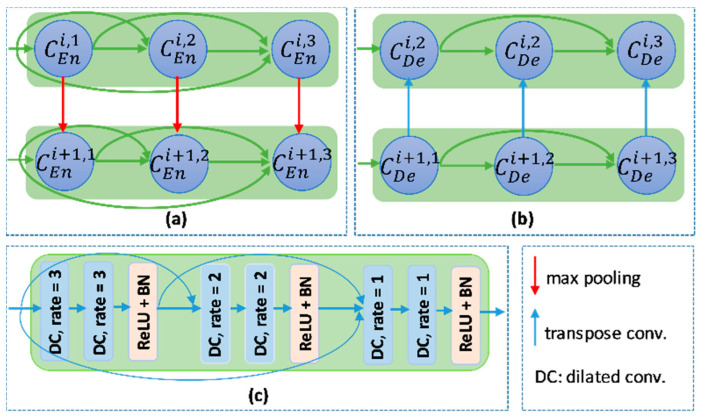
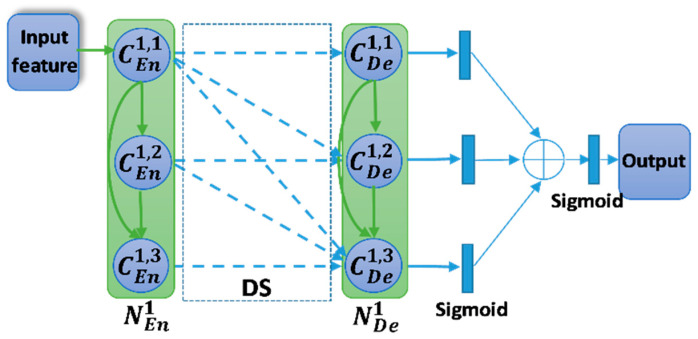
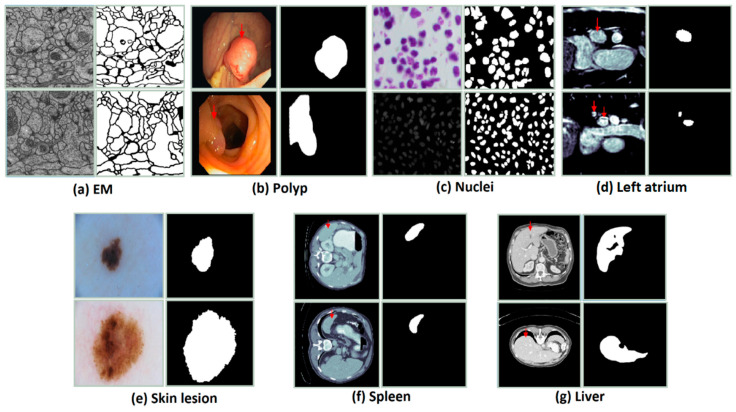
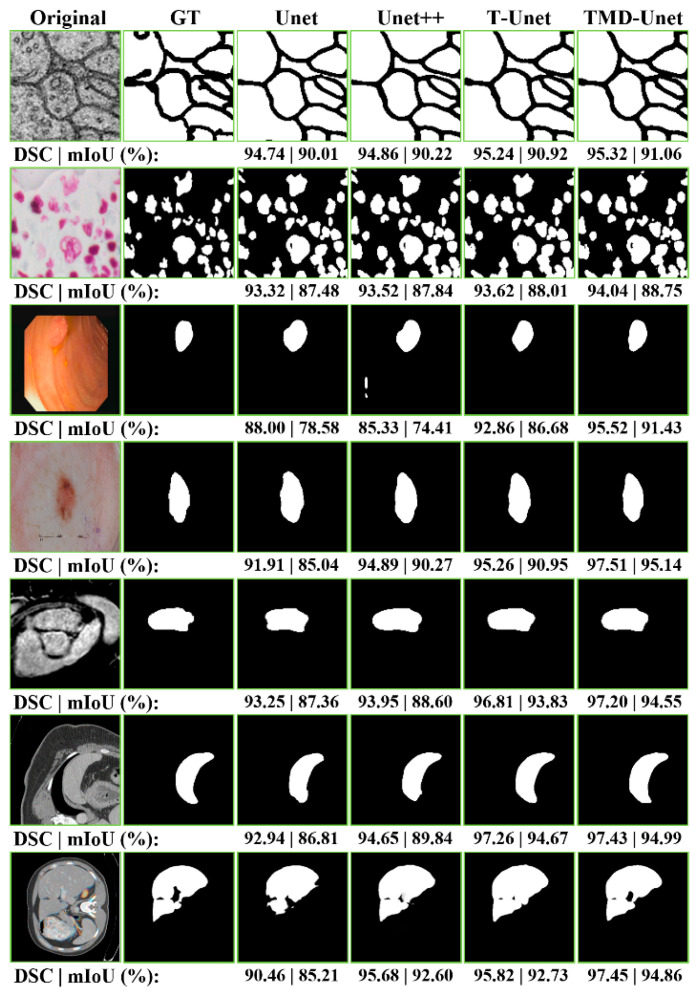
Deep learning is one of the most effective approaches to medical image processing applications. Network models are being studied more and more for medical image segmentation challenges. The encoder-decoder structure is achieving great success, in particular the Unet architecture, which is used as a baseline architecture for the medical image segmentation networks. Traditional Unet and Unet-based networks still have a limitation that is not able to fully exploit the output features of the convolutional units in the node. In this study, we proposed a new network model named TMD-Unet, which had three main enhancements in comparison with Unet: (1) modifying the interconnection of the network node, (2) using dilated convolution instead of the standard convolution, and (3) integrating the multi-scale input features on the input side of the model and applying a dense skip connection instead of a regular skip connection. Our experiments were performed on seven datasets, including many different medical image modalities such as colonoscopy, electron microscopy (EM), dermoscopy, computed tomography (CT), and magnetic resonance imaging (MRI). The segmentation applications implemented in the paper include EM, nuclei, polyp, skin lesion, left atrium, spleen, and liver segmentation. The dice score of our proposed models achieved 96.43% for liver segmentation, 95.51% for spleen segmentation, 92.65% for polyp segmentation, 94.11% for EM segmentation, 92.49% for nuclei segmentation, 91.81% for left atrium segmentation, and 87.27% for skin lesion segmentation. The experimental results showed that the proposed model was superior to the popular models for all seven applications, which demonstrates the high generality of the proposed model.
深度学习是医学图像处理应用中最有效的方法之一。针对医学图像分割挑战,网络模型的研究越来越多。编码器-解码器结构正取得巨大成功,尤其是Unet架构,它被用作医学图像分割网络的基线架构。传统的Unet和基于Unet的网络仍然存在一个局限性,即无法充分利用节点中卷积单元的输出特征。在本研究中,我们提出了一种名为TMD-Unet的新网络模型,与Unet相比,它有三个主要改进:(1)修改网络节点的互连;(2)使用空洞卷积代替标准卷积;(3)在模型的输入侧集成多尺度输入特征,并应用密集跳跃连接代替常规跳跃连接。我们的实验在七个数据集上进行,包括许多不同的医学图像模态,如结肠镜检查、电子显微镜(EM)、皮肤镜检查、计算机断层扫描(CT)和磁共振成像(MRI)。本文实现的分割应用包括EM、细胞核、息肉、皮肤病变、左心房、脾脏和肝脏分割。我们提出的模型在肝脏分割中的骰子系数达到96.43%,脾脏分割为95.51%,息肉分割为92.65%,EM分割为94.11%,细胞核分割为92.49%,左心房分割为91.81%,皮肤病变分割为87.27%。实验结果表明,所提出的模型在所有七个应用中均优于流行模型,这证明了所提出模型的高度通用性。